Well guys, I’m back in the land of mediocre food. After my sojurn in Oz, I’ve come to realize that I live in a food desert- you have to drive about 25-30 minutes to get anything to eat or to do grocery shopping. If you do eat in town, your choices are mostly limited to chains. Whether fast food or sit-down places, your food comes from massive industrial farms a thousand miles away, and it’s usually frozen and then plopped onto your plate by a line cook with three weeks experience working from a script.
The food scene in Australia isn’t anything like that, and the coffee is world-class. Right now I’m feeling a tad cheated as I drink my drip coffee—a quick cup of tea bag coffee in Oz was better, I’m afraid.
It is what it is. Now, a post-mortem on my working vacation in Australia.
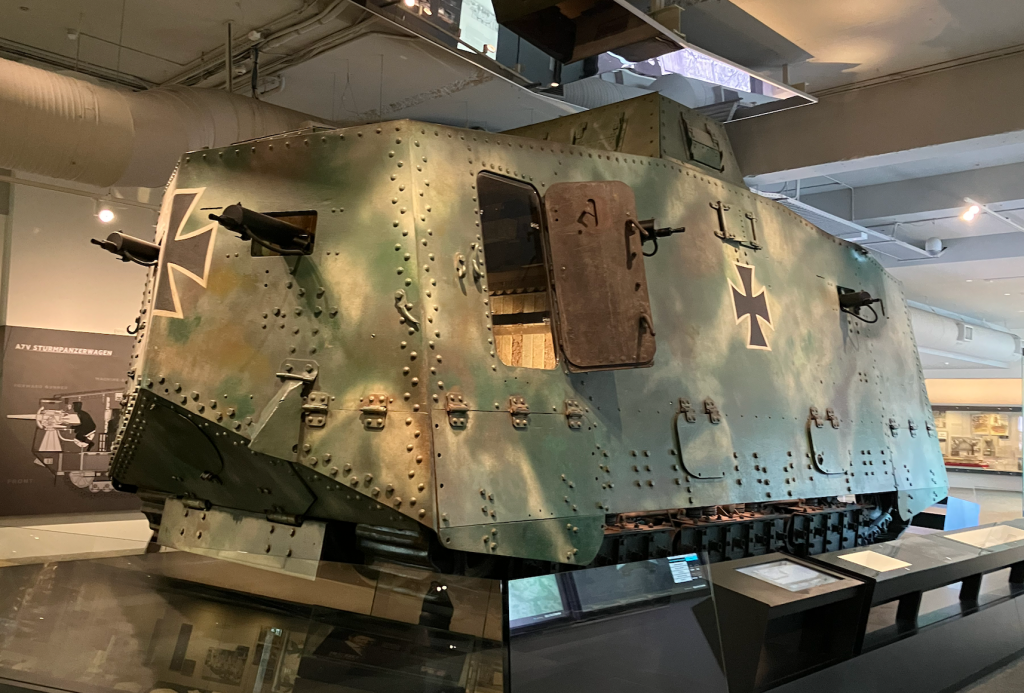
Much happened. Did I see kangaroos and other cool stuff? Yes, including the last existing WW1 German tank, captured by Queensland troops in 1918. Observe.
Strange to think that an ungainly beast like this heralded a new age in warfare, but it did. The Kaiser only fielded twenty of these in the Great War, and this is the sole remaining example, preserved at the Queensland Museum. If you look closely, it is scarred by shot and shell, and apparently sat in no-man’s-land until recovered by some really brave Aussie troops. Somehow they hauled it to a ship and sent it on the long voyage south, where it sat outside for decades.
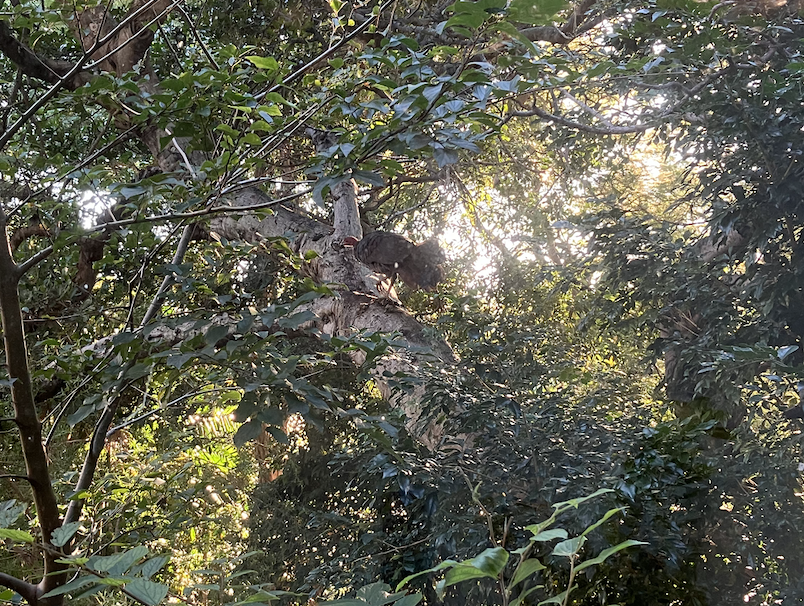
Pretty cool. This was but one of dozens of interesting things I saw there. The wildlife was super interesting, as was Brisbane, probably the nicest city I’ve ever visited. My hosts were gracious, and they were fantastic guides and friends. Every time I looked into their garden it was like a trip to the zoo! One day, while writing, a scrub turkey climbed onto the tree branch outside my window.
Observe.
The neighbors had raucous kookaburras. Their cries must be heard to be believed. They sound like maniacs.
There’s a lot I could write here- it was a fantastic trip. But now it’s done.
Regarding writing, much happened. I polished off my end of the Javan War, an upcoming co-authored deal with JB. It’s the origin story of Lucinda Hardy, the chief protagonist of the Cruel Stars universe. Also, I finished the preps for Light’s End, my upcoming alien invasion novel. I’m looking at a fifteen June launch. In addition, helped a little with moving around blocks on an upcoming JB thing, and dreamed up a new series and wrote the premise while brainstorming with John and Elana.
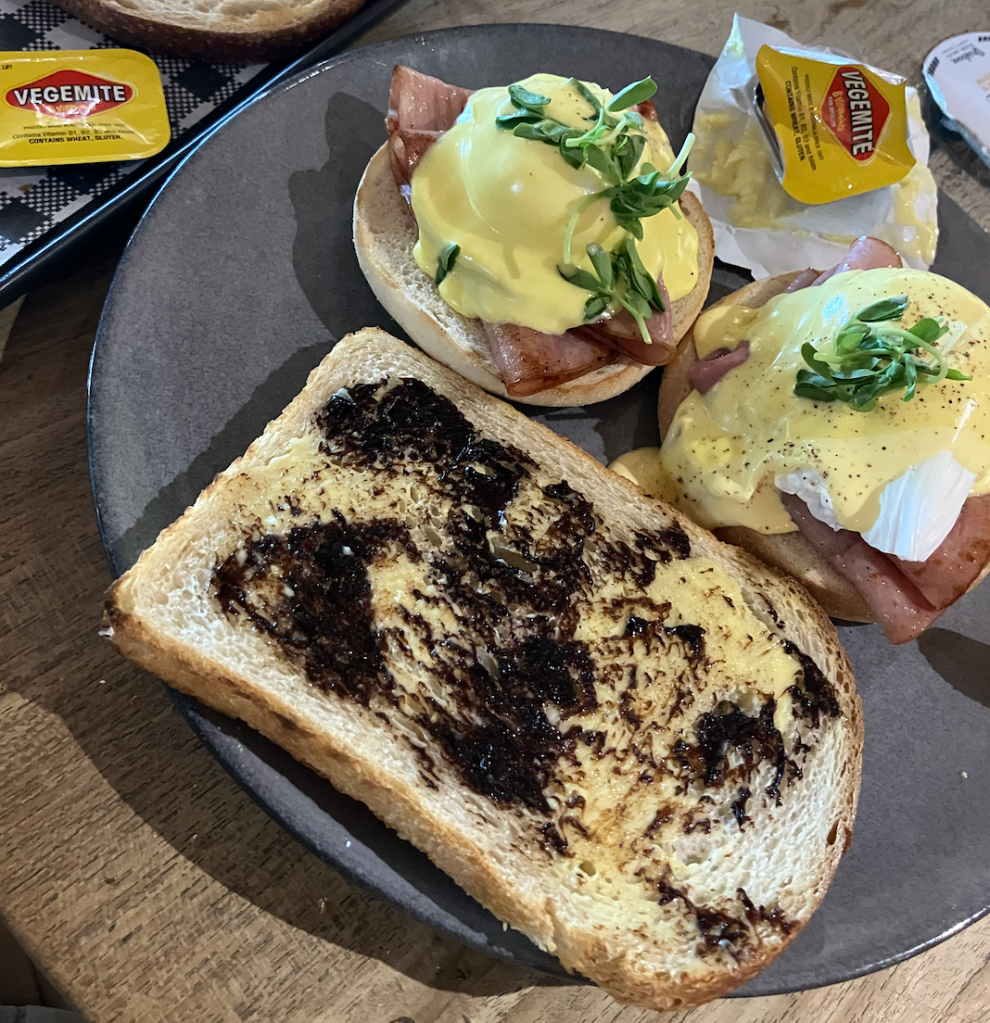
It was a totally cool trip, even if the trip is beyond hellish. It’s worth it. I even became a fan of vegemite, something that I had not foreseen. It is pretty awesome combined with eggs!
It was only fitting that I smeared it on my toast while enjoying my last breakfast, brekkie, in Oz. Delicious eggs benedict and good coffee, sigh. When I grabbed a coffee in Vancouver on the trip back it tasted like ditch water.
Nice country you’ve got down there, Aussie readers. I’d imagine I’ll visit again.
I’ve been talking about this threat for as long as I’ve owned this site.
The age of the automated hunter-killers is upon us. It’s a fact. We need to stop burying our heads in the dirt here, because the end of effective human combatants is in sight, at least in the traditional non-assisted format.
Witness this video, courtesy of the Chinese Government, who doubtless want the world to see their shiny new capability.
I guess these hell robot dogs cost about 2200USD a piece. Also, note that this is a public-facing, open-source video; what evil toys lay behind the dark curtain of their R&D shops?
Of course, one thing this vid does not show is the ‘bot hitting targets; the jury is out regarding the accuracy of this new weapons platform. However, if it’s even 50% accurate, this is a vast improvement over living, breathing, humans under fire. Also, there is no data for how hardened these hell dogs are to enemy fire. Will they fall apart with a few shots? How fast and maneuverable are they? Can they be easily jammed? There’s a lot of questions here.
However, you can pick this apart all you want, but the facts remain. The Chinese Army is fielding these, and they are a legit threat. Not in the future, now.
In earlier posts I’ve described how I’d use things like this to eviscerate an infantry unit at 0200 on some shitty, rainy night. This is no longer theoretical. In fact, I’d be shocked if the Chinese don’t flex a few of these nifty gadgets to the Russian Army in Ukraine, you know, just to try them out. Make a few notes here, a few improvements there, and presto, you have a traditional infantry neutralizer. Just like that.
Sigh. As stated on at least a hundred earlier occasions, we need AI assisted, human infantry powered armor. Period. The battlefields of today are already borderline unsurvivable for unaided infantry and armor, within the next decade they will be suicide.
Drones, hell dogs, smart mines, you name it. Go ahead. Pass all the laws and treaties you want, the enemies of the collective West will wipe their asses with them. It’s already happening in real time. Turn on the news, and then tell me I’m lying.
I’m not.
While we’re at it, let’s add modern nerve gas and tac nukes.
Unsurvivable I said, unsurvivable I mean.
Time for our policy makers to pull their heads out with a deafening “pop!” While we’re at it, we need to fire our defense industry oligarchs, because they suck. They cannot produce on demand, nor can they produce at speed. There is a real arms race, and we are losing it.
Deterrence prevents wars. Once an opponent is convinced, perhaps falsely, that he can win, then war becomes inevitable.
Don’t ever make the mistake of thinking that something can’t happen to you.
The rather intense fellow seen above is my Great-Uncle Russell, who fought with the infantry, 37th US Infantry Division, Pacific, 26MAY1942-NOV45. His war started on Guadalcanal, moved to the Munda Campaign, New Georgia, then to Bougainville. After Bougainville, he cruised up to the Philippines. He did the whole invasion thing (again), fought to Manila, fought through Manila, and then did some more bad stuff until the end of the war. Finally, in November of 1945 his unit returned to the States and he demobilized along with millions of others. He was married shortly thereafter- the photo above was his wedding pic. Guys frequently married after the war in their uniform, because it was the only good set of clothes they had.
His war was over. But not really. He had a passion for growing orchids, and he kept a small box of Japanese teeth. Modern readers will be grossed out by this, but this phenomenon was fairly common among Pacific veterans. It was no quarter given, unforgiving combat to the knife. How easily we all forget, or never knew, in this cushy, modern age, but I grew up in the wreckage of layers of the US’s wars, WW1-present.
My family, rather poor, had an inordinate percentage of combat veterans.
Therefore, when an Aussie friend asked me to knock together a few thoughts for her political party, the Australian Democrats, I was only too happy to oblige. I saw, and see, it as doing my bit in the spirit of my departed Uncle Russell, who sucked it while defending Australia from the Japanese thrust to the south, and he was small cog in the machine that carried the fight to the Japanese Greater Co-Prosperity Sphere, and witnessed the demise of said Sphere.
If he could withstand jungle rot, banzai charges, horrible malarial nights, and house by house fighting in Manila, then surely I could spend a week looking at open source documents and apply some analysis. At the end, I compiled a document with my thoughts about the current Australian Defense posture, and submitted it to my friend in Perth, and the Australian Democrats could do with it as they saw fit.
No hot machine gun, no soggy, sleepless nights, no maddening mosquitoes and quinine tablets. No wretched patrols, waist deep in leech-infested streams, with no-surrender crazies at the end.
Nope, a cup of coffee and Wikipedia.
So, without further ado, this is my take on the Defense of Australia, a germane topic these days if there ever was one.
Cheers, Jason.
Australian Defense Working Paper, Australian Democrats, 27JAN24
Contributor: CPT J. Lambright, USA, (Ret.)
Introduction
I do not intend to reinvent the hard work and expertise already devoted to the Australian Democrat’s Defense Platform. Rather, I would expand upon existing concepts and add input to the conclusions that you have reached. Of course, you are free to accept, modify, or decline my suggestions. I am not a defense policy expert and do not represent myself as such. I am a retired soldier who believes in communication and cooperation between allies. I am also not blind to the need for each nation to act in its national interest.
After examining the current Australian Defense Forces structure and commitments and the Australian Democrat Party’s existing policies and platform, allow me to begin.
Preface
A study of current AD thought leads me to believe that you care deeply about the defense of Australia, its people, and its interests. Your party leadership believes that much of the money allotted to defense is squandered in boondoggles and pie-in-the-sky projects that never seem to come to fruition and certainly do not advance the primary mission of the Australian Defense Forces- the protection of Australia. Also, you have reservations about the reliability of your chief ally, the United States, and its ability to prosecute and sustain any notional regional conflict across vast distances.
These beliefs are well-founded and justified by numerous examples from recent events. The failed war in Afghanistan is an excellent example. Also, you are correct to emphasize and prioritize staking out a clear contrast with other Australian political parties and their policies.
You want to defend Australia and its interests and improve battlefield effects while maintaining current defense budget parameters. This can be done.
Of course, you may want to examine what is in Australia’s interest and how that applies to your defense platform. Australia depends on foreign trade, and most products that arrive or depart from Australia move via vulnerable cargo ships along some of the world’s busiest sea lanes, such as the South China Sea. This is an example of a currently disputed area. It could become contested.
It is indisputably in Australia’s interests to patrol and defend these critical waters. Australia cannot do it single-handedly; it must do so with its partners.
With such an example in mind, let us begin.
The Australian Army
The old German historical standard for staffing armed forces was one division per million of the general population. While I do not advocate for Australia to field 26 divisions, there is room for growth within the Army, given current budget restraints and demographics. For the defense of the homeland, the Army is key, and examining open-source documents reveals present anemic staffing at best.
The Australian Army has eight combat brigades right now; three of them, the Regular Army brigades, are adequately staffed, trained, and equipped. The other five brigades assigned to the Reserves are partially staffed at low levels, with inadequate equipment to match.
A data point I noted is that the Reserve brigades are not expected to operate independently in a national contingency; portions will be seconded to the Regular brigades. This suggests that the Reserve brigades are hollow formations and that the Regular formations need augmentation to sustain national combat goals.
From my understanding of the historical role of the Australian Army, your Army has always been a citizen’s Army, with the bulk of its forces being derived from citizen soldiers.
There is nothing wrong with this, and it has strong parallels with the current composition of the US Army, where nearly half of the combat power of the American Army is concentrated in Army Guard formations. For those unfamiliar, the US Army Guard is a force of part-time soldiers who can be called upon to fulfill active-duty wartime roles with short notice.
Here is a difference between the Australian Reserve Brigades and the US Army Guard Brigades: the Australian Army Reserve Brigades need to be fully staffed, they need to be fully equipped, they are not completely manned, and they need a clearly defined wartime function.
There is little difference between the equipment of a US Regular Army Brigade Combat Team and a Guard BCT (note: the US Army does not have combat units in the Army Reserve). The RA and Guard BCTs can be and have been used interchangeably in their wartime roles. An example is my Afghanistan sector; I was attached to the 170th RA IBCT (Infantry Brigade Combat Team). The sector to the north’s “landowners” were the 37th IBCT of the Ohio Army National Guard.
Presently, the Australian Army would be incapable of such a mission (i.e. a Reserve brigade operating independently in conjunction with a Regular brigade).
I suggest that your Reserve brigades become actual brigades, with a complete skeleton active-duty staff, like the US Army Guard formations, with the rank-and-file being part-time, citizen soldiers.
To do this, you will need to recruit, train, and fully equip your five Reserve brigades, and then you will need to assign them a real-world mission. An example would be “Defense of Northern Queensland, emphasizing amphibious assaults and delaying actions.” During their weekend drills, they train in soldiering skills leading up to their annual exercises, which align with their assigned wartime task.
Also, when I say “fully staffed and equipped brigade,” I mean a fully staffed, trained, and equipped brigade. A modern BCT has assigned infantry, artillery, armored, engineering, aviation, medical and sustainment assets assigned and integrated, with a book strength of around 2600 personnel.
This implies that you will need much more equipment than you presently have, and you must find a mechanism to recruit quality personnel, which has challenges different from the US. I’ll name an example.
The Australian Army currently fields 59 M1 Abrams tanks.
The Ohio Army National Guard alone has more tanks than that. While your party has made a strong argument that Australia doesn’t need tons of tanks, and I agree, what you need for a coherent defense of the Australian mainland, let alone power projection into your Pacific northern approaches, is a strong expansion of your Army Aviation.
At present, you have 14(!) CH-47 Chinook helicopters assigned to your total Army. This is wildly inadequate. Helicopters are the ideal platform for Australian homeland defense, and you have very few available.
The AD defense platform at present notes that your overall plan will save one hundred billion dollars. Fine. Spend some of it on your Army, which has been starved for funds and is demoralized by justified controversy regarding the actions of a rogue corporal and the associated command failure.
A fully staffed and equipped US Army Infantry BCT, the “light” version of a BCT, costs about 4 billion USD. You could flesh out and fully equip your five Reserve brigades for 30.4 billion AUD, maximum.
This measure alone would vastly enhance the stated goal of the AD, to better defend the Australian homeland for less money.
I do not say you should replicate the US IBCT format, in which one “light” brigade has more tanks than your entire Army. The equipment should be tailored to your conditions, and battlefield developments in Ukraine should be considered. You could even develop cutting-edge drone warfare units; starting from scratch has advantages.
Also, I’m not privy to information about current Australian Army war-readied material stocks, and you are probably not either. However, a portion of that 70 billion AUD saved from other sources, like the Virginia class submarine affair (discussed later), should be set aside for developing a truly massive munitions stockpile. In the West, we seem to have forgotten how many munitions are expended in high-intensity combat operations. A good rule of thumb seems to be to imagine the highest rate of fire possible for an artillery battalion and then triple that number, to name but one example.
Judging from what I see in open-source documents, I’d wager that your Army has nowhere near what it needs to mount a stiff defense of the Australian mainland.
The Australian Democrats can set themselves apart by advocating for an expansion of your Reserve forces, better securing the homeland, and saving money to boot.
The lessons of Ukraine are clear.
Well-equipped light infantry forces are still the Queen of Battle, as they are known in the US, and they must be supplemented by the King, artillery, and they must be heavily armed and mobile.
Aviation and the appropriate supporting vehicles are key. Old M113 Vietnam-era personnel carriers and a few dozen helicopters won’t cut it.
I’d also suggest laying up large quantities of what is known as FASCAM, or artillery and air-dropped self-destructing mines, because these are gruesomely effective in delaying or stopping enemy maneuver forces. This is another re-learned lesson of the Ukraine War, where the countryside has been poisoned for generations by Soviet-era non-self-destructing mines. These dense blankets of mines are the only reason the invading Russian Army hasn’t been smashed to pieces by the vastly more professional and capable Ukrainian Army. However, I know the drawbacks of mines, even the self-destructing variety fielded by the US Army, all too well.
The drawback? Not all of them self-destruct, and they’ll kill kids for the next twenty years. The same goes for another effective weapon, the cluster munition.
FASCAM strikes me as the only class of mine that you might consider. Even the US Army doesn’t emplace traditional mines outside Korea, a policy exception. Traditional mines are known as long-term “area denial” weapons.
“Area-denial.” I dislike clinical terms for slaughter. And I despise mines. I nearly had my leg blown off by an Italian “toe-popper.”
However, you cannot put lipstick on a pig. War is the systematic, violent destruction of your enemies. You cannot dress it up or make it pretty. It is disgusting.
Therefore, I ask that you consider the stockpiling of the self-destructing Family of Scatterable Mines, FASCAM, with a no-first-use policy.
In summary, you can enhance the security of the Australian homeland by giving your Reserves a job. You will need to build and store mountains of munitions, as well. Especially the types that have been wildly successful in Ukraine, and I suspect your Army doesn’t have deep stores of them.
This can be done well within your current defense budget, and it is an argument that could set you apart.
The Australian Air Force
With its mission to defeat the enemy and defend the Australian homeland, the Army is the branch of service least susceptible to current technological disruption. However, technological advances have profoundly affected the scene of heavy conflict at present, Ukraine. Your Army should take note.
Your Air Force should take more than just notes. They should throw their current plans in the trash.
Why do I say this?
Last week, I read an article in the news where the USAF is quietly revising its current warfighting strategy; the upper echelons of that service branch acknowledge that there is very little chance of dominating hostile airspace in future conflicts. Instead, they plan for “surge air superiority,” or choosing a moment over the battlespace to establish momentary air superiority and act as a shaping force for naval or ground combat forces.
I imagine this is born of observations in Ukraine, where SAM assets have created an impermissive environment over the battlefields. Note: anti-aircraft munitions will only improve in the future and cost much less than manned combat aircraft.
This leads me to your current defense platform and my suggestions.
First, we will start with your premier combat formations. These are your fighter squadrons. Presently, there are three. These are currently slated to receive twelve more F-35 aircraft, for a grand total of 72 when the acquisition is complete.
I suggest stopping there and exploiting the AUKUS treaty’s advantage.
I am fully aware of the unpopularity of the treaty within your party. You have legitimate concerns, which you must process within the party’s leadership. However, I would ask that you investigate some advantages, such as access to the United States’ peerless classified research and development and procurement.
You have already spent the money on the F-35. It is budgeted. There is no point crying over spilled milk. You have the fighters and trained aircrew. But you can squeeze an enormous advantage with what you already have!
Airpower is about the domination of contested airspace, and numbers matter. For a country like Australia, you must punch above your weight.
The F-35, for its many flaws and drawbacks, has a little-discussed feature. This has already been worked into your earlier outstanding defense platform.
The F-35 is built to fight as a networked combat platform. You mention the skunk-works Ghost Bat autonomous combat drone, envisioned as a wingman for manned combat aircraft. There is very little in the public domain about this aircraft, but I would be shocked if these platforms could not be serial-linked under the control of an organic commander.
Allow me to explain the implications.
In classical aerial combat, the standard remains the German Schwerm or an approximate five-ship of combat aircraft operating in conjunction in aerial combat.
Five aircraft, under one flight leader.
There are approximately twenty-one combat aircraft in a fighter squadron. At any time, there are usually fifteen of these available as fully-mission-capable, or FMC, aircraft. This is the cold reality in front-line combat formations. In other words, an average fighter squadron can dispatch three five-fighter groups to surge against hostile forces.
If my guess is correct, one manned F-35 can control a Schwerm, one manned aircraft, and four unmanned.
The implication is that Australia, using its current manned combat platforms and trained crews, can procure the requisite amount of Ghost Bats and field the equivalent of fourteen fighter squadrons with a mix of unmanned platforms.
With the same personnel costs, this is a nearly five-fold increase in your country’s current aerial combat power. The Ghost Bat does not eat or have nightmares, and if it dies, no one cares. An operational squadron could have as few as five trained pilots, and they could be cleverly dispersed, another element of your current platform.
My guess is that the B-21 Raider, another part of your platform that the current Australian government decided not to buy, has similar capabilities.
You may want to reconsider this decision in the future because the geographical constraints of the Pacific theater will remain the same.
More bang for the same buck- this is what your party represents, correct? The above will achieve the desired effect.
Of course, I suggest expanding your C-130 fleet with the aforementioned 70 billion dollar savings from other areas. The C-130 is an excellent, future-resistant aircraft with many uses, including the projection of expeditionary force, a key element of combat in the Pacific. What worked for the Japanese in World War Two (and was only overcome with the combined might of the largest assembled expeditionary naval and ground force in history) can work in reverse order for Australia in any future conflict.
Another area that should be addressed is the ultimate high ground- space. Recent developments in commercial spaceflight allow mid-tier countries such as Australia to feasibly purchase and deploy space reconnaissance and communications assets that could give Australia an indigenous edge in any future conflict and aid in national decision-making.
In summary, the idea is to bleed enemy forces and deny them access to Australia. The Australian Air Force plays a key role in this potential fight.
With the same budget, more bang.
You have AUKUS. Use it with a clear eye toward Australian national interests. This leads to the part of the AUKUS agreement that has generated the most opprobrium- the Royal Australian Navy.
The Australian Navy
We will probably have the most disagreement here, but I ask that you bear with me as I make my case.
I’ve emphasized throughout this working paper that Australia must always first act in its national interests. While Australia has been a long-standing ally and close friend of the United States, the reality is that future developments may strain this relationship or render it moot via battlespace developments. It would be best to plan for worst-case scenarios. Military considerations demand precisely this.
Hope is not a plan. If you make hope a plan, you will gain harsh lessons in blood and treasure.
Right now, governments worldwide are hoping that China will not succumb to the desire to either war with Taiwan or to dominate the international sea lanes of Asia with its burgeoning fleet.
This is a bad bet.
While I have no desire for a war with China, military planners would be remiss not to take potentially hostile action on their part into account in worse-case planning.
I’ve stated a plain fact earlier in this paper and I’ll state it again here. Australia is heavily dependent on the world’s sea lanes, especially the South China Sea and, to a lesser extent, the currently contested passage to Europe via the Suez Canal, the Straight of Bab-el-Mandeb. Wishing it were otherwise does not make it so.
It is in the Australian national interest to partner with allies to keep these bodies of water open to unrestricted trade. The only means to do so is via naval power projection, which means capable and mission-ready RAN combat elements operating with the USN and Royal Navy.
Let’s begin with a raw spot regarding what we think is the biggest flaw in the AUKUS treaty: submarines.
The Virginia class sub deal is a bad idea. However, your previous government signed onto it. It is currently Australian policy and law.
I have an idea to mitigate this mini-policy disaster. While it is true that your government contracted to buy four or five Virginia boats at 4.3 billion USD each, the subs will only be delivered in the next decade, and they might not be delivered at all. The problems with US shipbuilding are well known, and in Washington’s current political climate, I have little faith that the shipbuilding issues will be resolved in a meaningful timeframe.
Here is my idea.
Slow-roll the Virginia subs. It costs little at present to second RAN personnel to USN Virginia boats for training, and you should proceed apace. After all, training is never wasted.
A valid point raised by AD and others is that Australia has no nuclear infrastructure or expertise. This must be emphasized- working with nukes is not trivial and cannot be underestimated. Also, environmental factors must be addressed. There can be no room for mistakes in this regard.
Here is the solution- Australia curtails but does not breach its Virginia class purchase. Accept delivery of two boats; by the 2030’s, you will have trained personnel.
Then, do not develop the maintenance or sustainment needs of nuclear submarines in Australia. Instead, contract to the world experts, the US Navy, and their dedicated civilian technicians. Base your Virginia class boats in USN Base Kitsap-Bangor, in Washington State, and have a detachment of RAN personnel that rotate from there on detached-duty assignments. This is similar to the USN Cold War era basing of submarines in Holy Loch, Scotland.
This kills two birds with one stone. You have the Virginia boats and their capabilities and honor the letter of the agreement, but you don’t have the nuclear subs’ mess, and you pay a fraction of their total sustainment costs. Also, this would allow you to cut and run from the Virginia boats under duress in extreme circumstances. You’d lose the boats but wouldn’t be stuck with the literal fallout.
The above measures will save plenty of money. This, in turn, allows the purchase of diesel-electric submarines to expand your fleet. Your current party platform has great ideas about which vessels to buy and the quantities needed. I would only expand your current thinking to include an underestimated but outstanding source- South Korea, specifically the KSS-III class.
As an aside, the South Koreans can deliver at speed. Note their recent contract with the Polish Army for tanks.
Another recent development in US submarine warfare, much like the Ghost Bat for aircraft, is the cryptic Orca unmanned submarine platform; once again, this is a benefit of AUKUS- access to Uncle Sam’s toy chest. You may wish to look into this, but little is known at present. It could be that Orcas operated in conjunction with manned undersea platforms have a similar force-multiplying effect as the Ghost Bat.
This concludes my thoughts about submarines. It combines your party’s current vision with what is politically advisable.
Now, I will address surface combatants.
I fully understand that naval engagements in the future will be rife with missiles and drones. This is happening right now in the aforementioned Bab-el-Mandeb.
It is premature to eliminate surface combatants from the RAN, which puts me at odds with your stated platform.
Here’s why.
A vignette that may seem irrelevant, but it isn’t.
I recently purchased a new vehicle to replace my old one. My old vehicle could do amazing things, and I paid extra for capabilities that defined one percent of its daily use. However, the new vehicle was a hybrid electric model with much better fuel mileage. It also excelled at 99 percent of what I needed daily. I decided I didn’t need the one percent. The 99 percent would do.
Western militaries pay dearly for that one percent- just like I did with my old vehicle. In the case of the USAF and USN, billions are paid for not just one percent, but .000000001 percent.
Does that make sense? Is it cost-effective?
No.
And so it is with surface combatants, whose use since World War Two has primarily been to project expeditionary power and to patrol those all-important sea lanes.
Threats are usually not great-power-based. Day-to-day threats to Australia’s people and economy are far more prosaic, in fact, ancient. A great example would be the relatively close Straight of Malacca, home to the world’s most pirated waters. Frigates such as your Anzac class might be easy meat to a Chinese cruise missile (but maybe not- more on this in a bit), but those ships are what is necessary to fend off drug dealers and kidnappers operating in the high seas. These are the people who restrict ordinary trade. Regional navies deal with this regularly.
Trade restrictions from threats like pirates are bad for Australia, which needs unimpeded trade flow and commerce.
The RAN must maintain surface combatants for this reason alone.
But there are more.
In your current platform, you mention, with justification, that surface combatants are vulnerable to subs, drones, and missiles. This is beyond a shadow of a doubt true- see the Moskva and others in the Russian Black Seas Fleet. But there are many measures that navies take to reduce this vulnerability, witness the current action in the aforementioned Bab-el-Mandeb.
The USN Arleigh Burke-class destroyers defending the area have performed superb service against this threat with battle-hardened adversaries equipped with relatively sophisticated, Iranian-supplied, and possibly Chinese technology-based equipment. The “Houthi Militias” are not militias in the sense that you may think, i.e., an untrained force of near-bandits. They are an expertly trained and capable force that withstood years of pounding by the Government of Saudi Arabia and emerged stronger. They should not be underestimated.
Their attacks against allied forces have been sophisticated; in some cases, they have struck merchant vessels. It isn’t easy to strike a moving target from a remove of tens of kilometers; a rag-tag “militia” is incapable of this.
We should note that the Arleigh Burke ships have successfully neutralized all direct attacks. Not one Houthi missile has penetrated the initial defense screen of these vessels. There are three levels of defense.
These are capable surface combatants being used right now to defend international shipping and lives.
This. This is the 99 percent justification for using and maintaining a surface naval force. I’d suggest purchasing retiring AB class USN vessels for pennies on the dollar, but it seems the USN has decided to keep them around a little longer. The first were scheduled to retire in 2026.
As a great alternative, I’d advise, once again, to look at the very capable South Korean ships. Specifically, the Sejong-the-Great class, which is comparable to the Arleigh Burke, and may exceed its capabilities. These vessels have a demonstrated daily use that can be had for far less than a US equivalent and will be delivered on a reasonable timescale, unlike US ships.
Furthermore, I’d look at Australian wartime strategy or near-war contingencies. Your location demands an expeditionary capability, and you currently have one with your Canberra class “gator-freighters” (USMC slang for troop/aircraft carriers). Maintain, upgrade, and, where possible, sustain and expand.
No one knows the Pacific like Australia. You have the institutional knowledge and capabilities.
Build upon it.
Conclusion
Soldiers, Sailors, and Airmen in a democracy do not die for money. They die for an idea- that their nation shall not perish from this earth.
We, as citizens, send our men and women to die on our behalf. We must never lose sight of this basic fact; when our children sign their names to an enlistment contract, they risk everything.
My uncle died in Korea before his eighteenth birthday. Some benighted souls would say he died for nothing. These people are nihilists who know neither courage nor defeat. They are the last people you want around you in a fight. The most cursory glance at the relative fates of South Koreans versus the poor souls in North Korea will tell you my Uncle Dick’s blood ran down the earth of that awful hill for a reason- that free people can remain free.
You, as a party, believe that Australia is worth defending. You want to do your best to add to the national discussion. I have deep respect for your previous work, along with your motives. It was a high honor to write this contribution. In addition, it was fun to exercise some long-dormant, unused semi-expertise and first-hand knowledge.
Throughout this piece, I avoided wonkish language and an emphasis on equipment. Equipment is great, but it is people who win. People who sacrifice for the common good.
Australia’s greatest asset is its independent-minded and free people.
You can use them to expand your reserves.
You can call upon them to adapt to the latest tech in the contested skies.
You can depend upon them to keep trade flowing and deter aggression and domination of international waters.
This is the discussion that Australia needs, and I was honored to play my part.
The fuzzy image above is a FaceTime screenshot, taken by someone who informed me of a marauder who has laid a gristly swathe through my hens.
This is why we can’t have good things.
While I understand the need for a mother raccoon to provide for her (large) brood of kits, I’d argue that my hens are not the appropriate venue for feeding them.
So, rotten bastards, I think. These lousy beasts have left the wreckage of my layers all over my yard and the neighbor’s yard as well.
We summoned the pest control fella, and that resulted in exactly nothing. Apparently, he grabbed Mama, and she put up a fight. She won. The pest control fella did not. Zero raccoons were captured; seven hens were dead.
Denizens of the lovely land down under, I feel your pain re: possums. However, be advised. We have ‘coons, you do not. Be glad! While funny and pretty in their own way, they can be a real menace. I’m prone to live and let live, but this means war.
BLUF: One of the unique eating experiences of my life; unique in the most positive possible fashion.
Right off the bat let me say that I am hardly a connoisseur, or a competent reviewer of food. I am the product of decades of institutional food and hastily bolted meals; you must take what I say with a grain of salt. However, I think I can say that I recognize special and novel. The other night, I experienced both.
If you ever find yourself in Yamba, New South Wales, Australia, I can heartily recommend Karrikin, a gem of Aussie dining on the exquisite Pacific coast.
OK. So, since my arrival to this fair land I’ve been bombarded with interesting food experiences. This morning I ate a vegemite concoction known as toast soldiers; it consisted of strips of buttered toast, loaded with the local brown salty paste, dipped in a semi-hard boiled egg. Surprisingly delicious. I requested the most Australian possible dish from my host’s recommendations; I ended up with a steak meat pie in a place called Maclean on the banks of the mighty Clarence River, a flood-prone, slowly flowing body of water bordered by innumerable sugar cane fields.
Also, I have since had both a beef burger and a fish sandwich fortified with beets; a surprisingly welcome addition. In addition, the alcoholic drinks have been first rate, not a Budweiser in 9000 miles, God be praised. While I’ve been sparing with these treats, what I’ve sampled has been top notch. Also, the weather has been top-notch, very comfortable. For those from the frigid north, I highly recommend an Australian winter. Hint: it’s not winter down here, although it is claimed as such. My guess is that the summers are ghastly.
But, let’s talk about my experience at Karrikin, a departure from any past experience.
We had a four course meal at a restaurant with no fixed menu.
That’s right; no fixed menu.
Whoa. For a child of the American strip mall, this alone sets this place apart. No nationally standardized menu, where a basket of jalapeno poppers prepared in Charleston, West Virginia is exactly the same as poppers served in Spearfish, South Dakota. No ready-made meal fetched from the depths of a freezer, shipped from a corporate kitchen a thousand miles distant, to be prepared by a first-week line cook with two days training.
Nope. A light-year from that culinary hell.
Let me walk you through the experience.
First, we walked, yes, walked, to the restaurant. So far, villages in Oz are pedestrian friendly. It was about half a klik from our accommodations, and there were no near-death experiences. We entered the Aussie standard friendly, open establishment, and we were shown to our table in the back. Nothing “fancy,” but a distinct outdoor feel, informal and clean. We sat and were greeted by the waitstaff, she was first-rate. In a jiffy, we got fresh water and the courses started.
There were four courses, and they were a mystery. You could ask what was on the menu, but I’m pretty sure we opted for surprise. Yes, special dietary considerations are honored, but you must be upfront in this regard. By the way, if you need something special, the staff does an amazing job of blending in your individual requirements to the spirit of the course.
And, the courses have spirit! Each is unique, and they do a fine job with indigenous ingredients.
This is where my lack of food-critique experience becomes obvious. I cannot adequately describe the courses, I won’t try. Plus, the ingredients were entirely novel, I don’t know the names for most of it. But, here goes.
The first course was native bread drizzled with a fine olive oil. In addition, there were amazing venison shavings with a savory spread. As a rural US guy who has taken and prepared my share of deer, it was the best damn venison I’ve had in my life, and I’ve had the freshest venison, with the choicest cuts, possible. Sliced cucumber. Radishes.
And this was but the first course. See illustration above. It set the tone and the standard- and it blew my doors off! Also, each course had a recommended drink- alcoholic or not. I went with dark beer, my host did wine, and later, during the main of succulent pork cutlets, I opted for a macademia liqueur- a local specialty, I gather.
We concluded with a fine dessert of a sort of custard crumble- it was fantastic! The portion sizes were just right; in all regards this was a satisfying and novel feed.
I ate every bit- none was wasted.
This. This is as it should be.
So, if you should ever find yourself on Australia’s East Coast, and you’d like to surf and relax, drop by Yanba. Australians think it’s a tad too developed- I disagree. See Atlantic City or Miami. While in Yanba, do yourself a favor and spend an evening in Karrikin. Take your time, eat your fill, and do as I did- allow yourself to be surprised!
It’s worth it.
You might want to reserve in advance, though. I think the word is out, and it deserves to be.
Five-frickin’-stars from a stranger in a strange land.
I’m writing from an undisclosed location, somewhere south of the equator, from which I will be be based for x amount of days.
In this Eden I’ve been surprised by the high quality of local food and drink, which the locals do not fully appreciate.
I do.
A simple trip to a very local supermarket reveals a staggering quality and quantity of food; the breads, cheeses, and meats are first rate and surprisingly affordable. While at Wally World in the States you can hardly escape with a few pathetic bags and your wallet lighter by a hundred-and-a-half, here, you can get the same amount of really first rate stuff, for less than half that amount.
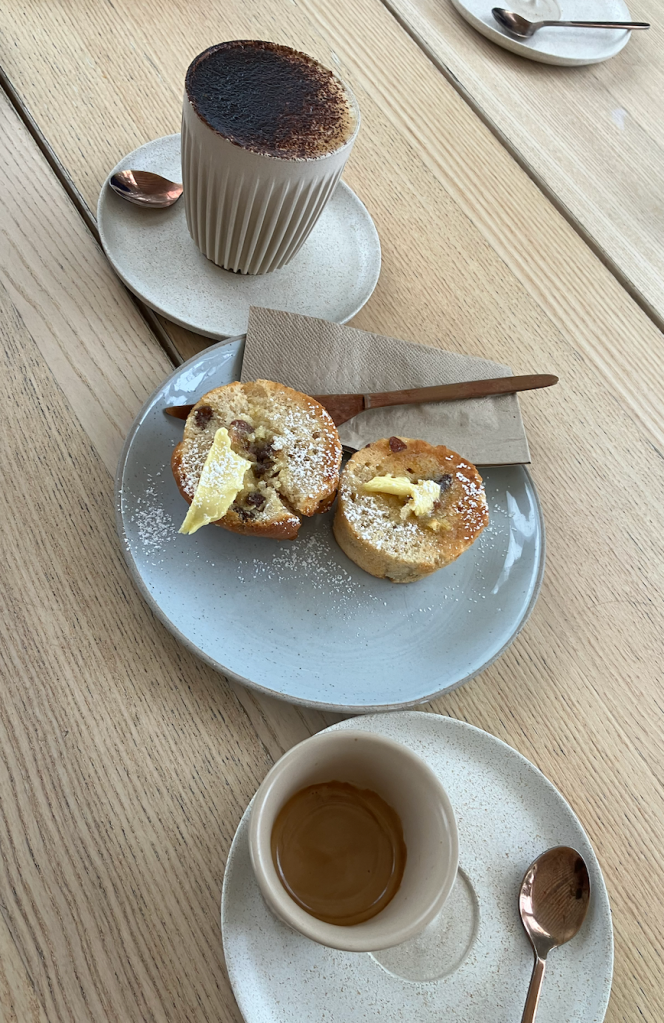
Among the items of truly quality foods and drinks is the Short Black, a bracing, rich, black-as-midnight cup of Joe. This is not a cup of coffee in the US sense. This is an adrenaline producing, full-throttle, vicious jolt of pure, visceral essence of the esteemed coffee bean, while died well on the bottom of my tastefully appointed cup.
I have been instructed that one should never drink more than four of these guys in a day. I fear I have been remiss- and at some point I shall pay for my many sins.
The Short Black calls, and I should firmly resist.
But damn, are they fine. The perfect compliment to the sunrise; a trusted companion to the rising sun in the north-east.
This has been a surprising revelation, the Short Black. I was unaware that the denizens of this fair land are harsh critics of substandard coffee.
After this, coffee in Midwest diners will be an abomination, I’m afraid.
I prefer simple things. I prefer inexpensive things. I prefer things that work.
This knife, a recent find on Amazon, combines all three things I like. I’ve been using this on the job over the past week, and I like it more and more. Usually, I prefer folding lock knives with a clip. They are very handy. But I saw this fixed-blade and it’s price, and I thought to try it.
I’m a fan of the Ka-Bar series of WW2 fame, but I find them a tad too large. Plus, they are expensive these days- it’s stupid, but I dislike beating expensive stuff, and work knives get beat.
This knife will take a beating. It is a full tang, quality steel knife with a brass riveted handle. This is the best- I’ve found that screws on knives always end up working loose, a real pain. These type knives last for a hundred years. They are simple, and they are good.
The sheath, while not totally awesome thick leather, is pretty good. It also holds the knife securely while you work- no worries about this falling out. Also, I prefer the pocket knife because fixed-blades tend to get in the way, especially when you are sitting down or getting in and out of a vehicle. This one does not. It was barely noticeable, a big plus.
Very functional, worth every cent. If you’re in the market for a fantastic work knife, give it a look.
Hey, all. I’m still basking in the glory of having sent the rough draft of Light’s End, my new alien invasion novel, to my editor. It was 112k words of fun, trust me. I think I started writing on it this past late summer, and it took some doing.
So, to celebrate, I’ve been catching up with violin work and manual labor over on the Hell Tree, previously mentioned in the posts below.
Guys, I’ve been really impressed with the 57 fiddles, named “57” because that’s how many dollars each one cost me. Please see the review post below for the full story. I’m still shaking my head at the scandal of it; fifty-seven dollars for a violin body of this quality. It’s ridiculous. Above, you can see the one I’ve decided to keep as a vacation/camping fiddle. It outshines my current camping violin, which I’ll sell to make room for this one.
I added some extras to the one I kept for personal use, including a fancy chinrest and Pirastro Tonica strings. A brief aside about the Tonicas: I’ve used many types of strings over the years, including D’Addarios, Red Labels, Infelds, Dominants, Fiddlerman, etc. For some reason, I’ve never used the Tonicas, but several months back, Fiddlershop.com had a sale; a set of Tonicas plus a good rosin cake for about 25 bucks. I couldn’t pass it up, so I bought the set. The strings sat until I had a good candidate, and I decided to use them on this 57 fiddle.
They are great! I love the feel and the sound; they’re worth every cent of 38 bucks, the going price for a set. One could make the argument that putting a mid-grade string on a low-end violin is like throwing lipstick on a pig, but I disagree. If the strings help this humble fiddle to sound its best, then so be it.
Because working together, they play very well!
I thought to share this project with you, because it’s turned out much better than I anticipated.
Before we get into a discussion about All Things Roxor, I’d like to say for the wider audience that I’ve submitted my latest manuscript to the editor.
Hopefully, I’ll get it back by early May for an anticipated mid-June launch. The book concerns my take on what an actual alien invasion could look like, and it’s ugly. Long story short, we’d be screwed at this point in our civilization’s development.
I wrote approximately 112,000 words, with a two-week sprint at the end during which I did nothing but write. This directly caused a slowdown in another vexing project I’ve been tackling for an elderly neighbor: the violent disassembly of a massive maple that inconveniently fell over on his lawn.
Well, he couldn’t clear it for health reasons, and I needed the wood. Therefore, we made an agreement, and two months ago, I set to work. Did I mention that it was frickin’ huge, sixty inches at its widest point and that my saw only has a sixteen-inch bar? It’s been something, and frankly, without the amazing Roxor, it would have been a crappier job.
No shade on the Maverick, because it would have handled the work, but the Roxor has made it easier. For one, it’s not a daily driver, so I have no need to put my tools away every day. I’ve simply left them in the Roxor’s bed, as seen in the image above. For another, while I believe in working my vehicles, it would have really sucked to hit a brand-new 24 Maverick’s painted sheet metal with a stray log thrown in by exhausted hands.
It happens, trust me. This is not a concern with the Roxor, which will never be traded in.
Finally, I guess you can call me a weenie, but the Roxor doesn’t care if you get in and out of it with muddy shoes or woodchips falling from my clothes into the interior. Woodchips are especially annoying on fabric seats and carpet—they stick to everything. The Roxor has vinyl seats and a dura-coated interior. No one cares about mud or chips.
It’s the perfect work implement for these sorts of jobs.
And did I mention the power of it’s diesel, or unfeeling drivetrain? The Roxor has both, and I’ve used the hitch endlessly on this job. See below.
This is an example of what I call “splitting day.” Because of my relatively small chainsaw bar size, I have to whittle away at the trunk one chunk at a time. The chunks have to be small enough that I can feasibly carry the blocks to the wood splitter, seen behind the trailer. This is no easy task, and it usually takes a few days of “chunking” before I have enough gathered to split and fill a trailer.
By the way, allow me to plug the Harbor Freight heavy-duty utility trailer here. It is the ideal trailer for these kinds of chores, and the Roxor really likes it. For a reasonable fee, anyone in the US can have this great trailer. Add a thick plywood floor and some side stakes, and it’s wonderfully versatile. But I digress.
The Roxor has been the ideal work platform for this enormous chore. A definite force multiplier, and every time I hit the key, it reminds me why I bought it.
If you consider a Roxor, remember it is far more than a “toy.” And I’d advise you to get the factory hitch! It’s an amazing, versatile vehicle.
At some point, I’ll write a piece about more of the mods I’ve done to this beast—slowly but surely, my vision of the Roxor’s end state is being realized.
The end state is that the Roxor is my mobile toolbox.
Hey, everybody. A riff today on one of my hobbies, some amateur luthier work. I especially like to bring out the performance on low-cost, but upgradeable, instruments. It really is amazing what a bit of TLC and attention to detail can bring out of an otherwise sloppily manufactured, mass-market instrument.
By the way: BLUF, the instrument featured today is a BUY, but I can only vouch for this exact model, in this exact finish. Other violins I’ve encountered from this manufacturer you may want to pass on.
Here’s a bit I wrote earlier, elsewhere, with pics. Here goes, if your eyes haven’t glazed over already.
The bane of music teachers everywhere is the student who shows up with a Violin-Shaped Object, or VSO. While these instruments can be made to play, they usually cost far more effort than they are worth. A hard rule is that a quality instrument must have good materials and acceptable workmanship, period. You will not get an awesome, ready-to-play-from-the-box student-grade violin for under a hundred dollars. In fact, expect to pay at least four hundred dollars as a bare minimum, and I’d advise buying from a knowledgeable and reputable retailer.
Now that I’ve said that let me sing the many praises of this violin, available at an unbelievable price point. I have a minor passion for violins; an outgrowth of this is exploring low-cost options. Not everyone has four hundred dollars, and I think music should be available to everyone. When I saw this violin on sale, I ordered it. Upon examination of the first one, I was so impressed by the base fiddle that I ordered two more, and to my shock, they were better! Very handsome, quality wood and the standard of manufacture was better. I’ll have to do far less work with the other two, as seen below.
See the nice, genuine spruce tops. Not plywood, as so many other fiddles at this price point.
And… the pretty, two-piece maple bottoms! It’s a scandal that these sell for this money, and that many end up in closets for eternity, doomed by poor fitment. It doesn’t have to be this way.
First, I am familiar with Cecilio products. I’ve owned and worked on a number of them. Therefore, I knew this violin was a fairly safe bet, but it would need fitting to perform well. However, I needed to examine the specific model. The description said the violin was made of ebony, spruce and maple. The pictures seemed to confirm this, although I doubted real ebony on a sub-hundred dollar violin. Importantly, Cecilios usually have real purfling- the inlaid wood strip along the edge of the violin’s plates. Very inexpensive violins have painted, decorative purfling. Also, poor-quality violin bodies are made of plywood. You should avoid this- it affects the tone. In addition, I know Cecilios have full-length bass bars, an internal tonal feature. These are essential. The profiles aren’t perfect, but they are adequate.
I mention this because you can’t fix plywood bodies, fake or absent bass bars, and painted purfling. To make an instrument playable, you have to have a firm foundation, and this is non-negotiable to me.
The instrument arrived, and I unboxed it. As I expected, the case was serviceable, and it protects the instrument well. The factory strings are inferior. They are guaranteed to make the fiddle sound terrible. I discarded them immediately. If you buy one of these violins, order Red Labels with the instrument if you’re on a budget, or D’Addarios for a few dollars more. I’ve had problems with the factory tailpieces, so I installed a new unit that is about nine dollars- a carbon-fiber unit available on Amazon (note: if you get this, be sure to prep the tailpiece by putting a tiny dab of bearing grease on each screw. Yes, you can reuse the nylon gut from the factory tailpiece). The bow is OK. It will work, although you must trim a few stray hairs with fingernail clippers. Be sure to rub the hair down with rosin dust before use. Please ensure your hands are clean when you do this. Also, as expected, the fingerboard is painted, which is a shame because there is some really nice tropical hardwood under the flat black paint. However, it does not affect play, so it doesn’t matter that much. The chinrest is serviceable. It’s painted maple. See below for how it looked when it arrived. This is typical of Chinese factory violins.
Then, I closely examined the essentials—the body, the stuff that dictates whether you have a violin, or a VSO. This includes the top plate, the neck, the bottom, the bass bar, the finish, and the purfling.
I was very impressed with the core instrument at this price point. I’ve seen much more expensive instruments with inferior materials! Before I talk about the many deficiencies in this violin’s fit and finish, let me list the positives. See the images below; one of the pics was made upon project completion after I tuned, adjusted, and cleaned the violin. Wow! It turned out amazing for a sub-100 dollar fiddle! You can see the mildly flamed, two-piece belly, the tight-grained spruce top with yes, real inlaid purfling, and there is a picture of the peg box- excellent maple! I liked the core instrument so much that I ordered two more! The pics of the fitting problems, and there were a few, were of the worst of the three. If you order this instrument, you may get those problems, but it’s not necessarily a given.
Look at this pretty belly! A sub-$100 fiddle shouldn’t be allowed to have this genuine mildly flamed, two-piece maple prettiness, but it does. YES, it is real maple, not veneered plywood—you can see the grain from the bottom through the F hole on top, as opposed to the White Ply of Death.
Now, check out the wood on this peg box! (You can also see the AWFUL factory work on the nut, which is the worst of the three fiddles I ordered. Yes, I fixed it. I’m getting there.)
Finally, a photo that shows the REAL purfling, although I took it to demonstrate careless handling at the factory.
Long story short, the bones of this model fiddle, the stuff you can’t improve, are solid. All three had vast space for improvement.
So, let me tell you what I did to this little fiddle; if you order one, you may have to do something similar, too. But not necessarily; 2/3 of the violins of this exact model were marginally acceptable. One was not. You’ll see pics.
I think this violin is best for someone who isn’t afraid to tinker or wants to learn how to do violin work for themselves. This is an ideal platform for that; the basis is solid and excellent.
However, let’s talk about what I had to do to make this runt of the litter sing. One violin had a terrible saddle; it’s the ugliest (new, not worn antique) one I’ve ever seen. However, it’s functional, so I left it alone. See below.
Previously mentioned was a weird crushed point on the upper right; this probably happened at the factory. It’s cosmetic, not a show-stopper. See earlier image. Of course, the sound post was incorrectly placed and crooked; I had to trim and reposition it. While adequate, the bridge profile needed some fine-tuning, and I fit the bridge feet properly, too. A peeve of mine is that all three violins had perfectly good bridges, and most of them were ruined because someone at the factory didn’t know that the long-grain side of the bridge was supposed to face the player. Most of them were cut backward and will have to be discarded. A shame. I mentioned how I ditched the factory tailpiece. You should, too. The (blackened maple) pegs fit all right, although I did slightly ream out the D-hole. I used peg soap on the pegs and reinstalled them.
Then, there was the nut, the little block of wood by the peg box that holds the strings at a uniform distance from one another, and, importantly, holds the strings very slightly above the fingerboard. Slightly? Yes. The E string is supposed to be .3mm above the fingerboard! That’s really close- see the images for how the nut looked from the factory.
Yes, this is not good. More like 2mm on the G, as opposed to .4! And what’s with the wood putty boogers? Sigh.
This spacing isn’t good, either. By the way, it’s not nearly as bad as some nut spacings I’ve seen! Still, it’s inadequate.
The nut was terrible, but believe it or not, I’ve seen much worse. I had to work with a string gauge, a file, and sandpaper to get it close to right. You can see the before-and-after images. The nut was the worst part, but it’s OK now. If you do this, be VERY careful with your file. One slip, and you need a new nut, which is a pain.
Out came the file…
…And, the improved nut profile. Not perfect, but much better.
The long list of adjustments I just discussed should be perfect on the aforementioned four-hundred-plus dollar music store instrument, and it darn well better have good strings.
However, the total cost of this fiddle, including new strings and tailpiece, was less than a hundred bucks. At the end of the process, it was pretty darn good!
If you feel like tackling a minor project to save money, or you want to learn how to do basic violin work, then this is hands-down the violin model for you. You can learn to do all the above by watching online videos, and there are only a few special tools required. These can be bought on Amazon.
By the way, it plays very well! This was the best part; this girl can sing!
This is a good model if you know what you’re getting into. Recommend.





 The Interstellar Valley