Combat Air Support

Unknown

So the USAF has been talking for many years about replacing the A-10 Warthog in the CAS, or Close Air Support role. They haven’t done it yet, for good reason- the A-10 is a killer, and nothing but. The problem with the A-10 is that the airframes are old and there is always more demand for the remaining aircraft than the Air Force can supply.

I was never lucky enough to get an A-10 “on-station,” for some weird reason we had B-1’s a lot, sometimes F-18’s and the occasional F-15E. And of course we had AH-64s as well, along with the odd drone or two. So in my past life I have had some contact with the guys and gals in the air who dropped the random odd bomb or fired the occasional Hellfire missile.

I like the CAS mission, the Air Force hates it. Why? It’s not cool, it’s not glamorous Tom-Cruise-on-a-motorcycle “pushing the edge of the envelope” crap. The job involves endlessly circling around in the air over ground troops who seem to be traveling at the speed of an ant with the prospect of absolutely nothing happening for weeks on end.

However, when the bored pilot in the air gets the call to head earthward, there are lives at stake- including the pilot’s. It’s a gut-wrenching, tough, precision job that has to be done absolutely right.

That’s why I was quite interested when I read on a random news article this week that the DOD is considering a new aircraft for the CAS mission, and I discovered that a really cool little bird already exists, the AT-6 Wolverine.

By all means, click on the link, Textron’s website does a much better job of describing the tough little aircraft than I can, and there are all kinds of pictures.

Here’s my take-away from looking this mean little machine over. No, it can’t dogfight, and you would be a fool to get into one with the AT-6. However, it would be great as a dedicated CAS bird, which is what it was designed for. It would do a far better job than the DOD’s stupid wet dream, the way overpriced and overrated F-35.

The AT-6 has all the stuff that grunts in contact want. It can mount .50 cal machine guns, shoot Hellfire missiles, drop 500 lb bombs and deliver all the right devastation in all the right areas. It has a turboprop engine (tops for reliability and survivability), great maneuverability and excellent loiter-time.

This thing is the field commander’s CAS dream. I wish there would have been one or two of these flying around overhead at some points in my past, and if I was still doing the job now I would definitely have a warm-and-fuzzy when one of them would check in with my forward air controller (known as a JTAC).

The DOD needs to pull their heads out of their posterior, forget about the stupid F-35 in the CAS role, and buy a zillion of these cool little birds for the price of one (!) lousy F-35.

But hey, the cool guys with sunglasses and leather jackets love the F-35, so no AT-6 for the grunts.

What a shame.

Admin note

Hey everybody. I will ruminate soon about some stuff, but today I wanted to tell everyone my broken list button on my contact and Facebook page has been fixed with a new newsletter service. For those of you who tried to sign up earlier, my apologies. Go ahead and resubmit, it should work fine now.

Promise that those who sign up for my newsletter will be the first to know about all things Jason.


Immolation, Excerpt One

An excerpt from the concluding novel of the Valley trilogy, Immolation.

Fall 2345, H-476, invasion plus three to four days

Paul slurped at ration paste, which tasted like cherries this morning. He studied the fallen tower before him. His battalion was still holding the northern side of the cordon around City A, and Second Battalion was continuing to “clear” the city. Occasionally, Paul would hear gunfire as soldiers found Harpy civilians. The story never ended happily for those unfortunates.

He had been more or less camped out on this spot for the past forty hours or so. His mission was to stay in place and catch “squirters” as Second Battalion rummaged around in the necropolis before him. This city had not been hit with an orbital strike, obviously, but it had suffered some damage from the very high winds that had circled the globe after the battlewagons had dumped their rocks on the planet.

More damaging still, though, was the ash that had spread like a cancer through the atmosphere. The heaviest particles had fallen out by now, but the days were still dark. Paul would only periodically catch a pale glimpse of this world’s sun. It was dark and dreary, and Paul wondered about the big question: when would the Harpies be able to fly again?

Looking at the sky, he figured it would be any time now. The day was noticeably brighter than when Third Battalion had dropped, and he didn’t have to run his defrost constantly to keep the ash off his helmet’s visor. He flicked it on only from time to time.

He was confident the flyers would come soon. But when? Only God knew, as far as he was concerned. The lack of action was making him nervous. He wasn’t used to sitting and waiting for days.

He heard the distinctive roar of an M-372 from afar. He queried his halo where it was coming from. In an instant, he had the answer: to his south, in the ruined city, over a kilometer away. A private in Second Battalion had fired at a flying Harpy. A search team had flushed it out of a tower.

Paul placed a call to Major Sergeant Woodrow, who was visiting Echo Company. “You hear that, Woody?”

“Yeah. I guess some of them are starting to risk a flight.”

“Yeah, that’s what I figured, too. I’d tell everyone to stay sharp, but they already fuckin’ know that.”

“Uh-huh. No reason to joggle anyone’s elbow; people know what’s up.”

“Sky’s clearer today. I bet we start seeing more of ’em soon.”

Woodrow grunted. “I won’t take that bet.”

“Yeah. Hate this cordon shit.” Paul decided to brave the stink and have his second smoke of the day. He thought his visor up, and the reek of dead Harpy immediately pounded him. With haste, he got a smoke and lit up.

Woodrow answered. “I dunno. Beats watching everyone fuckin’ die around you.”

Paul nodded and drew on his cig. “Damn right. This shit grates on my nerves is all.”

“Yeah. Seriously, though, it gets on the guys’ and gals’ nerves too. This shit needs to wrap up soon. Any word on that?” Woodrow was fishing for info.

“Nope. I can tell you what I see on my regimental schematic, though. Dunlevy’s saying that three-quarters of the city is clear.” Paul checked the schematic again. Sure enough, there was the “pie chart” of the city, with a statistic next to it in bold green: 76.2 percent.

Woodrow laughed. “That city is three-quarters clear like my ass isn’t hairy. Even though these new suits can climb like bats, there is no way seven hundred or so soldiers have checked every nook and cranny of that place.” He paused to laugh again. “I’ll bet most of them go into those buildings and sit around and play vids for a while.”

“No way for them to sham with a halo, Woody. But I get your point. We’re going to declare the city clear, and then the Harpies are going to fly right back in.”

An M-372 went off to Paul’s right. He threw away his butt and slammed down his visor. Another one fired, and then his fired too. It was set on auto, so his systems had seen the Harpies flying way before his weak human eyes could.

He shifted positions immediately, a reflex granted to him by the fighting on Brasilia. A soldier who stood still while fighting Harpies didn’t live to be a veteran. He sprang behind a structure filled with glass-like tubes and waited. While he waited, his M-372 fired again. He pulled up the targeting screen and looked at what he had shot. Dozens of Harpies were pouring out of a tower to his front, flying north toward perceived safety. Unfortunately for them, that was the function of a cordon.

Paul and his troops were part of a noose around the city. There would be no escape.

As he watched, the fleeing Harpies died. And then he heard it: the zing of a rail gun and the crack of an impact. One of those bastards was armed. More Harpies poured from the half-ruined tower; their flight was doomed by Third Battalion’s fire. One Harpy almost made it past them. She was shot in midair as Paul watched. Her body landed a hundred meters away with a wet thud.

Finally, the flight became a trickle, and then it stopped. The Harpies that flew toward Paul’s position were dead to a being. His incoming-rounds counter told him that the rail gun had fired three times, and its wielder was dead. None of his soldiers had been hit, whereas 121 Harpies died.

It was the type of trade that he liked—that is, plenty of them and none of his.

Putting the infantry out of work?

As many of you know, my books feature the Armored Infantry in combat in the 24th century. What this would look like would be humans encased in approx. 2.5m tall exoskeletons equipped with weaponry, supplies, armor, etc. They would be able to operate in all environments, carry very heavy loads, move fast and far, and shoot a variety of weapons better than the unaided infantryman. At this point, such powered armored suits are not available.

Something, though, tells me that people want this to happen. After all, humans are constantly looking for better ways of killing. The Armored Infantryman will eventually become a battlefield reality, I can almost guarantee it. Whether the suits are manned or unmanned is really the key question (I think for the foreseeable future they will be manned).

That’s why it peaked my interest when I became aware of the METHOD-2, a powered and manned robot created “for extreme environments” where humans might have some difficulty surviving. From what I’ve read, applications would be search and rescue, cargo handling, etc. But when you see an image of the crazy thing, its military applications are obvious as well.

And really, what better suits the description of “dangerous, extreme environments” than combat? From all reports, the METHOD-2 won’t be ready for combat or search and rescue work any time soon. Most videos I’ve seen show the robot attached to power leads. In the famous picture of Jeff Bezos in one at his MARS show you can clearly see that the machine is held up by chains. Of course, that was probably for safety reasons at a public venue. I do not doubt that the machine can stand.

For any type of practical work, the power lines and chains will have to go, obviously.

For me the import of METHOD-2 isn’t in its remarkable appearance or cool factor. It’s in the fact that people are paying a LOT of money towards research along these lines. It won’t be tomorrow, but machines like the METHOD-2 will be fielded in the future by both civilians and governmental organizations.

If the government fields such a machine, rest assured it will be armed.

No, I don’t see any lack of employment for the infantry into the future. What I see is an extreme enhancement of their ability and lethality through machines like the METHOD-2.

The Ripsaw

All,

“Immolation,” the final installment in the Paul Thompson military sci-fi trilogy, is proceeding through its paces with my publisher. Right about now the manuscript is being put through the copyediting wringer. In a couple of weeks, I will get it back with about a million track changes that I need to approve. You never know how bad your grammar actually is until you do something like this. It’s humbling. My cover design is also being finalized, I think it looks pretty cool. Whether anybody else does… lol, we shall see.

In any case, today’s blurb is about the Ripsaw, the coolest looking mini-tank ever. To see an image of this wild little machine, just click on the link above. Apparently, the little war machine can go about 60 mph and climb very steep grades. The engine is a 600 hp diesel, it doesn’t lack for power. It has the option of two operators. Note that I said option. This little tank can be remotely operated, as well. Pretty cool.

However, the US Army can’t seem to find an appropriate use for the little buggy.

Really? That must require a truly terrifying lack of imagination. As the article above states (the first half that you can read for free, anyway), uses proposed have been as an anti-tank platform, an ambulance, an ammunition hauler (amen, brother), etc.

I’ll go with a tank killer, although the other ideas are pretty good, too. Imagine mounting a Javelin and a .50 cal on this mean little machine. Holy crap, it would run rings around regular tanks, have a very low profile, and just generally be able to shoot-n-scoot. And it doesn’t even really need human operators. I’ll bet it costs a small fraction of what a regular tank would cost, too.

That’s probably why the Army hasn’t found a “use” for this little machine yet. Its potential scares the crap out of some people.

Yeah, I know I’d talk about Trappist-1, and I will. That’s just too juicy of a subject to not comment on- seriously, three planets within the goldilocks zone and only 39 odd ly away. But this caught my eye. That robot-thing Bezos was playing with did, too.

Write soon about both.


The PKM vs. the M-240B

wheatfields

There are a lot of things to discuss this week, one of the big items being the exciting discoveries in the Trappist-1 system, some 39 LY from Earth. Four planets in the “goldilocks zone” of a neighboring star, exciting stuff. For the millionth time, I wish we had some kind of feasible FTL transportation. This system is worth looking at, and in terms of interstellar distances, it is fairly close by.

But that’s not what I’m going to discuss this week, I will get to it soon. Today, I will lay out my subjective judgment on two of the most widely used general purpose-machine guns in use worldwide.

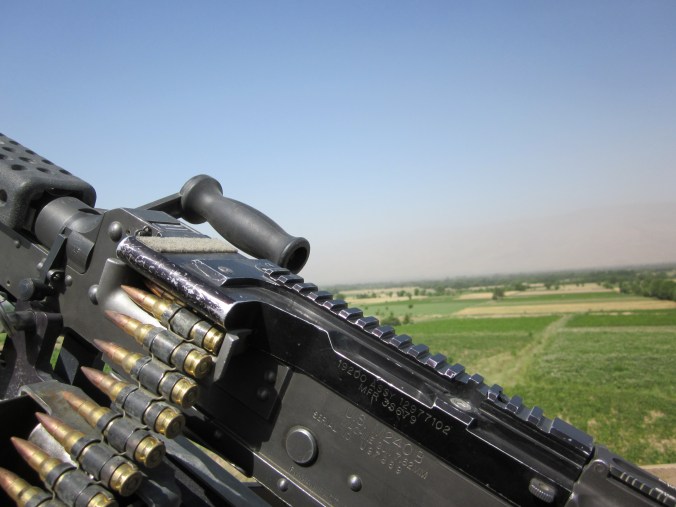
These two guns are the PK series machine gun, and the M-240B, also known as the FN MAG. Both weapons have been used extensively in wars and conflicts worldwide, and they are frequently used by opposing sides, but certainly not always. I have had the pleasure of being trained on the use and employment of both, and I have used both in combat operations.

I won’t get into mechanical descriptions of the two weapons. You can read about the PK here, and the 240B here. Instead, I will give you my subjective judgment on the two based upon personal experience.

First, impressions and differences. When you set the two weapons next to each other, the first thing you notice is the “tinny” appearance of the PKM and its relatively slender build. It has a cheap looking skeleton stock, the gun looks as if it would fall apart with heavy use. That goes to show you, however, that appearances are deceiving. The PKM is tough as nails.

In contrast, the 240B looks well-made. Its receiver is a bulky block; its furniture looks solid, heavy. And it is heavy- it weighs nearly 28 pounds. Trust me, the thing is no joke to carry over long distances. The biggest walk I’ve ever made with one was some twenty miles. I thought I would die at the end of that.

The relative weights of the weapons, 17 pounds (9kg) for the PK, and 28 (12.5kg) for the 240B, is an important subject. I will return to that in a bit. Needless to say, the 240 has more heft than the humble PK.

Also, the weapons feed differently. The 240B feeds left to right, belt “sunny-side (brass exposed in the links)” down. In contrast, the PK feeds right to left, belt “sunny side” up. Also, the 240B uses the NATO standard disintegrating link, while the PK uses the old-fashioned one-piece belt.

The rounds used are more or less as powerful as one another. The 240B uses 7.62 NATO, while the PK uses the 7.62x54R. If either of these rounds hit a human target, the results are dramatic. No lack of potency with either choice. Accuracy is excellent with the 240B, it is good enough with the PK.

Field-stripping of both the weapons is pretty easy, too. If you don’t do anything dumb, there are no small parts to lose or put in backwards. By dumb, I mean tearing down the feed-tray in the field. I knew a guy who did that once, and when he went to use his weapon (the 240B) the feed mechanism fell apart into tiny parts after the first shot. Springs and pawls went everywhere; the weapon was inop. A combat mission was delayed because the guy was overzealous and did something he wasn’t supposed to do. The feed-tray on the PK is much less prone to curious-soldier tinkering. However, if used properly, both do the job very well.

Older, widespread versions of the PK can’t mount optics, while the 240B does. In a fixed position, that’s a major advantage. The 240B is known as “an automatic sniper rifle” because of its inherent accuracy, and the use of scopes like the ELCAN make it so that you can drop a burst on a dime. Also, it’s nice to have thermals mounted on a 240B at night, it gives you a warm and fuzzy feeling to know that no one is sneaking up on you in your crummy outpost in the middle of nowhere.

So which weapon is better?

My answer is ambiguous. It depends on what you’re doing, really.

Here are my subjective impressions of the two weapons.

First, some background. I worked as an advisor attached to the Afghan Army once upon a time, we used a mixture of US and Warsaw Pact weapons- we used the NSV, DShKM and M2 heavy machine guns, the Mk19 grenade launcher, the 82mm Soviet mortar, the M-240B and PKM GPMGs, the AK-47 and the M-4 rifles, the M-24 and M-107 Barrett, numerous pistols, the RPG and an M-3 grease gun. We had a real mix of stuff.

As one of my additional duties was a vehicle gunner, I got to use a lot of this stuff regularly. Also, I was the lead US advisor to an Afghan rifle company and a bit of a jack-of-all-trades. So sometimes I rode, and a lot of the time I walked.

I think the PKM is a better weapon on a dismounted patrol (dismounted=walking). Why? It weighs ten pounds less! And it works well within 500 meters- past 500 you have a lot of trouble ID’ing targets, anyway. One pain with the PK is that you have a partially expended belt dangling from the weapon, but you can stuff the thing into a pouch or something. The weapon works well, it has a nice rhythm and is dead reliable. One night on an ambush I carried a 240B up the side of a mountain- I wish I would have brought the PK, instead. By the time I made it to our position at the top, those extra ten pounds were crushing me.

For fixed position work, the 240B is the best. It is very stable, very accurate, and has the side bennie of the optics that I mentioned earlier. If you put it on a tripod with a traversing and elevation (T&E) mechanism, it cannot be beat.

The weapons are tied when used in vehicular gunnery. As weight is no longer a problem in this application, either gun does the job. I do think that the PK is a tad more responsive when you swing it onto a target, but the 240 is more accurate so it cancels out. I’ve used both off of trucks, and both work very well.

Both weapons have good ergonomics; neither weapon has truly significant flaws.

Bottom Line:

Both machine guns are first-class weapons. They share a lot of plusses, but both have some different minuses.

The 240’s big drawback is its weight. However, its weight becomes a strength in a fixed position or in a turret- the extra mass makes for more operator control. Another drawback is that you must remember to disengage the safety before cocking it; otherwise you can jam the bolt up.

The drawbacks of the PK are that stupid non-disintegrating belt, and the barrel change is not as smooth as the 240. Also, older, widespread versions can’t mount optics, a definite disadvantage. Later versions can mount optics, though. I’d love to do a field test of the two weapons side by side with optics and fixed-distance targets to get a true apples-to-apples comparison. I never had the opportunity, though, and I probably never will. Out of the business, these days.

On balance, I think the 240B edges out the PKM. However, both are excellent, first-class weapons. In an ideal world, the soldier would have his or her choice between the two for different missions. However, one rarely gets those types of choices. My team and I simply had the luck to be able to choose from a wide variety of tools in the toolbox.

Soldiers in “line” outfits get what they get. But if the choice is either a 240B or a PKM, then either way the soldiers have a fine machine gun.

You don’t want to be on the receiving end of either.

Immolation

Hey, everybody.

I’ve been in a flurry of motion with the finalization of the final book in The Valley Trilogy, Immolation. I started writing in December, finished the rough draft by mid January. Then I put it out there to my crew of Betas, who did an awesome job of tweaking the product. I set an internal deadline of 15MAR17 to have the completed manuscript ready for submission to my publisher.

I am pleased to report that it’s ready for submission, all 94866 words of it. Going off of past experience, the publishing process will take several months. My company will design a cover, lay the book out in both print and ebook format, and put the script through the wringer of professional copyediting. At the other end of the process will be a shiny new book with my name on the cover, and the Valley Trilogy (and Paul Thompson’s tale) will be complete. Barring some unforeseen disaster, the book should be available NLT June.

Not sure yet where I’m going in the future, but there are some intriguing prospects out there. We shall see.

Keep an eye peeled for excerpts from the book and other stuff.

Limits

As we stood around and Pete shared his tales of Ranger School between swigs of Natural Light and the occasional tobacco-laced gob of spit, the thought struck me that everyone has his or her limits. That applied no less to an elite soldier like Pete. We had both seen those physical and mental boundaries in training and in combat.

Napoleon said “Poverty, privation, and misery are the school of the good soldier.” By those measures, Pete was an excellent soldier indeed.

Each phase of Ranger School brought new forms of punishment. Pete started at Darby, at FT Benning Georgia, where there was a five-mile run, the Army Survival Water Test, and a twelve-mile ruck. Then his class moved on to desert phase where they did “long walks between objectives.” Then they moved on to mountain phase where they did rappelling and mountaineering. Finally, there was Florida phase, where the students would finish in the swamps.

“The purpose of Ranger School is teaching people to lead in a combat environment. Because you can’t put them in combat, you take away their sleep, and you would take away their food to put everyone on edge.” He paused and continued. “People get like zombies.”

“You try to stay awake, but you’re asleep, and you don’t know you’re asleep.” Sleep was the enemy, being caught sleeping could result in flunking out of the course. According to Pete, the worst times were when you were laying in the prone. However, he was quick to add that he had fallen asleep when kneeling, or even standing or walking. “I’ve seen people fall asleep, and fall onto the ground… they’d stay asleep, after they just fell over.”

“I had started down the zombie path.” Pete was on a patrol base, pulling security. “Somehow I fell asleep. When I woke up, I was standing in the middle of a road.” This meant big trouble for Pete. He was outside his perimeter without his weapon, position unknown. “I had no idea where I was. This was an oh-shit moment at Ranger School.” He went on to say that if he had been missed, he was “fucked.”

Pete started walking up the road, and the endless ten or fifteen seconds he walked before he saw other Ranger students was “terror.” He had no idea how he had gotten to where he was, and he was frightened by what had just happened. Eventually, as low-key as he could, he found some guys from his squad, located his gear and weapon, and went back to pulling security as if nothing had happened. It was a close call. “I didn’t get caught.”

Pete mentions that they called his class the “Sunshine Class,” because they didn’t get rained on until the last phase, Florida phase. Then the rain started. “And I mean rain,” Pete says with emphasis. “In Ranger School, you’re not allowed to put on that poncho you’ve been carrying around with you in your rucksack, because the RI didn’t say you could.” It was November, and it was cold. “It sucked. You’re laying there in the prone, and water is running down the crack of your ass.” Pete was sick of lying there, soaking wet, with a thousand other places he’d rather be. A lightbulb went off in his head. He had a trash bag in his ruck, everyone was required to have one. So he got his out and put it on under his t-shirt, no-one could see a thing. He began to warm up, his misery factor ticked downwards slightly. “I was snuggly warm, like a hug from your mother.”

“People noticed what I had done.” Before he knew it, lots of people were putting on trash bags underneath their clothes. He didn’t care, “I didn’t think it would go bad.”

But it did. That night, as the students were getting into boats to paddle down a river, a Ranger Instructor was giving the students a hard time. He bumped into a student, and he heard the noise of a trash bag rustle beneath their clothes. He grabbed the student, heard the trash bag, and said “What the fuck?” The RI realized that everyone probably had the unauthorized trash bag beneath their clothes. He started grabbing students by their shirts, and if he heard the crinkle, he singled them out for punishment.

Pete knew he had to do something. Something that no-one wanted to do was to jump in the cold water first to paddle the boat. Pete really didn’t want to face the punishment that the increasingly irate RI was threatening, so he jumped in the water and swam to the back of the boat, unscathed and undiscovered. “I got away with it, I didn’t get caught.” He managed to get the trash bag off in the dark, he left it in the river.

In desert phase, “You would start moving as soon as the sun went down and the rattlesnakes came out.” The students would walk twelve to fifteen klicks, fully loaded, to an objective. Then they would walk to the next one, over and over again. Pete could hear singing in his head, he thought he was losing his mind. The walking was endless, he was bored and a little bit crazy by the end of it.

Florida phase seemed to have made the biggest impression on Pete, he came back to it again. The surging ice-cold swamp water made an impression on him, “you were in it continuously.” One night they were in chest deep water again. The RI that accompanied the students called into range safety (called “Watertown”) because the students had to build a rope bridge. Range safety called back and said that the students weren’t allowed in the water, it posed a real hypothermia risk. “Motherfucker, I’d been standing in chest deep ice-cold water for hours!” Pete said.

The RI was in trouble, and he knew it. He marched the students up on to a dry road, and they crossed the river via a permanent bridge. Pete’s toenails had mostly fallen out, but one that had not was partially loose and was digging into the toe next to it, every step was agony. His feet were bleeding.

The Ranger Instructor told the students they could turn on their “Ranger TVs.” That meant they could start a fire, one fire per four students. He needed to bring everyone’s body temperatures up. It had been a close call.

Finally, Pete had another bad experience with a rope bridge. He got volunteered to swim the rope across the river and tie off to the tree on the far side. So Pete jumped into the November water with all of his gear and a rope tied around his waist. He successfully managed to tie off, and he stood by. That’s when he heard that Watertown had again forbidden the students from swimming; it was too cold.

Pete was pissed. He was soaking wet and bone-cold; he had made the swim for nothing. He heard the RI call out. “Ranger, swim back over here. We’re not getting wet tonight.” Pete was furious. He told the RI to “Fuck off.” Pete had lost thirty pounds when he had come to the school with none to spare. He was at the end of his endurance. The RI didn’t care. Pete lost the argument; he had to swim back.

In the middle of the river, “he couldn’t do it no more.” His platoon had to pull him in by his rope, they fished him out of the scummy swamp creek like a drowned rat.

On another occasion, a carelessly tossed artillery simulator blew him out of an inflatable raft, with ringing ears and a headache he was at least relieved of the duty of paddling the boat.

By the time he graduated, he was “one scrawny, starved, smelly Ranger.”

Pete had discovered his limits, and he had learned that while the limits were real, one could always find that little bit extra that would help you cross the finish line.

Pete the Ranger showed back up at Ranger Regiment with a Ranger tab sewn to his uniform, he felt like a “god.”

Thus concludes Pete’s Ranger School tale.

More to follow from Pete.

Ham Slice

5365047

After giving the overview of Ranger school, Pete took another drink of his favored brew, Natural Light. He topped off his tobacco supply and continued.

First, a little explanation of terms and concepts is needed for the layman. A lot of Ranger School consists of establishing patrol bases and moving from one point to another. A patrol base is essentially a place where soldiers camp in a tactical environment. When a mission comes down (a raid would be a good example, or an ambush) some soldiers leave to execute. Others remain behind. The soldiers that go forward to do the mission travel to an established Objective Rally Point (an ORP) where final preps are made before the raid or ambush. Once the preps are finalized at the ORP, the mission gets done.

There are a lot of steps involved in the process that I have roughly outlined above, and at Ranger School the students are graded on all of them mercilessly. Also, it cannot be emphasized enough that this stuff gets done at all hours of the day on barely adequate sleep and with a daily maximum caloric intake of 1200 (that’s a typical MRE, or one US Army ration pack. A soldier should be supplied with three MREs daily- but not at Ranger School).

“After a mission you would return to a patrol base, and usually it was in the middle of the night or early morning.” The Ranger Instructors or RI’s would change shifts, and the next nightmarish day would begin. “While this was happening a lot of stuff would derail at Ranger School. An instructor would come in who was pissed off at his wife or kids… that would usually play in to how much you were going to get fucked with that night.”

“So we were in Florida Phase of Ranger School, the final phase of the school, and everyone was tired and worn out.” According to Pete, it was a dark night, with no illumination. “Someone was fucking around at the Patrol Base.” He went on to add that they had been in the woods for weeks, and that everyone’s sense of smell was heightened, in addition to being ravenously hungry. The student Platoon Leader was trying to make things happen at the Patrol Base for that night’s mission, and things weren’t going well.

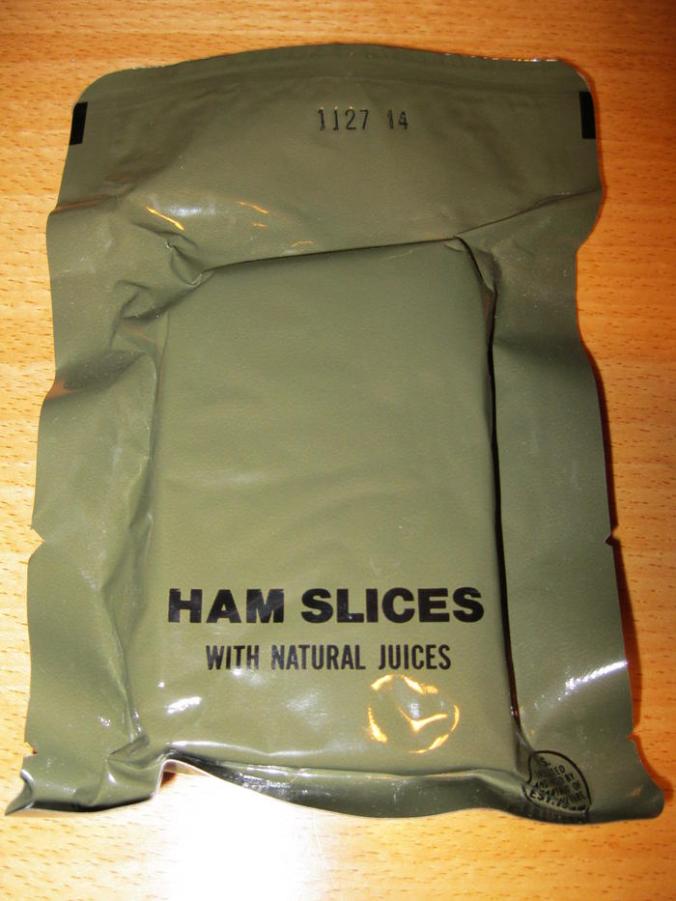
Someone opened a ham slice MRE while he was trying to brief for the evening’s mission. Everyone could smell the tasty treat due to the aforementioned sharpening of the senses. The student Platoon Leader got pissed off and started to yell. “Who’s eating the fucking ham slice!?” The RI who was present called out. “Hey! This is a tactical situation! Everyone needs to maintain tactical whispering! The enemy could be anywhere at this point, and if you’re yelling out, then you’re wrong, Rangers.”

At that point, someone in the Patrol Base called out. “Fuck You!”

Pete laughed at the memory. “You have to remember that this wasn’t the millennial generation yet, yelling that to a RI was a pretty risky move.”

The Ranger Instructor was angry. He whipped out a huge Maglite, and shined his beam towards the twelve o’clock position of the Patrol Base.

“Who said that!” he demanded. He swept his beam around, trying to find the student who had sworn at him in the brush.

As soon as he called out, another disembodied voice shouted in the pitch dark, this time from the six o’clock position. “I did! Fuck you!”

“Like a dumbass,” the RI turned and swept his beam to the six o’clock. “Who down there said that!”

The words had barely left his mouth when another voice called out from the nine o’clock. “Fuck You! I did!”

From all directions, the “fuck you” chorus came in. The RI was definitely pissed. “Out came the artillery simulators,” Pete recalled.

As an aside, an artillery simulator is a fairly powerful pyrotechnic device (a quarter stick of M1 dynamite) that produces a loud whistle and heavy “bang.” The blast can definitely injure someone who is too close by; care must be used when they are thrown.

At Ranger school, they were thrown about like candy. Their use signaled that a position had been compromised.

Well, after being defied, the RI decided that the student’s position had been compromised, and he would pay them back. He started throwing the artillery simulators around and “everyone had to pack up all their gear and rucksacks in the dark.” The students had to hasten to their alternate patrol base in the swamp. They had to crawl and run several kilometers through chest deep water and heavy brush. It was a bad experience; no one got any sleep.

However, Pete thought things balanced out. “Several students got away with yelling fuck you to a Ranger Instructor.”

I asked Pete if he was one of those students. Pete smiled a shit-eating grin and answered.

“Yes.”

And then he laughed his ass off.

More follows, readers.