Thanksgiving gift- Family pumpkin pie recipes.

Hey all.

I thought to repost a series I did in 2020, because it’s relevant to the season.

Below are four posts regarding traditional pumpkin pies, and a blow-by-blow guide to how to make them, based on old family recipes. As in, really old. In one case, Civil War era.

So- here they are again, released from being buried beneath the weight of a hundred other posts.

Enjoy!

More later.

-J

The Maternal Line

My mother, pictured above. The final link in the maternal line.

I have a bit of a different story for you all today. You see, I stand in awe of the knowledge that is transmitted through families, if only we keep an open ear.

Today I’ll tell you of my quest to chase down an ancient family recipe, and the odd chances and turns it took to be preserved.

I’ll cut to the chase. The recipe was transmitted by the woman pictured below, Imo. But it was her great-grandmother’s, name unknown.

She gave it to her daughter, Alice.

Alice is who I turned to for help in 1999, when my mother-in-law needed a recipe for pumpkin pie from scratch. I remember calling her. I said, “Grandma, how do you make a pumpkin pie from fresh pumpkins?”

She said “I don’t know. I always used canned pumpkin.” A pause. Then she said “I think I have a recipe from my mother, who got it from her grandmother.”

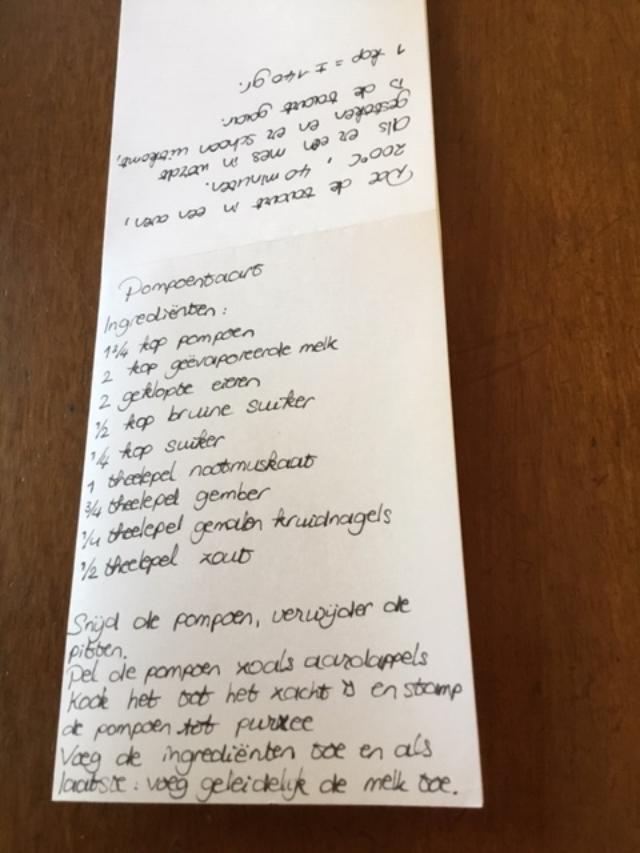
My Great-Great-Great Grandmother! Civil War era, at least. She read it to either me or my wife, not sure who. My wife translated the recipe into Dutch, then she gave it to my mother-in-law. It looked like this:

My mother-in-law baked the pies, we ate them. They were good, but they were really unlike any other pumpkin pie I have had before or since. Something about the proportions, maybe? But they were not as sweet as the modern pumpkin pies by far.

The years went by, I forgot about this incident, although I never quite forgot those lovely pies. Alice, my Grandma, died in 2016 after a full and very long life.

Fast forward to this, the year of the plague. I put in a big garden, and I ended up with ten pumpkins.

What, what to do with fresh pumpkins?

And then I remembered. My maternal line’s pumpkin pie recipe. I asked my parents if they could find it. Well, they found a recipe in my Grandma’s handwriting, but I didn’t think it was “it.”

See below.

In my Grandma’s careful hand, and undoubtedly old, but not the very old recipe she read over the phone to my wife.

Was it lost?

Then I thought to call my mother-in-law. Did she still have the recipe?

It didn’t take long for her to find it; she sent me an image of the recipe in Dutch. Fortunately my wife had transcribed the proportions in the old English measurements back then. All I had to do was convert the recipe back to the original language.

Via a very irregular method, it was saved. This one tiny chunk of knowledge from deep time, back a long way on the maternal line.

Today, readers, I am very glad to be able to share this recipe with you!

It makes a pumpkin pie that is different from the modern, store bought ones.

Here goes, from my family to yours!

What else has been lost? So much. But this little jewel was saved.

Enjoy!

1865 vs WW2 Pumpkin Pie, Part One.

Hey, all. It’s a dark, cold and rainy day over here, so the time has finally come to try out my Great-Great-Great Grandma’s Civil War Era pumpkin pie recipe.

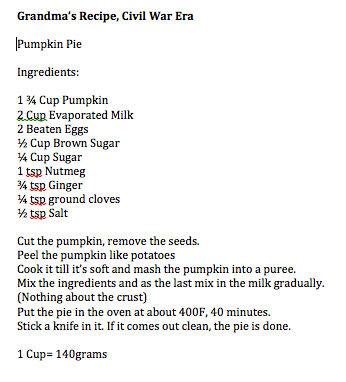
See the recipe below.

As I looked this recipe over, I did not doubt its provenance. It is old. Why would my Grandma say the recipe came from her mother’s Great-Grandma when it did not? She wouldn’t have. However, I was struck by the use of evaporated milk; I wondered when that ingredient came into widespread use. A simple Google search gave me my answer; evaporated milk became widely available in 1885. So my guess is that the recipe was modified for evaporated milk around 1890 or so.

Not such a big deal. Further research indicated that people used cream in pie-making before evaporated milk, so in the pie I am attempting today I substituted cream for evaporated milk. This is how it would have been made around the Civil War or earlier.

For those who had no milk cow, or did not have a subscription with the milkman, I can see why evaporated milk made sense. Shelf-stable and cheap. We really do take things like fresh milk for granted; this was not a given around the turn of the twentieth century.

But I’ll bet cream tastes better. We’ll see. If this pie tastes like I remember from twenty years ago, it’ll be different. Different in a good way.

OK, so let’s get down to brass tacks. How do you make a traditional pumpkin pie?

First, the pumpkin must be selected and prepared. We can skip the selection process because this came out of my garden. It is a Sugar Pie Variety small pumpkin, an heirloom seed type. I don’t mess with hybrids.

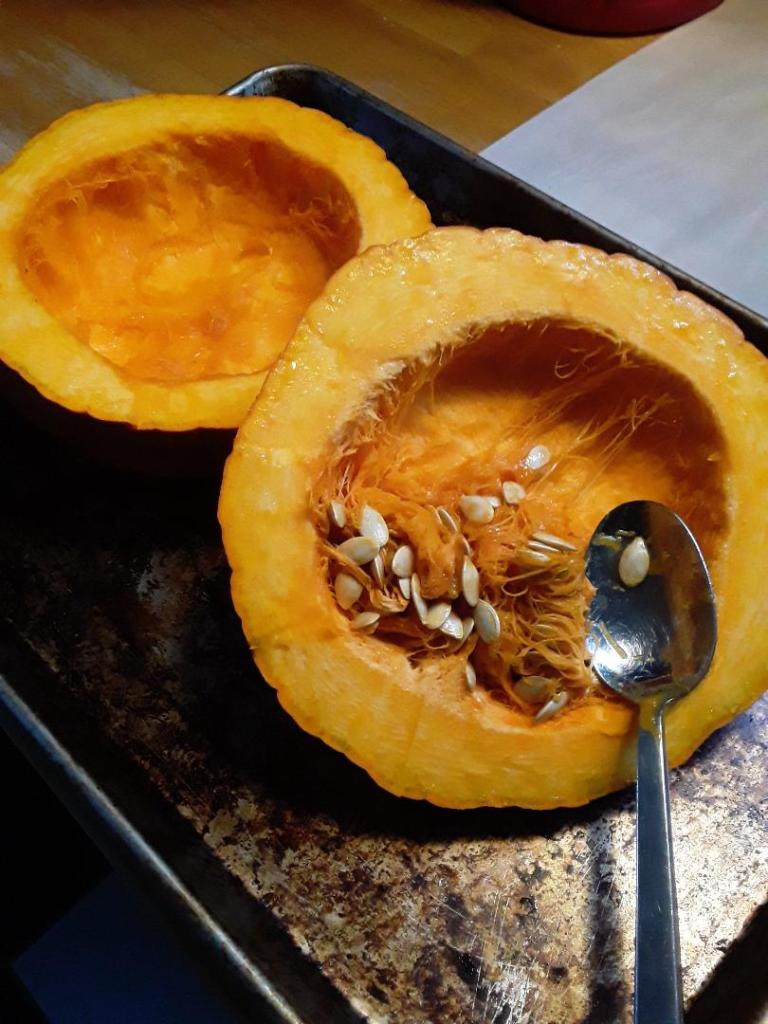
Split the pumpkin in two as shown. Pumpkins are tough, use a sharp knife and don’t cut yourself. Grab a stiff spoon and scoop out the seeds and strings. If you want, save the seeds for roasting or next year’s planting.

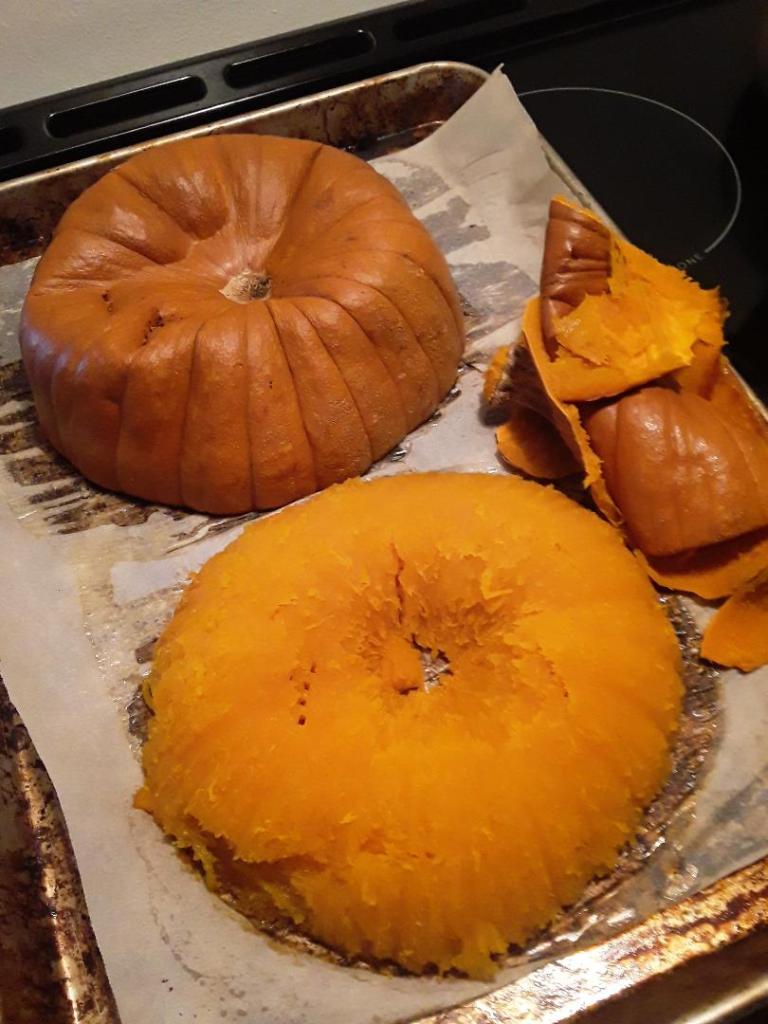
Once the pumpkin is cleaned out, grab a cookie sheet and put a piece of parchment paper on it. Place the two halves of the pumpkin on the sheet as shown. See why you must use a smaller pumpkin?

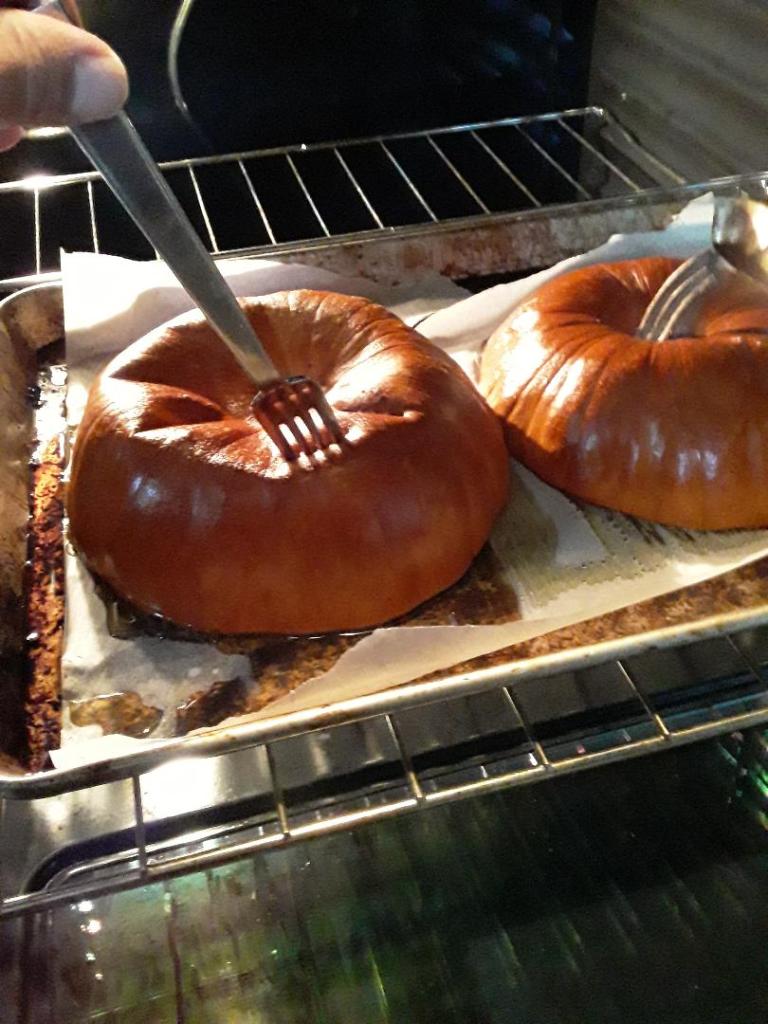
Preheat the oven to 400F (205C). When it is hot, place the pumpkin in there for about forty-five minutes.

You’ll know it when the pumpkin is done. A fork will stick right in. This would have been difficult in a raw pumpkin. Take the baked pumpkin out of the oven and let it cool down.

Note how the skin easily pulls away from the cooked pulp. This is desirable. See below.

The pumpkin at this point smells pretty good. If you’d like, grab a chunk and eat it; it should be slightly sweet with a hint of caramel. One eight inch pumpkin will give you a plate full of pulp.

Now you need to process the pulp into a puree. You can do this the old-fashioned way, or be like me.

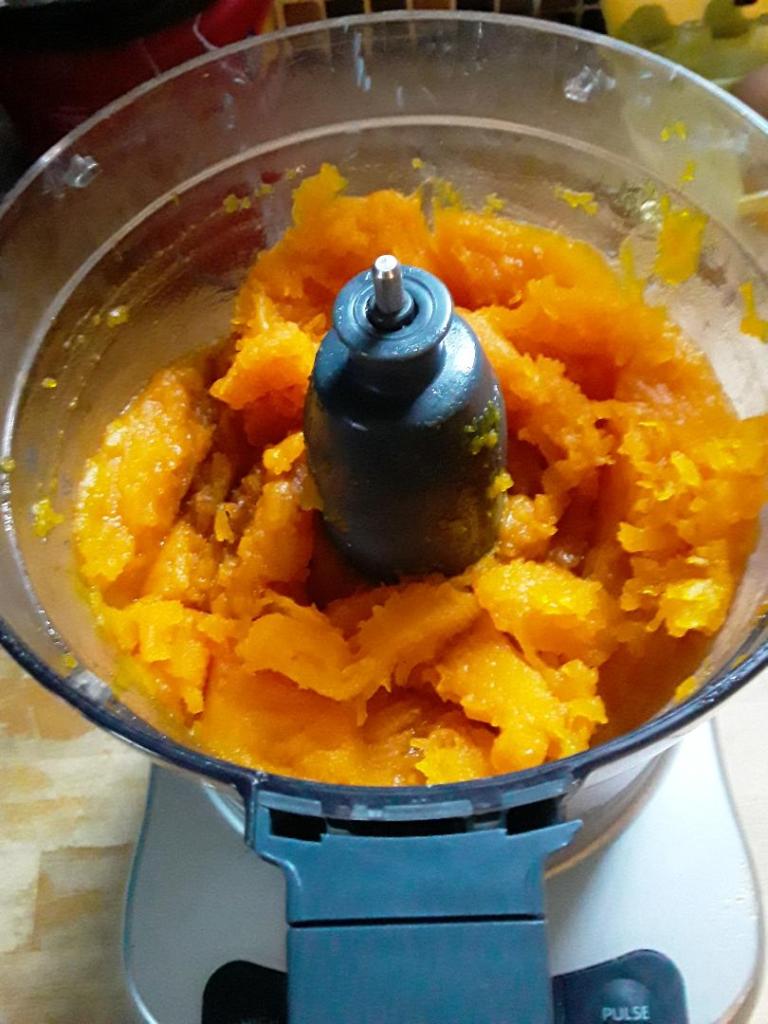
Jam that sucker into a food processor and hit “fast.” A minute or two later, and your fresh pumpkin is as fine of a puree as that gunk from a can. But yours is fresh. In my case, I remember planting the seed. There’s a certain satisfaction in that. See below.

There you go. This is what you were after when you picked up that little sweet baking pumpkin from the farmer’s market. Bright orange, fresh as heck, caramel-smelling pumpkin guts.

This. This is what the baker wants. This is what leads to delicious pies. Hopefully; I am a real novice. In any case, the eight-inch pumpkin yielded five cups of usable puree. According to the recipe, this is enough for a little less than three pies.

I want to do two pies, so this is good.

One pie will use the 19th century recipe; the other one will use Grandma’s WW2 era recipe.

The recipes are different; to lower the number of variables I’ll use the fresh puree and cream in both and I’ll see which my family prefers in a taste test.

All I’m waiting on now is for the chickens to lay some eggs.

Waiting on eggs? Yeah, seriously. With the approaching winter the chickens have gone into their fall molt and egg production is down.

But that’s OK. I’ll stick the puree in the fridge.

All good things come to those who wait.

Stay tuned…

1865 vs. WW2 Pumpkin Pie, Part Two

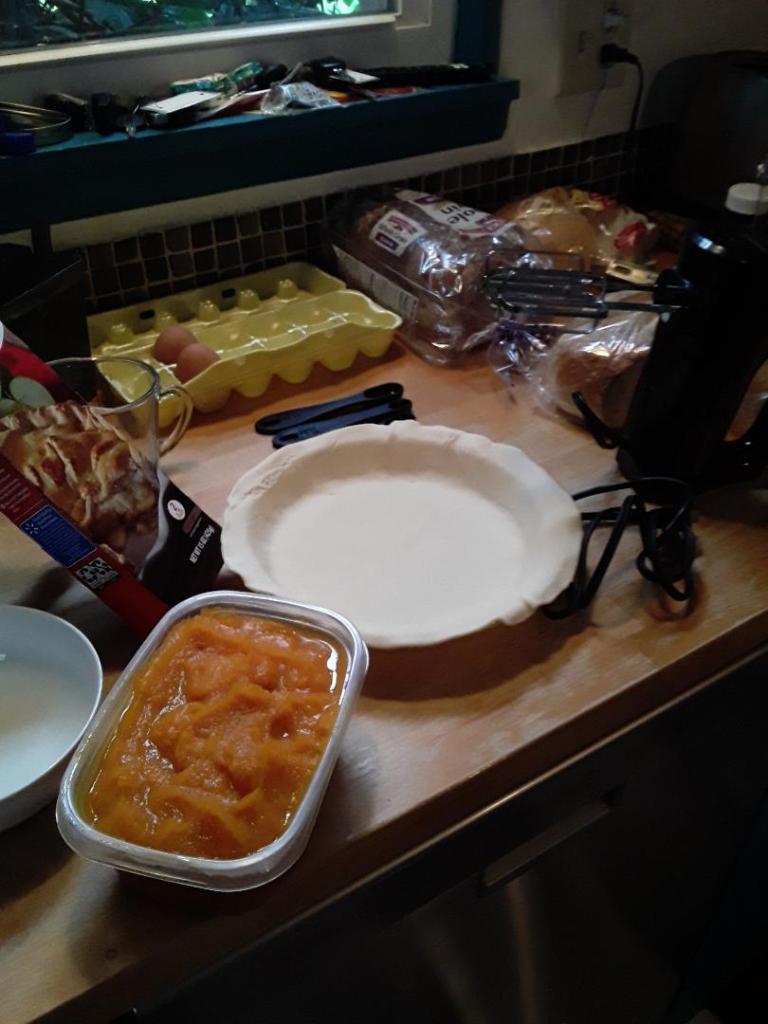
Alright, so above you can see the ingredients for the pie prep, as you may have noticed I wimped out and bought a pre-made Walmart pie crust. Way easier. I used a Pyrex pie plate, lightly buttered. Then I got all the ingredients ready. I put the eggs in the mixing bowl first and I whipped them with the hand mixer. Then I added the puree, followed by the sugar and spices. Last, I added in the cream as the mixer ran. This pointer came from my dad, who said Grandma did it that way.

So I followed his guidance faithfully.

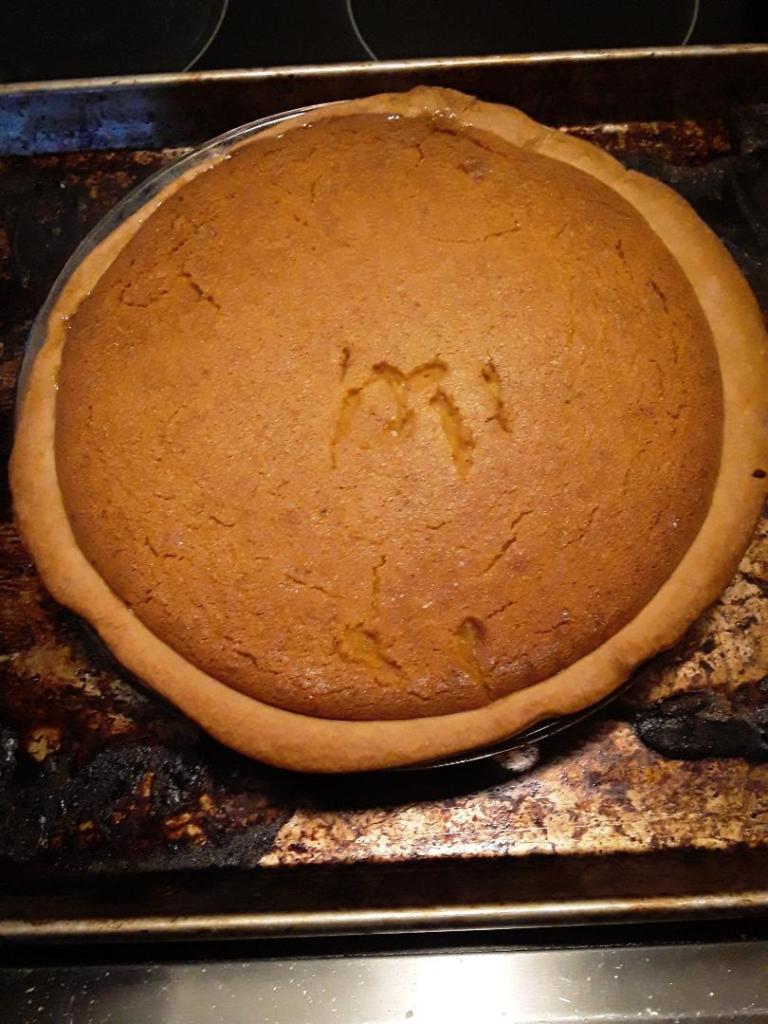
The end product fit almost perfectly in the pie form, with maybe a quarter-inch of wastage. Not bad for a 150 year old recipe! One thing that struck me immediately was the honey color of the batter. I am curious how this will translate to the color of the finished product (turned out fine).

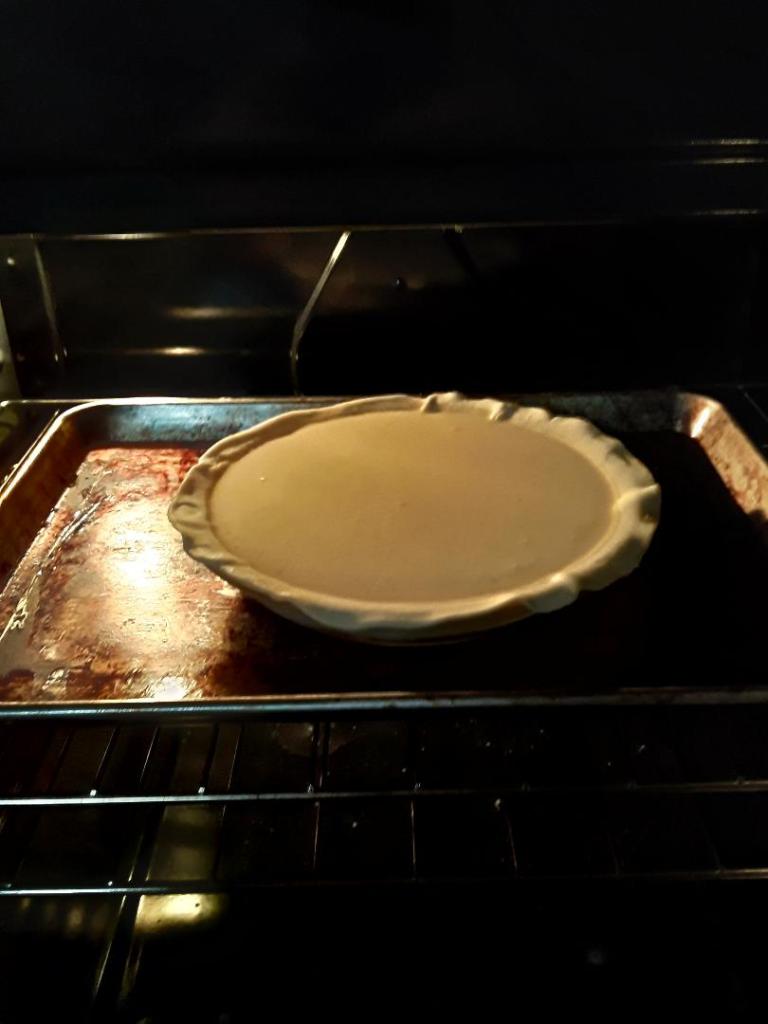
Into the oven it went, preheated to 400F. I ran it for fifteen minutes at the higher temperature, then I reduced it to 350F for thirty minutes. At thirty minutes I gave the pie the “knife test” i.e. if you stick a knife in it and the knife comes back dirty, then go another five minutes.

Well, the pie was definitely not done yet, it still sloshed. So I set the timer for another fifteen minutes and decided to check it every five minutes. Lesson learned? This old recipe has some serious weird mojo, my dad was shocked when I told him it took a full 25 extra minutes to bake; maybe the old recipe was optimized for wood stoves. It wouldn’t surprise me.

This is what I saw at the end of the process.

It seemed to look and smell OK… I allowed it to reach room temperature.

It was time for the dreaded taste test as the evening’s dessert.

How did the Civil War pie fare?

Well, as soon as the pie cooled I decided to try a piece before the fam. Just in case it was dreadful, you know. Well… here’s my report.

I’ve eaten a lot of pumpkin pie over the years, and this one was a different breed. Different in a good way. I can’t put my finger on it exactly, but maybe it was because it was all fresh ingredients, with the eggs and the pumpkin sourced right here on this little patch.

There is no better way of describing the pie than to say it had a distinct nutty flavor, underlain with a rich creamy texture. It really does seem as if fresh cream is a shining star in this recipe, along with the just-picked-and-baked pumpkin itself.

Nothing was particularly overpowering, but I think it could have done with a bit less nutmeg. Maybe a tiny bit less. Surprisingly, the Walmart crust was excellent, it was just right and blended well with the pie. Crispy, but not too much and definitely not mushy.

As I stated above, it surprised both me and my dad how long this sucker stayed in the oven, but in my opinion it was really worth it.

The recipe stands as written, the “excessive” two cups of cream and all.

Whoever came up with this recipe really knew what the hell she was doing. I can’t take any credit at all; all I did was followed the departed woman’s measurements and proportions. Also, I didn’t freak when the pie took much longer than we had figured, and don’t sweat it when it rises like a soufflé.

Very, very good. Actually, one of the best I’ve ever had. Seriously.

This was a good experience.

Next up is Grandma’s gem from World War Two.

I plan to use fresh pumpkin again, and cream, just so that this is an apples-to-apples comparison.

Stay tuned. More soon.

1865 vs. WW2 Pumpkin Pie, Part Three.

Today I’ll be baking another pumpkin pie, this time using the 1940ish recipe listed above, in my Grandma’s own hand.

See below. This is Alice, around the time the recipe was written.

I won’t go into the particulars associated with making this pie as my methodology will be unchanged from the last pie, see part two of this series.

There are four constants:

  1. The fresh pumpkin filling, baked and prepared yesterday.
  2. Land O’ Lakes cream.
  3. Straight from the coop eggs.
  4. The Walmart pie crust.

Here’s what is going to be different. Grandma’s recipe uses an additional egg, as well as less milk/cream. Also, she made the brown sugar/white sugar proportions identical, and she used different spices.

And that’s going to be a big difference in this pie. She wrote a note on her recipe about substituting cloves and ginger for nutmeg, I am going to do as she suggests for the following reason; Dad says she never used nutmeg in her pies as long as he knew her, since 1972 or so. (when I did the substitution for nutmeg I used 1/4 tsp each for ginger and cloves. It worked fine!)

So I’m going to try to play this straight. I’m curious if the pie turns out similar to the pies I remember throughout my life; she baked past her ninetieth birthday.

I do not doubt that this pie will taste and cook differently from the Civil War pie.

Let’s see, shall we?

Using the same method as described in Part Two, I stuck this in the oven.

It could be my imagination, but this pie mix seems to have a more orangish cast. Probably because there’s a hair more pumpkin in the recipe, 2 cups (16oz) as opposed to 1 3/4. BTW- that eight inch pumpkin had exactly enough puree for two pies! Be sure to conserve puree- I barely had enough.

I’m curious about a lot of things with this recipe, not the least of which is taste. How will the cooking time be affected? How rich will it be? Will the heavy dose of cinnamon stand out?

All there is to be done now is to wait.

A surprise- if anything, this pie took longer to bake! Here’s what my cycle looked like as I did it- I checked the pie with the knife method after 45 minutes. Shouldn’t have bothered- it wasn’t close until about an hour and ten minutes on 350F. 15 @ 400, 30 @ 350, 15 @ 350, 5 @ 350, 5 @ 350, 5 @ 350, 5 @ 350, 5 @ 350, 5 @ 350, 2 @ 350. So in total 77 minutes at 350, as opposed to half an hour.

An observation- don’t bother to poke it while the center is still cratered.

Finally, the pie was done (hopefully).

Here’s how it looked after it cooled a few minutes.

This pie looked a little different from the 1865 pie; perhaps a darker shade of brown-orange and a more porous look. I think that might have to do with its higher egg content. Maybe.

Proof’s in the pudding, though. After this cools, I’ll sample it and write it up.

So I had two pieces.

That really says enough, but I’d like to go a bit in depth. The WW2 pie is definitely sweeter, less exotic tasting than the 19th century pie. Its taste is more in line with a conventional product, although I must say that if you use your own pumpkin, fresh eggs and cream you will get a superior pie. Both recipes make that clear.

My two cents? Both of these pies are excellent. I give a slight edge to the 1865 pie, though, because of its originality and the way it makes its ingredients really shine. Grandma’s pie, while awesome, is just a tad too sweet. However, if I would not have had both pies readily available, I would have never noticed.

And my family? They prefer Grandma’s pie because of the sweetness.

So it’s kind of a toss-up as to which pie is better.

Clear take-aways-

  1. Fresh pumpkin kicks the crap out of canned.
  2. Go with cream over evaporated milk. I get why they used it years ago, but cream is better.
  3. Nutmeg, while not overpowering, makes a real difference.
  4. Walmart ready-made crusts rock!
  5. If you have access to them, get quality free-range eggs. Better yolks, happier chickens.
  6. Less is more with sugar.

Final reflection- I am really glad I tracked down these recipes and did this. Also, now that I’ve set them on the internet, they will live forever.

In some small way, this is a tribute to my Grandma, a kind lady who lived a long and meaningful life.

If you get a chance, try these recipes this Thanksgiving. For my friends in Australia, try to source a genuine North American pumpkin and put something unusual on the table this summer.

Cheers! J.

Leadership

The United States has had some amazing leaders over the years.

Our luck has run out.

This is why I haven’t been posting or getting a lot of stuff done. I’ve been in a funk. Some has been personal, much has been political or conflict driven. We are in for some major challenges, and I am unconvinced that the US or the broader West has leaders up to the tasks ahead.

What do I mean.

It’s simple. First and foremost, in Gaza and Ukraine we are watching the future of warfare, and our possible futures, unfold. This is ugly as hell. Years ago on this site, I gave you all a heads-up about the ramifications of drone warfare in combat, and in my fiction I explored and extrapolated the lessons I learned overseas.

Well, the drone warfare I encountered in the desert wastes was a joke compared to what is happening now. Look at what cash-starved Ukraine is doing to the Russian Navy in the Black Sea. Is the USN taking note? They damn well better be. With cheap sea drones the Ukrainians are sending very expensive ships, including at least one capitol ship, to the bottom of the sea.

Tanks and infantry are suffering heavy losses. Unsustainable losses, although the First World War demonstrates that there is a lot of damage that a country can sustain before its army refuses to fight. Note to our sclerotic, votes, and largesse dependent weapons industry- play time is over. The whole peace dividend thing was the purest bullshit, and Europe in particular is realizing how badly they’re exposed, although we aren’t far behind.

Once again, the windmill I tilt at- we need the infantry Armored Fighting Suit, married to drone tech and battlefield AI. Which leads into the next point.

Land mines. Does anyone who is carping about the Ukrainian’s lack of success realize what a hellscape the Russian Army has made in Ukraine? The mine densities are said to be five mines per square meter, for hundreds of kilometers, in belts twenty klicks deep. Let that sink in. Nasty little plastic bouncing betties like the POM-2, and it’s evil, seismically activated little brother, the POM-3. And that’s just the anti-personnel stuff, and only a few of many types.

Anti-mine treaties are great and everything, but the Russians, and other bad actors worldwide, laugh their asses off about them. Also, the Ukraine War just launched a beacon to the world- if you really don’t want to lose territory, plant a shitload of mines. Fat chance that some poor bastard in a heavy kevlar suit with a mine detector is going to make a dent in the Surovkin belt- first, the mines are made not to be detected by a conventional detector. Second, the mined area is usually loaded full of junk and shrapnel. Third, any Army Engineer will tell you that a minefield not covered by fires will not stop maneuver forces. So, guess what? The minefields are covered by fires. A guy with a machine gun who wants to kill you. Finally, minefields don’t look like manicured football fields. No. They are anything but. The damn mines are everywhere, hidden amongst weeds, shrubs, dirt clods, you name it. For fifty years, a sizeable percentage of Ukraine is lost. Worthless. Unless you feel like every kid in a given village dying within a month, multiplied by hundreds of villages.

The only help here is the armored fighting suit, aided by AI. Which we will need anyway, because some dumbass tech-bro is no doubt working on the Terminator as we speak. Humans are bad enough, if we let the machines fight our wars we are incredibly screwed.

We need clear leadership in military terms. Instead, we have more of the same throw money at it bullshit. Guess what? It’s not working.

Second point where we need real leadership, and leadership isn’t there. Our politics. Wow, if you would have asked me ten years ago about the surreal crap we’ve all seen these past years I would have laughed.

I’m not laughing now. What a mess- I’d say “unprecedented,” but that’s overused. We’ve never been up against this before- our two Presidential current front runners are inadequate to the task, to put it mildly. They should both clear the decks for people with less baggage and a couple less decades. Being President is tough, two guys born in the 1940’s with excellent chances of dying in office, probably at the worst possible moment, is undesirable.

Which brings us to leadership, and the sucking vacuums where leaders would otherwise sit in various capitols in the West. Here are some negative examples to watch out for, and avoid, in proposed leaders:

-Blame others. A leader accepts responsibility for what happens on his or her watch. You can delegate tasks, but not responsibility.

-Set different standards for different groups. This is a sure-fire way to cause resentment among the ranks.

-Engage in needless name-calling. A leader sets himself above the fray, and sets a positive example for his followers. Examples matter! People will emulate your behavior, for better or worse.

-Overindulge in personal luxuries. This makes a leader vulnerable to accusations, baseless or not.

-Have exceptionally low moral standards. I am hardly a Puritan, and we are all human. But if you lay down with dogs, you are going to catch fleas. This will bite a leader, sooner or later.

-Have zero integrity. If you send men to die, or you ask a nation to follow you into battle, they need to believe that you are telling them the truth. I am not so stupid as to state that a leader must always be honest- deception and subterfuge are a key part of battlefield leadership. Make no mistake, our leaders are also commanders. No President hasn’t killed someone, or millions of someones. But when you speak to your people, you need to be straight when it matters.

-Engage in hypocrisy and projection. People usually see right through this. Ever notice how liars despise liars, or cheaters accuse everyone else of cheating? Don’t do it.

-Fail to live a life of courage. Bullying is not courage. It is the opposite.

-Believe in nothing, to be a nihilist. If you have no basic set of principles to adhere to, you will justify anything. Your followers, who do believe in something- you– will follow you right over a cliff. I used to wonder why Germans kept fighting for Hitler after the war was plainly lost. I no longer wonder. Fanaticism paired with nihilism is a deadly combination.

-Fail to form a cohesive team. A leader gets as many people as possible, from as many different backgrounds as possible, to work toward a common goal.

-Have no sense of mission. A leader must see the mission and work toward the mission, even to the detriment to his well-being. Because the mission comes first.

-Kiss up, and kick down. A version of bullying. Don’t do it.

-See your opponents as enemies, incapable of honest disagreement. A leader sets himself up for failure if he doesn’t understand the opposing side. Disagreement is fine. Demonization is not.

-Makes excuses. Day One of Officer Candidate School or Basic Training: “There is no excuse. Only failure.”

-Have no guiding vision, only an eye for personal gain.

-Fail to recognize that loyalty goes both ways.

So, that’s as many as I can think of right now, I’m sure there’s more points. I’m not saying that leaders should be perfect, infallible beings. Just that they meet some minimum standards. If they do too much of the above, look elsewhere.

Because leadership matters.

For a lack of it, we are going to get our asses handed to us.

This is my fear.

Hit Send.

Hey guys.

A quick update from my rural perch.

As you know, I have a few irons in the fire. One such iron I’ve put on the back burner, but my Patreon crew has had access to it for quite a while in rough draft form.

This would be STORY2, “The Storyteller’s World,” book two of what is probably my least commercially successful series, but a space-opera universe that I really like. Therefore, I will publish it, caution be damned. Even if it’s a money loser, I don’t give a shit.

So, around a ton of life distractions, I managed to compile and edit the final rough draft just now. Some 76,000 words, which is a typical book length for me.

It was fun getting back into the world of Joe Johnstone, and seeing what happened to him on this latest and bravest of humanity’s new worlds. I’d like to think I did an OK job of imagining what it would be like, to drop into a hostile world. To see things for the first, and try not to die from accident, predation, or a simple lack of food.

But about twenty minutes ago, I hit “send,” and away it flew on the internet to my editor for one of the last stops before publication.

Wow, am I glad I finally pulled my head out and made this happen.

Now, all I have to do is a LOT of writing to get INVASION1 to a similar state for the Christmas reading season. I said at the beginning of the year that I wanted four titles out in 2023, and it is still feasible.

Something tells me, however, that there will not be four titles next year. It’s a fairly punishing schedule. The saga isn’t over yet, but I’ve made a clean shot at meeting my goals for the year.

Next year- who knows?

The Mahindra Roxor

Or is it a WW2 Jeep?

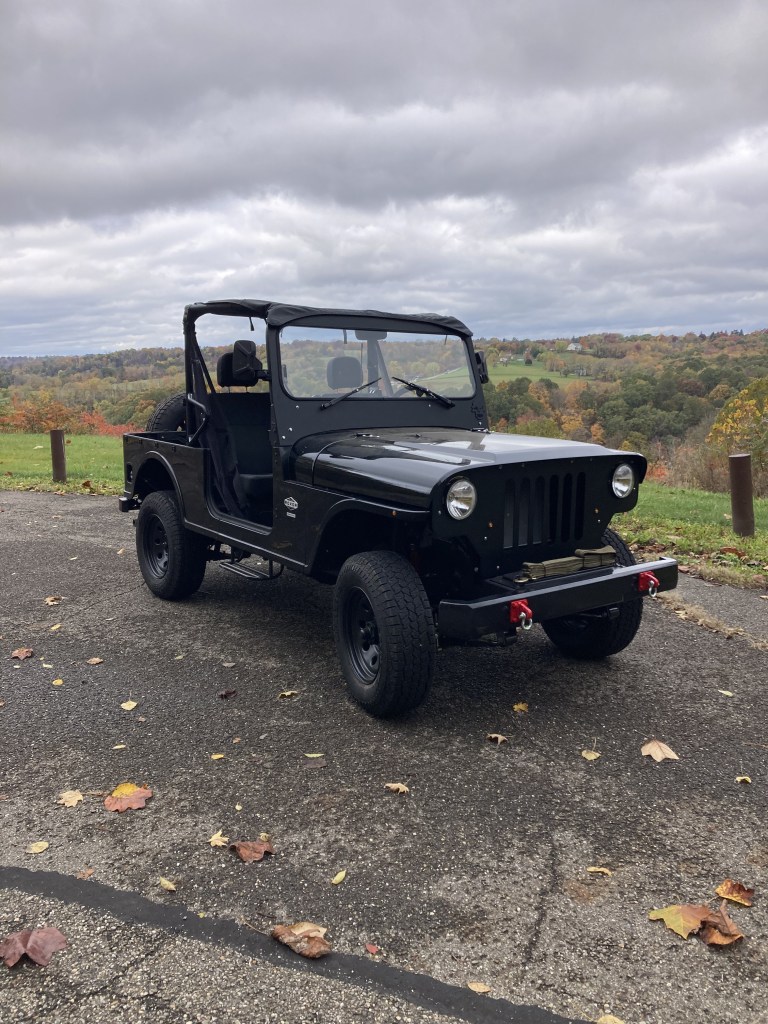
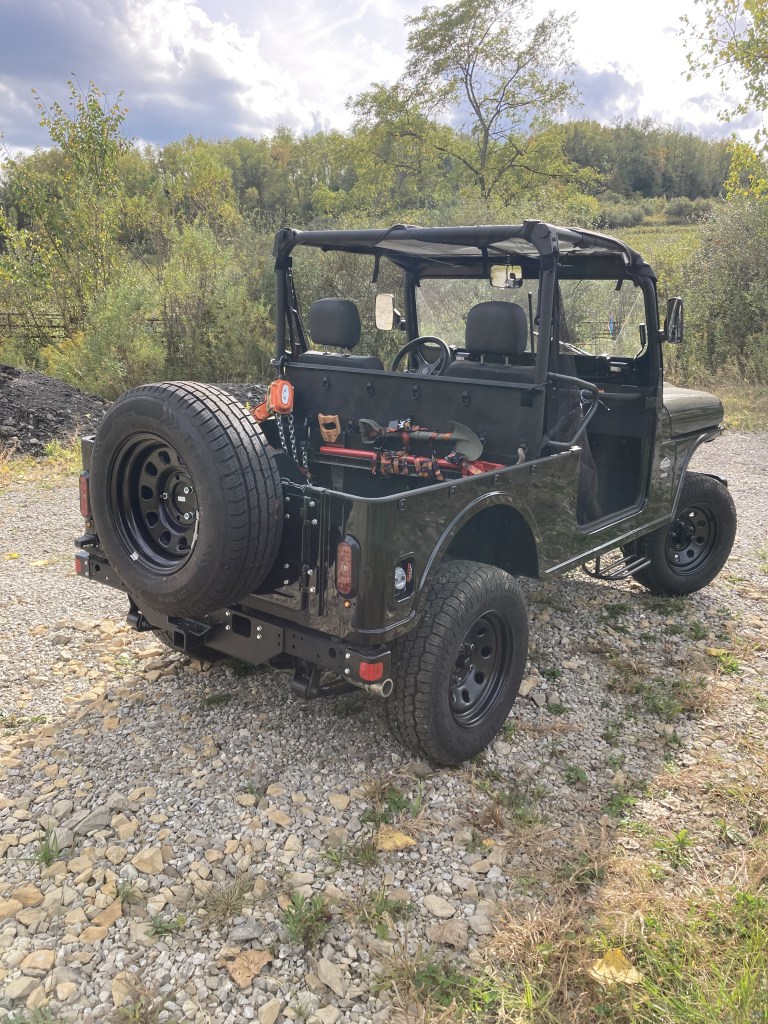
Good question, actually. Think of it as the old WW2 Jeep, but with some modern must-haves, like a reliable engine and five-speed transmission. Plus a digital speedometer/tach, the roll cage is kind of nice, and seat belts are a plus. The old Willys didn’t have that stuff, and the five-gallon gas tank was under the driver’s seat. Kinda dangerous. So, there was room for improvements in the original design, and Mahindra made them.

But the good parts they left alone. Rugged design. Honest steel construction. Ridiculously steep gears- 5.38’s, with a low and hi range transfer case and Dana 44 style axles. Needless to say, this is not a highway vehicle, and neither is it intended as one. This wagon was most comfortable driving around at about 40 mph in fifth gear, 2WD. Sure, it would go faster. But why? As an “under-speed utility vehicle,” this guy can’t be operated on limited access highways, anyway, and its legal top speed is 35 mph.

Once again, not a highway vehicle, and not intended as such, either. No, this is an off-road beast, with its only paved miles being back roads to get to local trails and forests. Once you appreciate the Roxor for what it is, you can see what a freak it is- a throwback to an earlier generation’s craftsmanship and ruggedness.

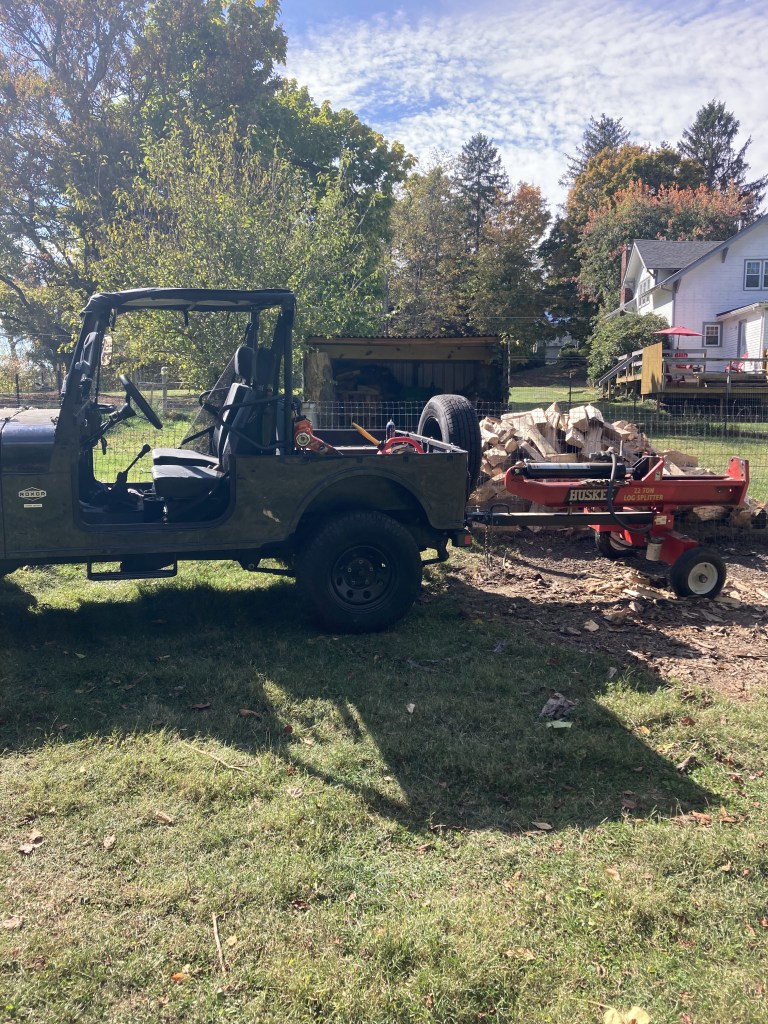
Guys, I’ve gotten some work out of this wagon. Observe.

This was the Roxor’s first chore- a dead elm that had crushed my pasture fence. You can’t see it in the pic, but this is seriously steep. Without the Roxor- a really crappy job. The following pic gives you an idea of the hole we worked in.

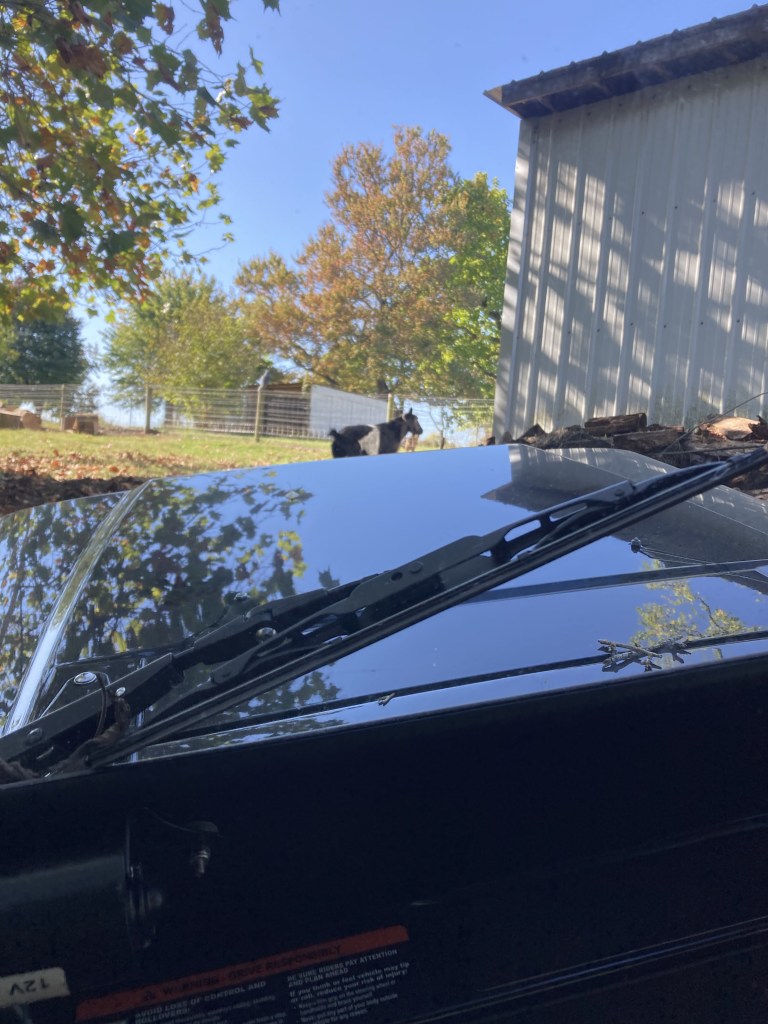
It was a big tree, and the job took a couple of days. It didn’t help when I was climbing out of this spot, at the worst possible moment, one of my goats decided she needed to be right where I was driving. Well, I didn’t want to run her over, so I had to back up and try again. This is a lot steeper than it looks- without the Roxor’s crawling ability, it would have been a no-go.

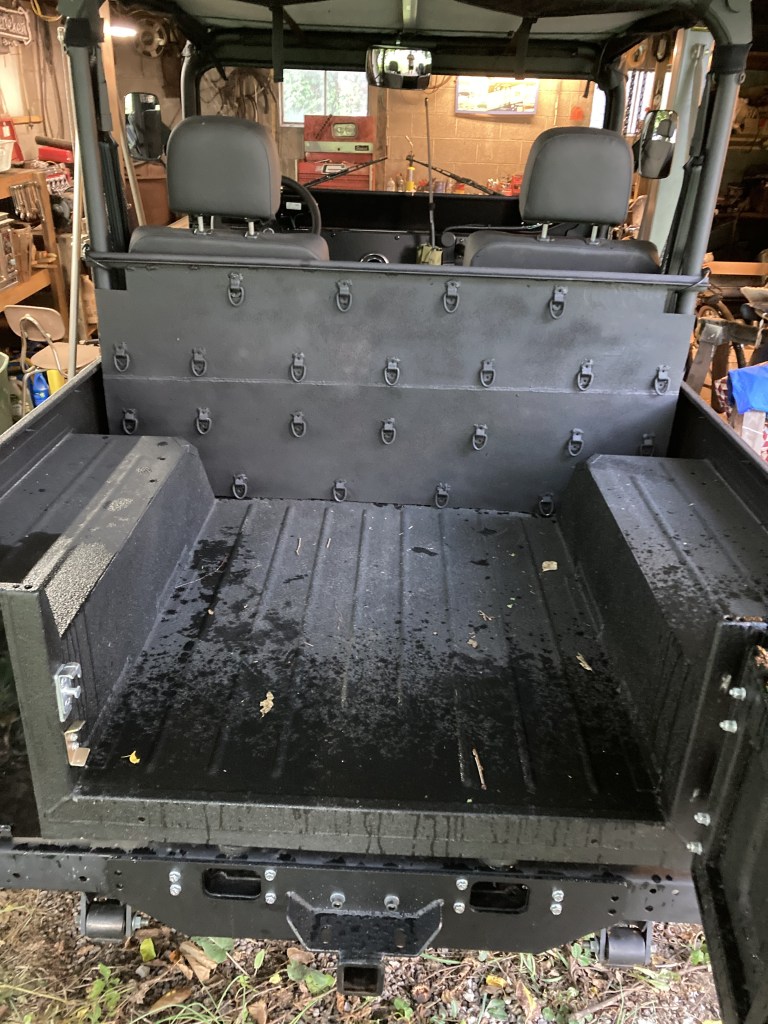
Before I did this job, though, I put a lot of thought into what it would take to make the Roxor trail worthy, and a worker, as opposed to a toy. Looking at the original design, some mods had to be made. One was a means of protecting the seats and keeping stuff (like logs) from rolling around in the crew compartment.

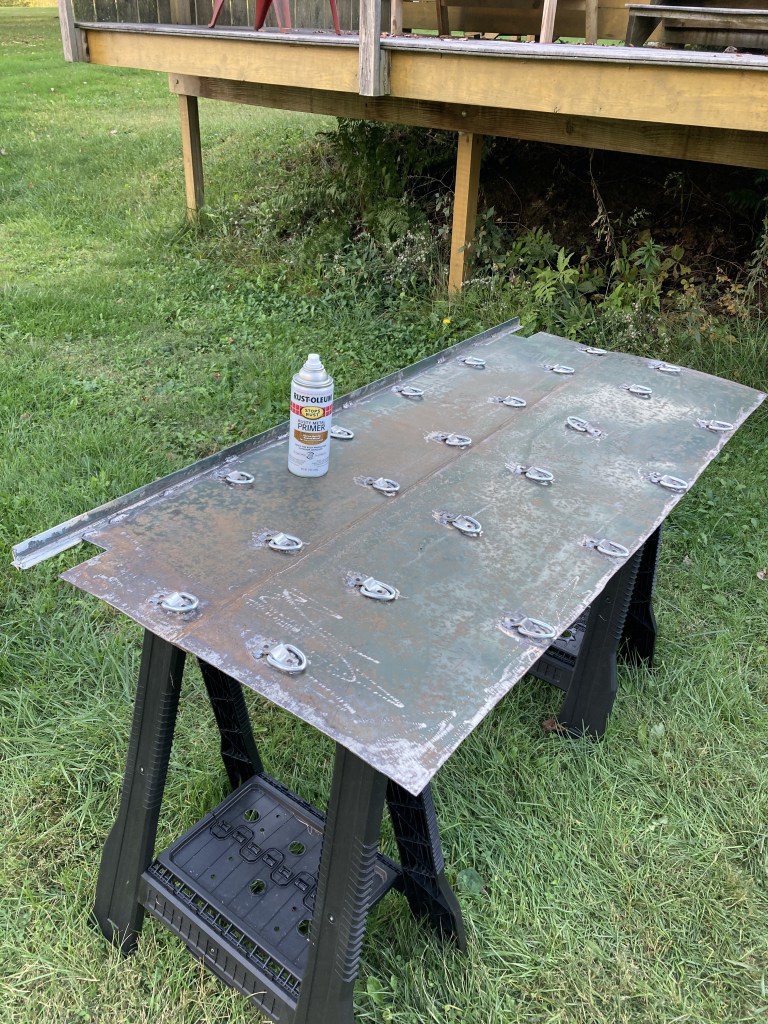
Luckily, I had a few pieces of steel left over from an oil tank I cut up years ago. I never throw away “scrap” pieces of steel. It’s just too useful if you can do a little fabrication. Observe.

A little welding, a little grinding, and a whole lot of 2.99 tie-down two-packs from Harbor Freight, and I had what I needed. A means to divide the vehicle, and to protect my seats. From things like really big frickin’ logs.

The divider was fabbed from the old oil tank, a steel cattle T-post, and a couple of U bolts to secure it in place to the roll cage. The bottom jammed into a narrow crevice by the rear fender wells, and in subsequent testing, I can confirm that it is very solid. But why did I need all of those tie-downs?

You can NEVER have too many tie-downs! I’m a big believer in keeping your tools and gear tightly secured. Not only is it neat, but it’s safer, too. If you get in some kind of misfortune, you don’t have big, heavy things flying around. The top row is reserved for a future rear window. I plan to make a cab enclosure from marine-grade vinyl. I just haven’t gotten to it yet.

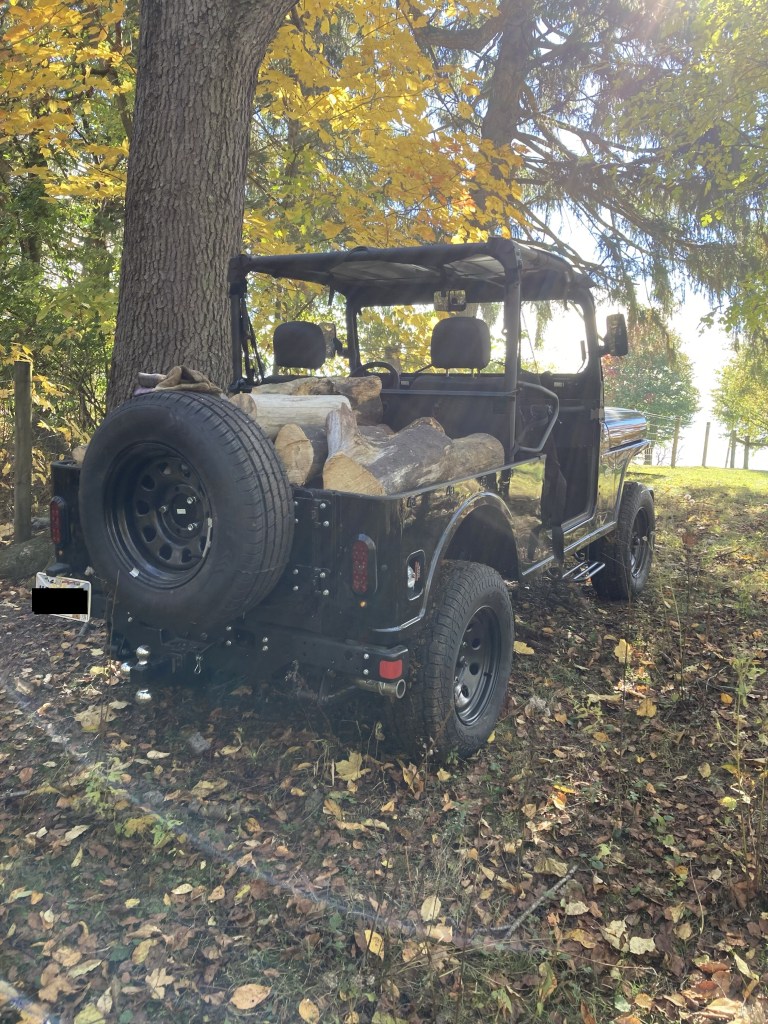
So far, the Roxor has met or exceeded my expectations. The elm job, for example, would have been terrible without it. Here’s a pic of what happened to the elm after a few days work.

This is a versatile machine. As I’m pretty familiar with its pattern, the old GI Jeep, it hasn’t surprised me. No, it’s the same buggy without outdated crap and antique parts. This is what I wanted, and after years of chasing my tail, it’s what I got. The hell of it is that it was much less expensive than a typical plastic side-by-side, and much more practical. If you’re in the market for a vehicle like this, I can recommend the Roxor.

Of course it’s fine off-road. This is what it was built for.

This ditch, which is gnarlier than it looks, is typical of the sort of obstacles that I encounter around here. The Roxor made short work of it, as you can see.

Pretty glad I did this. It’s been a lot of work to get it close to where I want it, but now it’s there.

Catch ya.

A Worthy Cause

Hey, all.

I think this is important. Way more important than my usual gibberish. It involves the upcoming referendum in Australia about the parliamentary referendum on an official indigenous Voice, and this was an interview I did with Elana Mitchell over the weekend in that regard.

Here’s the link- I encourage you to click on it and check it out.

A few clarifications re: the podcast. While speaking, I did my best to stick to the facts and the facts only. I gave only a thumbnail sketch of my military service, so I glossed over a lot.

If anyone wants the full details, I’m happy to provide them via email.

In regards to my family’s history and tribal affiliation, much of this is also available in public records. Minnesota does an amazing job with historical documentation. However, I also relied upon family oral history, which was astonishingly accurate over a 230-year sweep of history.

‘Nuff said.

Elana did an amazing job in helping me tell a very personal, very painful, story. The linked page she created is comprehensive and professional.

If you have the time, take a look. It’s important.

Cheers,

J

Enormous Distraction

Hey, all.

You may have noticed that I’ve gone a bit dark around here lately.

Don’t worry, I haven’t forgotten about you. It’s just that a long-awaited reality has finally come to fruition- the arrival of my very own fully operational Death Star, in the form of a pattern true Indian Jeep, otherwise known as the Mahindra Roxor.

I bought a base model and had the dealer install a few options. Trivial things such as a windscreen, a trailer hitch, and wipers. I splurged and even got a wiper wash motor.

When Mahindra means a base model, they mean a base model. You get a functional off-road vehicle with tail/brake lights and headlights. That’s about it. You must either pay someone to do everything else, or you do it yourself.

The wipers, hitch, and windshield were a bit much, so I paid for the installation. However, I left plenty of work aside for myself. I’ve been busy with these additional mods over the past week. The mods are creature comforts and safety features. They were largely inexpensive, thanks to Amazon, but labor-intensive work.

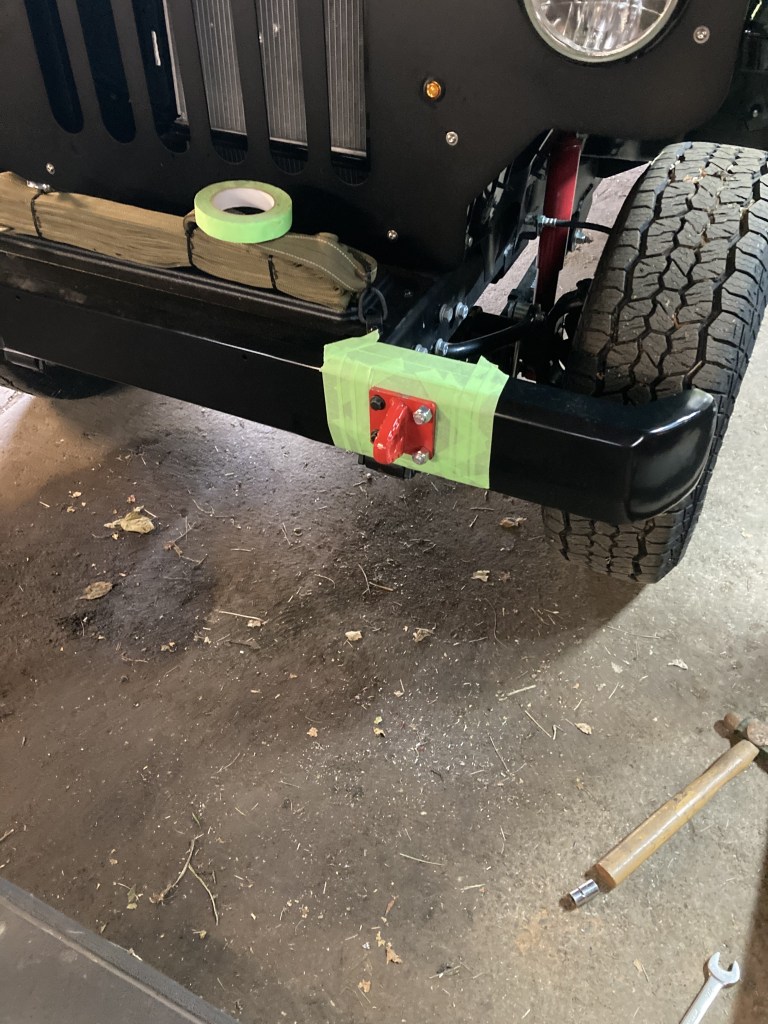
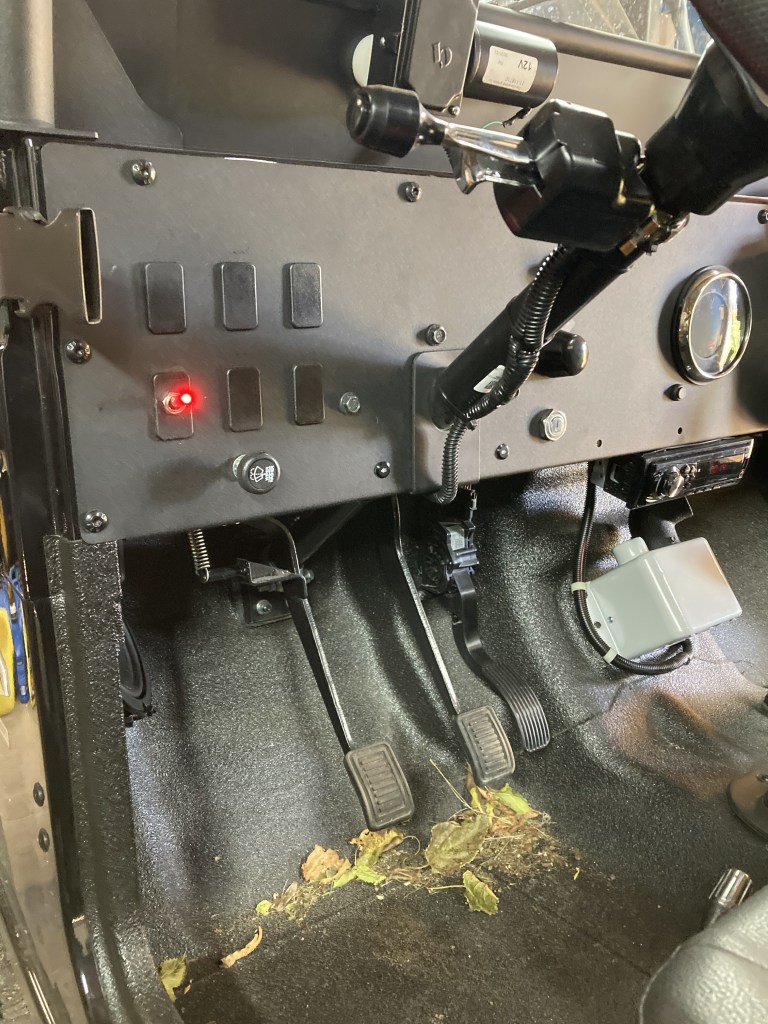
What did I do? I added turn signals. This was a real chore- you must drill holes in brand-new, freshly painted sheet metal. It’s not for the faint of heart. If you are a few millimeters off, it will look like crap. You only get one chance to get it right. Therefore, a good layout is a must. It’s time-consuming. Also, I added a radio and a license plate bracket. This needed correct, properly routed wiring and a new dedicated fuse box.

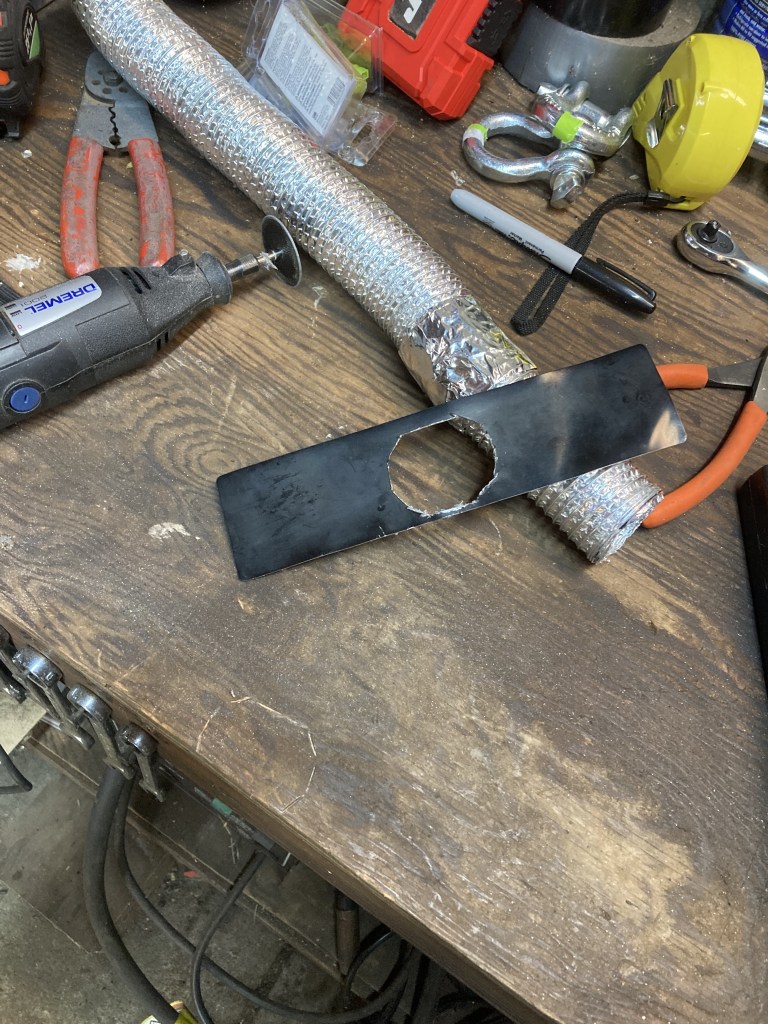
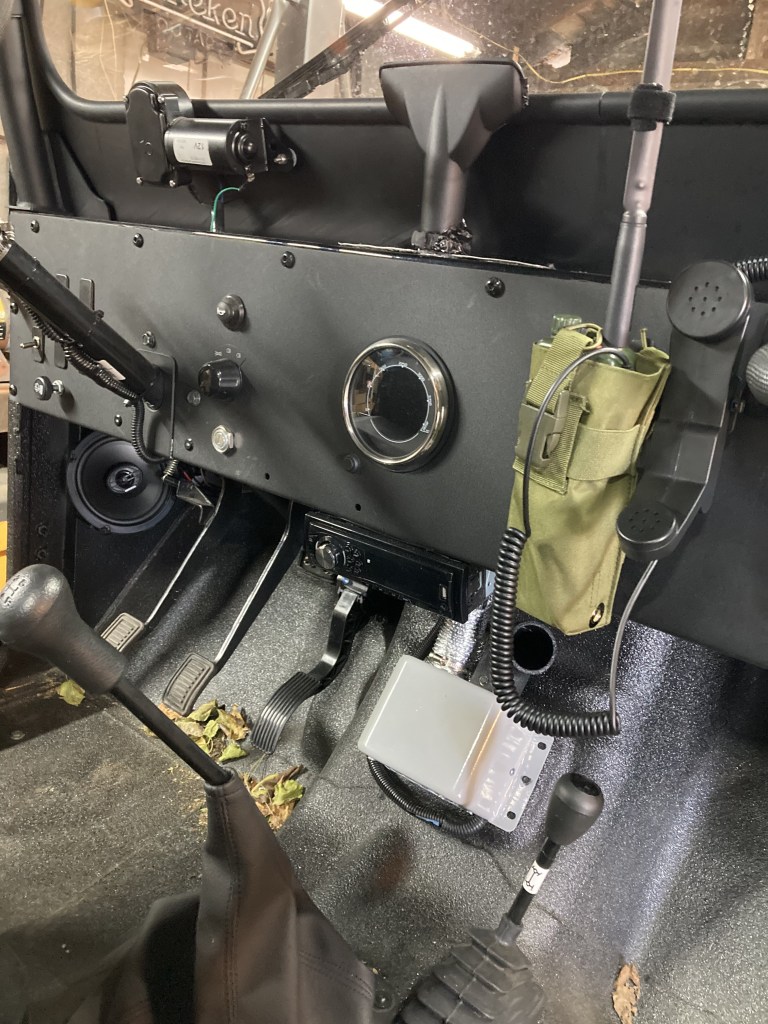
I don’t know if you’ve ever installed a car radio, but it involves contorting yourself under the dash to route wires and make connections. And BTW, the Roxor had zero provisions for mounting said radio and speakers. Therefore, more holes had to be drilled while I was already in what amounted to a stress position.

Guys, I’m sore as hell.

However, all the crawling on the ground and being jammed under the dash bullshit is done, and everything works.

I wanted to really press on this past week because we had lovely weather, some of the last of the year. This makes life a lot better when you’re doing work outdoors.

Something had to give, and that happened to be writing. However, it’s all over but the crying. The Jeep is now roadworthy, and I still have some mods to do to make it trail-worthy. However, that’s what I know of as “gentleman’s work,” it doesn’t involve me stuffing my body into unfriendly and unyielding spaces. And the hell of it is that the Roxor is an easy vehicle to work on, with plenty of space. You should try doing wiring on a subcompact- it’s a special breed of hell, and my hat is off to the peeps who do it, day in and day out.

But there you go- my activities for the week.

More writing soon.