The ancients knew a basic fact, and, at present, we are relearning it.
You can have all the money in the world, but iron, cold iron, trumps a bag full of gold.
Kipling, in his 1910 poem “Cold Iron,” says it best.
“Gold is for the mistress – silver for the maid” –
Copper for the craftsman cunning at his trade!
“Good!” said the Baron, sitting in his hall,
But Iron – Cold Iron – is master of them all.”
A great example is the Russian oligarchs, who often find that their superyachts and connections do not protect them from falls from windows, which they inexplicably seem to be drawn to.
A clear-cut case of a pile of gold, which does not protect from cheap, accurately applied steel, if you get my drift. There are many examples of this lately; a great one would simply be the picture of tech bros lined up in supplication behind certain leaders, who they hoped to buy off in one form or another.
Observe. These magnates, all of whom possess untold wealth, have been humiliated in turn. Federal charges were undropped against their pernicious websites, tariffs were applied to choke off their income, and positions of power granted were then snatched away. This was followed by rubber-stamped legislation that will cost their core businesses, well…everything.
All because these self-proclaimed geniuses and visionaries lost sight of the ball and basic facts—iron controls gold; always. Yes, you need gold for iron. But once you control the iron, the gold reverts to a supporting role.
Iron, indeed, is master of them all.
A cheap bar of high-carbon steel, funded by gold, attains a form that intimidates or destroys. In ancient times, a gladius was wielded by a Praetorian Guardsman. In modern times, an AK-74 is in the hands of an agent of the NKVD, the old name of the modern FSB.
Don’t pay attention to the gold; the flashy boats, or the private jets. Keep your eye on the iron.
As stated above, we are relearning this ancient fact. Personally, I never lost sight of this—I carried iron for far too long to forget. If the US Government paid me to apply my chunk of steel and plastic somewhere, I did so. To quote an old Appalachian ballad:
“No wealth, no land,
No silver, no gold—
Nothing satisfies me, but your soul.”
It’s a terrible mourn about the angel of death, the grim reaper. Why did people sing it back then? Because death was always close, an intimate companion seen on a failed birth, a sickbed, or at the hangman’s gallows. The spoiled children of the modern world have forgotten the so-called “good old days.”
Fun fact: they weren’t good.
So, here we are—recreating the world of iron. Congratulations. If I could, I’d opt out. In some ways, I’m doing so, and this is a reason I’ve been absent for a while.
I unplugged and did stuff, and I will again. I’ve lived in the world of iron, and I don’t wish it upon anyone.
However, some are relearning, the hard way, that no wealth, no land, no silver, no gold…will stave off the one who collects your soul.
Have fun with that, guys, and they are almost all guys.
My grandmother used to say “if you don’t have anything good to say, don’t say it at all.” She was a smart lady, and she lived to be very old. Now, she’s gone, along with 99% of her generation. I knew when those wise old folks, who watched a world burn, were gone, that we would have trouble. I think I’m right. Which is why I took the longest hiatus from this website since I started it seven years ago. I didn’t have anything good to say in December, and I still don’t.
But I do have things to say. It’s up to you to judge if they are good or not.
First, I have experienced a great deal of personal turmoil lately. That’s no one’s problem but mine. The turmoil is a direct result of recent developments in the news; my more alert readers can make of that what they will. Bad news is not hard to find. This has put me off my game.
Second, I’ve always looked for solutions to difficult problems. Right now, I have a problem, and I’ve found a partial solution. I’m not going to say anything more about that. It’s my cross to bear, and if it works out, it should be a lot of fun. Broadening my scope, I’m not sure how we dig ourselves out of our current mess. Leadership matters, and we suffer from the lack thereof.
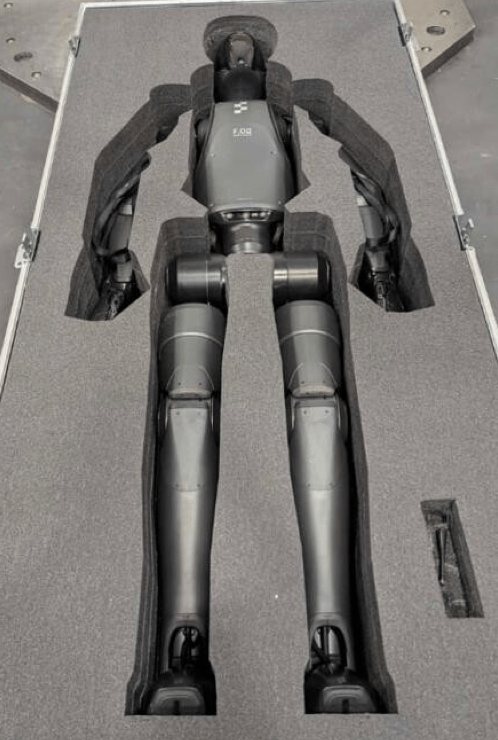
Third, as I alluded to, we are led by people who do not have anyone’s best interests in mind. I’d thought to write an article called “Hyper Intelligent Idiots,” but I decided against it. No one cares, anyway. Three hundred and sixty million people are asleep at the switch, all of us are to blame. This includes me; I am part of the problem. I will show you an image, however. Observe.
This robot, called Figure 02, is made by Figure AI. Alas, I’ve been talking about this since I started writing, and I’ve addressed this specifically in my sci-fi. “This” is the replacement of humans on a mass scale. It won’t happen tomorrow, but it will happen. There is too much money involved, invested by too many intelligent idiots.
What do I mean by an “intelligent idiot?”
A friend remarked that boardrooms are full of them. They are people who are good at exactly one thing, and they pursue that thing regardless of cost. They have zero common sense, and frequently no empathy, either.
These people, whose number includes the wealthiest among us, will bring a Terminator to the store near you. Far fetched? It isn’t. Just two weeks ago, the first robotic combined arms assault in history was launched on the Eastern Front; the Ukraine War has supercharged these bloody-minded developments. By the way, the attack was a success. I’m pretty sure from the beginnings of this website, and certainly in my first book, I’ve spoken of this.
It was a matter of time. Now, it is upon us.
So, fourth, I’ve concluded that our fates are in the hands of insanely wealthy, and possibly unstable, people who think we are all collateral damage waiting to happen; billions of loose ends that need to be tied off. What tool is better for this than the rapidly evolving progeny of Figure 02, who would be just as good on the battlefield as in an assembly plant?
An assembly plant? But what about the workers?
Laughs bitterly. Exactly. You’ve been had. There’s a reason the ultra rich have been buying islands with bigass bunkers or are looking at off world options. Think about it. There’s no reason for me to lay out every last detail of how we have succumbed to the greatest con in history, a trap laid by people who don’t even bother to lie anymore about their motivations.
In conclusion, I’ll talk about a subject endlessly tossed around in the gun mags of my youth. It was the constant rehashing of the folly of Army Ordnance in the 1950s, when they developed the M-14, and the Soviets fielded the Kalashnikov series. In short, when the rifleman’s rifle, the M-14, met the AK series in battle, the AK came out on top. Why, and what does this have to do with this piece?
The AK-47 was the direct result of Soviet battle experience in World War Two, where they discovered that the vast majority of firefights happened within a couple of hundred meters. They also found that a rifle had to work all of the time, including the worst times, and that it had to spit out a lot of lead, quickly. Accuracy and ergonomics were tertiary concerns, at best.
Strangely enough, US Army Ordnance, drawing from experience in the same war, decided that the prewar cult of the rifleman and superb accuracy and ergonomics trumped other considerations. The Army went forward with the M-14, and forced NATO to adopt the new round as standard, the 7.62 NATO, or .308 Winchester. At the time, the US Army could still dictate what NATO did, so several promising allied projects were scrapped, and the European armies adopted, grudgingly, the 7.62 as standard.
We are in the midst of another such folly. Instead of seeing the plain evidence before our eyes of failure on multiple levels, we press ahead with technologies and social patterns that assure disaster.
Some people think it’s a great thing to burn it all down. Of course, they think they personally will not be licked by the flame. I care to differ. Many think it’s a great idea to hand every last little thing over to the jet set. What? The people who run Homeowner’s Associations, and run the country club? Expect little mercy on that front. Others have the idea that having any government in our lives is poisonous. If you know your history, look up what a lack of government has been like, historically. The 17th century Scottish lowlands were a great example. That was a place where life was very, very cheap. Houses looked like forts because they had to be. Terror is a tyranny of a particularly cruel sort. It is frequently disguised as freedom. Finally, people just want to hand everything over to a strong ruler, to give up on thinking for themselves. To accept authority, legitimate or not.
This is the path to perdition, readers. I’ve been talking about this stuff for years, and now it is upon us. I won’t belabor the point.
This image is apropos of exactly nothing except a source of great amusement around here, the wonderful BirdBuddy, which sends us pictures and videos of the denizens of our bird feeder. All we have to do is to supply bird feed and sunlight, and we get a series of pretty darn funny pics.
No. Today, I’d like to talk about a new writing direction I’m thinking about, and for which I busted out a short on a grey and gloomy day.
You guys know I’ve struggled lately; it’s been a real pain. But it’s OK; that’s life. I’ve taken some steps to alleviate my funk—this has helped. Yesterday, while imagining my extracurricular project, I suddenly wanted to write. The weather outside of my window seat was ghastly. It looked like a winter sunset at 1400—gray and sodden. Not the thing to lighten up one’s mood, but we went for a long walk, anyway. Movement and exercise are important.
Upon return, I mulled over a potential future project. I had an idea. Lately, I’ve been thinking about the Roman Empire. This is partially due to Doc Wetsman’s books and “Pax,” an excellent non-fiction by Holland. In addition, thanks to my distant bud, I’ve been mulling over possibilities in fantasy and alt-history.
I started “Pax” because I needed a little help with antiquity. This has never been a strong part of my knowledge base. I’m OK with the broad strokes of history, but I tend to focus on certain eras. Therefore, some reading was a must. I don’t adore the Roman era or think it was some ideal part of history. Actually, the times we’re living in are MUCH better than the era around the birth of Christ.
Even deep within the “civilized” world at the time, a party of soldiers or bandits raiding a homestead for plunder and rapine was routine enough to be utterly unnoteworthy. Anybody could be enslaved for the slightest reason. Slaves and criminals were crucified. Crowds screamed in pleasure at the sight of hundreds meeting gristly ends, along with any wild animal that could be found. Entire regions were put to the sword, and no one batted an eye.
This was Rome and the Pax Romana. The “Peace of Rome” was frequently the peace of the grave, and those who idealize it are fools.
However, it’s fascinating. Also, I guess the Roman Empire was better than squatting in some miserable mud hut and selecting an unpopular villager for the annual sacrifice to the sun. This happened every year around what we know as Christmas (The Church was GREAT about stealing ancient holy-days; see Ostara, otherwise known as Easter. Her symbol, the fertility goddess, was the rabbit.)
Like it or not, we still see the modern world through our ancestor’s eyes. Those muddy villagers who kept pigs in their huts? Yeah, that was us. The centurion who shrugged and put the slave on a cross? Both the crucifer and the crucified, us, too. The person who crouched and knapped flint by the treacherous Great Lake? Us. The courtesan in the Eternal City? Us. The long, sun-blackened, and endless pursuer of game, who could run a gazelle into exhaustion, us as well, somewhere back there.
These are our archetypes. They inform us today, whether we like it or not. I think this is what draws people to fantasy. Times in our deep past, when the fae were real, and owls carried the spirits of the dead. We want to touch those dark and endless forests as we recline on our nice warm couches. We want to shiver in the cold, while wrapped in fell dread. We wish to chant with our cousins (who were also our mates) while passing the horn filled with holy-day mead as the Chosen roasts on the pyre. A part of us wishes to cry havoc and unleash the dogs of war.
Unfortunately, we still have those desires in a time when war could easily mean our extinction. This creates real problems.
We are, for the most part, divorced from the reality of mortal, daily danger. This is why this sort of fiction is so popular. It’s an escape to a time when our ancestors scoured the woods in search of anything edible, but they wouldn’t touch a fairy ring of delicious mushrooms; for the revenge of the fae would be dreadful.
Better to starve.
With this in mind, I created a writing sample yesterday. It was a joy to write, but I won’t publish it here. It lets too many cats from the bag; but it was great fun, my first foray into fantasy, that most popular of genres. It’s just below romance—laughs, count me out, there. Not that I don’t enjoy a good love story, I do. It’s just that I cede the field to those with more talent. See Outlander and Bridgerton, and their respective, juicy successes.
When our current reality descends into madness, bleakness, and actual horror, it’s incumbent upon those of us in the “creative class” to provide escape. Yesterday, I provided my own.
I’ve been talking about this threat for as long as I’ve owned this site.
The age of the automated hunter-killers is upon us. It’s a fact. We need to stop burying our heads in the dirt here, because the end of effective human combatants is in sight, at least in the traditional non-assisted format.
Witness this video, courtesy of the Chinese Government, who doubtless want the world to see their shiny new capability.
I guess these hell robot dogs cost about 2200USD a piece. Also, note that this is a public-facing, open-source video; what evil toys lay behind the dark curtain of their R&D shops?
Of course, one thing this vid does not show is the ‘bot hitting targets; the jury is out regarding the accuracy of this new weapons platform. However, if it’s even 50% accurate, this is a vast improvement over living, breathing, humans under fire. Also, there is no data for how hardened these hell dogs are to enemy fire. Will they fall apart with a few shots? How fast and maneuverable are they? Can they be easily jammed? There’s a lot of questions here.
However, you can pick this apart all you want, but the facts remain. The Chinese Army is fielding these, and they are a legit threat. Not in the future, now.
In earlier posts I’ve described how I’d use things like this to eviscerate an infantry unit at 0200 on some shitty, rainy night. This is no longer theoretical. In fact, I’d be shocked if the Chinese don’t flex a few of these nifty gadgets to the Russian Army in Ukraine, you know, just to try them out. Make a few notes here, a few improvements there, and presto, you have a traditional infantry neutralizer. Just like that.
Sigh. As stated on at least a hundred earlier occasions, we need AI assisted, human infantry powered armor. Period. The battlefields of today are already borderline unsurvivable for unaided infantry and armor, within the next decade they will be suicide.
Drones, hell dogs, smart mines, you name it. Go ahead. Pass all the laws and treaties you want, the enemies of the collective West will wipe their asses with them. It’s already happening in real time. Turn on the news, and then tell me I’m lying.
I’m not.
While we’re at it, let’s add modern nerve gas and tac nukes.
Unsurvivable I said, unsurvivable I mean.
Time for our policy makers to pull their heads out with a deafening “pop!” While we’re at it, we need to fire our defense industry oligarchs, because they suck. They cannot produce on demand, nor can they produce at speed. There is a real arms race, and we are losing it.
Deterrence prevents wars. Once an opponent is convinced, perhaps falsely, that he can win, then war becomes inevitable.
Don’t ever make the mistake of thinking that something can’t happen to you.
The rather intense fellow seen above is my Great-Uncle Russell, who fought with the infantry, 37th US Infantry Division, Pacific, 26MAY1942-NOV45. His war started on Guadalcanal, moved to the Munda Campaign, New Georgia, then to Bougainville. After Bougainville, he cruised up to the Philippines. He did the whole invasion thing (again), fought to Manila, fought through Manila, and then did some more bad stuff until the end of the war. Finally, in November of 1945 his unit returned to the States and he demobilized along with millions of others. He was married shortly thereafter- the photo above was his wedding pic. Guys frequently married after the war in their uniform, because it was the only good set of clothes they had.
His war was over. But not really. He had a passion for growing orchids, and he kept a small box of Japanese teeth. Modern readers will be grossed out by this, but this phenomenon was fairly common among Pacific veterans. It was no quarter given, unforgiving combat to the knife. How easily we all forget, or never knew, in this cushy, modern age, but I grew up in the wreckage of layers of the US’s wars, WW1-present.
My family, rather poor, had an inordinate percentage of combat veterans.
Therefore, when an Aussie friend asked me to knock together a few thoughts for her political party, the Australian Democrats, I was only too happy to oblige. I saw, and see, it as doing my bit in the spirit of my departed Uncle Russell, who sucked it while defending Australia from the Japanese thrust to the south, and he was small cog in the machine that carried the fight to the Japanese Greater Co-Prosperity Sphere, and witnessed the demise of said Sphere.
If he could withstand jungle rot, banzai charges, horrible malarial nights, and house by house fighting in Manila, then surely I could spend a week looking at open source documents and apply some analysis. At the end, I compiled a document with my thoughts about the current Australian Defense posture, and submitted it to my friend in Perth, and the Australian Democrats could do with it as they saw fit.
No hot machine gun, no soggy, sleepless nights, no maddening mosquitoes and quinine tablets. No wretched patrols, waist deep in leech-infested streams, with no-surrender crazies at the end.
Nope, a cup of coffee and Wikipedia.
So, without further ado, this is my take on the Defense of Australia, a germane topic these days if there ever was one.
Cheers, Jason.
Australian Defense Working Paper, Australian Democrats, 27JAN24
Contributor: CPT J. Lambright, USA, (Ret.)
Introduction
I do not intend to reinvent the hard work and expertise already devoted to the Australian Democrat’s Defense Platform. Rather, I would expand upon existing concepts and add input to the conclusions that you have reached. Of course, you are free to accept, modify, or decline my suggestions. I am not a defense policy expert and do not represent myself as such. I am a retired soldier who believes in communication and cooperation between allies. I am also not blind to the need for each nation to act in its national interest.
After examining the current Australian Defense Forces structure and commitments and the Australian Democrat Party’s existing policies and platform, allow me to begin.
Preface
A study of current AD thought leads me to believe that you care deeply about the defense of Australia, its people, and its interests. Your party leadership believes that much of the money allotted to defense is squandered in boondoggles and pie-in-the-sky projects that never seem to come to fruition and certainly do not advance the primary mission of the Australian Defense Forces- the protection of Australia. Also, you have reservations about the reliability of your chief ally, the United States, and its ability to prosecute and sustain any notional regional conflict across vast distances.
These beliefs are well-founded and justified by numerous examples from recent events. The failed war in Afghanistan is an excellent example. Also, you are correct to emphasize and prioritize staking out a clear contrast with other Australian political parties and their policies.
You want to defend Australia and its interests and improve battlefield effects while maintaining current defense budget parameters. This can be done.
Of course, you may want to examine what is in Australia’s interest and how that applies to your defense platform. Australia depends on foreign trade, and most products that arrive or depart from Australia move via vulnerable cargo ships along some of the world’s busiest sea lanes, such as the South China Sea. This is an example of a currently disputed area. It could become contested.
It is indisputably in Australia’s interests to patrol and defend these critical waters. Australia cannot do it single-handedly; it must do so with its partners.
With such an example in mind, let us begin.
The Australian Army
The old German historical standard for staffing armed forces was one division per million of the general population. While I do not advocate for Australia to field 26 divisions, there is room for growth within the Army, given current budget restraints and demographics. For the defense of the homeland, the Army is key, and examining open-source documents reveals present anemic staffing at best.
The Australian Army has eight combat brigades right now; three of them, the Regular Army brigades, are adequately staffed, trained, and equipped. The other five brigades assigned to the Reserves are partially staffed at low levels, with inadequate equipment to match.
A data point I noted is that the Reserve brigades are not expected to operate independently in a national contingency; portions will be seconded to the Regular brigades. This suggests that the Reserve brigades are hollow formations and that the Regular formations need augmentation to sustain national combat goals.
From my understanding of the historical role of the Australian Army, your Army has always been a citizen’s Army, with the bulk of its forces being derived from citizen soldiers.
There is nothing wrong with this, and it has strong parallels with the current composition of the US Army, where nearly half of the combat power of the American Army is concentrated in Army Guard formations. For those unfamiliar, the US Army Guard is a force of part-time soldiers who can be called upon to fulfill active-duty wartime roles with short notice.
Here is a difference between the Australian Reserve Brigades and the US Army Guard Brigades: the Australian Army Reserve Brigades need to be fully staffed, they need to be fully equipped, they are not completely manned, and they need a clearly defined wartime function.
There is little difference between the equipment of a US Regular Army Brigade Combat Team and a Guard BCT (note: the US Army does not have combat units in the Army Reserve). The RA and Guard BCTs can be and have been used interchangeably in their wartime roles. An example is my Afghanistan sector; I was attached to the 170th RA IBCT (Infantry Brigade Combat Team). The sector to the north’s “landowners” were the 37th IBCT of the Ohio Army National Guard.
Presently, the Australian Army would be incapable of such a mission (i.e. a Reserve brigade operating independently in conjunction with a Regular brigade).
I suggest that your Reserve brigades become actual brigades, with a complete skeleton active-duty staff, like the US Army Guard formations, with the rank-and-file being part-time, citizen soldiers.
To do this, you will need to recruit, train, and fully equip your five Reserve brigades, and then you will need to assign them a real-world mission. An example would be “Defense of Northern Queensland, emphasizing amphibious assaults and delaying actions.” During their weekend drills, they train in soldiering skills leading up to their annual exercises, which align with their assigned wartime task.
Also, when I say “fully staffed and equipped brigade,” I mean a fully staffed, trained, and equipped brigade. A modern BCT has assigned infantry, artillery, armored, engineering, aviation, medical and sustainment assets assigned and integrated, with a book strength of around 2600 personnel.
This implies that you will need much more equipment than you presently have, and you must find a mechanism to recruit quality personnel, which has challenges different from the US. I’ll name an example.
The Australian Army currently fields 59 M1 Abrams tanks.
The Ohio Army National Guard alone has more tanks than that. While your party has made a strong argument that Australia doesn’t need tons of tanks, and I agree, what you need for a coherent defense of the Australian mainland, let alone power projection into your Pacific northern approaches, is a strong expansion of your Army Aviation.
At present, you have 14(!) CH-47 Chinook helicopters assigned to your total Army. This is wildly inadequate. Helicopters are the ideal platform for Australian homeland defense, and you have very few available.
The AD defense platform at present notes that your overall plan will save one hundred billion dollars. Fine. Spend some of it on your Army, which has been starved for funds and is demoralized by justified controversy regarding the actions of a rogue corporal and the associated command failure.
A fully staffed and equipped US Army Infantry BCT, the “light” version of a BCT, costs about 4 billion USD. You could flesh out and fully equip your five Reserve brigades for 30.4 billion AUD, maximum.
This measure alone would vastly enhance the stated goal of the AD, to better defend the Australian homeland for less money.
I do not say you should replicate the US IBCT format, in which one “light” brigade has more tanks than your entire Army. The equipment should be tailored to your conditions, and battlefield developments in Ukraine should be considered. You could even develop cutting-edge drone warfare units; starting from scratch has advantages.
Also, I’m not privy to information about current Australian Army war-readied material stocks, and you are probably not either. However, a portion of that 70 billion AUD saved from other sources, like the Virginia class submarine affair (discussed later), should be set aside for developing a truly massive munitions stockpile. In the West, we seem to have forgotten how many munitions are expended in high-intensity combat operations. A good rule of thumb seems to be to imagine the highest rate of fire possible for an artillery battalion and then triple that number, to name but one example.
Judging from what I see in open-source documents, I’d wager that your Army has nowhere near what it needs to mount a stiff defense of the Australian mainland.
The Australian Democrats can set themselves apart by advocating for an expansion of your Reserve forces, better securing the homeland, and saving money to boot.
The lessons of Ukraine are clear.
Well-equipped light infantry forces are still the Queen of Battle, as they are known in the US, and they must be supplemented by the King, artillery, and they must be heavily armed and mobile.
Aviation and the appropriate supporting vehicles are key. Old M113 Vietnam-era personnel carriers and a few dozen helicopters won’t cut it.
I’d also suggest laying up large quantities of what is known as FASCAM, or artillery and air-dropped self-destructing mines, because these are gruesomely effective in delaying or stopping enemy maneuver forces. This is another re-learned lesson of the Ukraine War, where the countryside has been poisoned for generations by Soviet-era non-self-destructing mines. These dense blankets of mines are the only reason the invading Russian Army hasn’t been smashed to pieces by the vastly more professional and capable Ukrainian Army. However, I know the drawbacks of mines, even the self-destructing variety fielded by the US Army, all too well.
The drawback? Not all of them self-destruct, and they’ll kill kids for the next twenty years. The same goes for another effective weapon, the cluster munition.
FASCAM strikes me as the only class of mine that you might consider. Even the US Army doesn’t emplace traditional mines outside Korea, a policy exception. Traditional mines are known as long-term “area denial” weapons.
“Area-denial.” I dislike clinical terms for slaughter. And I despise mines. I nearly had my leg blown off by an Italian “toe-popper.”
However, you cannot put lipstick on a pig. War is the systematic, violent destruction of your enemies. You cannot dress it up or make it pretty. It is disgusting.
Therefore, I ask that you consider the stockpiling of the self-destructing Family of Scatterable Mines, FASCAM, with a no-first-use policy.
In summary, you can enhance the security of the Australian homeland by giving your Reserves a job. You will need to build and store mountains of munitions, as well. Especially the types that have been wildly successful in Ukraine, and I suspect your Army doesn’t have deep stores of them.
This can be done well within your current defense budget, and it is an argument that could set you apart.
The Australian Air Force
With its mission to defeat the enemy and defend the Australian homeland, the Army is the branch of service least susceptible to current technological disruption. However, technological advances have profoundly affected the scene of heavy conflict at present, Ukraine. Your Army should take note.
Your Air Force should take more than just notes. They should throw their current plans in the trash.
Why do I say this?
Last week, I read an article in the news where the USAF is quietly revising its current warfighting strategy; the upper echelons of that service branch acknowledge that there is very little chance of dominating hostile airspace in future conflicts. Instead, they plan for “surge air superiority,” or choosing a moment over the battlespace to establish momentary air superiority and act as a shaping force for naval or ground combat forces.
I imagine this is born of observations in Ukraine, where SAM assets have created an impermissive environment over the battlefields. Note: anti-aircraft munitions will only improve in the future and cost much less than manned combat aircraft.
This leads me to your current defense platform and my suggestions.
First, we will start with your premier combat formations. These are your fighter squadrons. Presently, there are three. These are currently slated to receive twelve more F-35 aircraft, for a grand total of 72 when the acquisition is complete.
I suggest stopping there and exploiting the AUKUS treaty’s advantage.
I am fully aware of the unpopularity of the treaty within your party. You have legitimate concerns, which you must process within the party’s leadership. However, I would ask that you investigate some advantages, such as access to the United States’ peerless classified research and development and procurement.
You have already spent the money on the F-35. It is budgeted. There is no point crying over spilled milk. You have the fighters and trained aircrew. But you can squeeze an enormous advantage with what you already have!
Airpower is about the domination of contested airspace, and numbers matter. For a country like Australia, you must punch above your weight.
The F-35, for its many flaws and drawbacks, has a little-discussed feature. This has already been worked into your earlier outstanding defense platform.
The F-35 is built to fight as a networked combat platform. You mention the skunk-works Ghost Bat autonomous combat drone, envisioned as a wingman for manned combat aircraft. There is very little in the public domain about this aircraft, but I would be shocked if these platforms could not be serial-linked under the control of an organic commander.
Allow me to explain the implications.
In classical aerial combat, the standard remains the German Schwerm or an approximate five-ship of combat aircraft operating in conjunction in aerial combat.
Five aircraft, under one flight leader.
There are approximately twenty-one combat aircraft in a fighter squadron. At any time, there are usually fifteen of these available as fully-mission-capable, or FMC, aircraft. This is the cold reality in front-line combat formations. In other words, an average fighter squadron can dispatch three five-fighter groups to surge against hostile forces.
If my guess is correct, one manned F-35 can control a Schwerm, one manned aircraft, and four unmanned.
The implication is that Australia, using its current manned combat platforms and trained crews, can procure the requisite amount of Ghost Bats and field the equivalent of fourteen fighter squadrons with a mix of unmanned platforms.
With the same personnel costs, this is a nearly five-fold increase in your country’s current aerial combat power. The Ghost Bat does not eat or have nightmares, and if it dies, no one cares. An operational squadron could have as few as five trained pilots, and they could be cleverly dispersed, another element of your current platform.
My guess is that the B-21 Raider, another part of your platform that the current Australian government decided not to buy, has similar capabilities.
You may want to reconsider this decision in the future because the geographical constraints of the Pacific theater will remain the same.
More bang for the same buck- this is what your party represents, correct? The above will achieve the desired effect.
Of course, I suggest expanding your C-130 fleet with the aforementioned 70 billion dollar savings from other areas. The C-130 is an excellent, future-resistant aircraft with many uses, including the projection of expeditionary force, a key element of combat in the Pacific. What worked for the Japanese in World War Two (and was only overcome with the combined might of the largest assembled expeditionary naval and ground force in history) can work in reverse order for Australia in any future conflict.
Another area that should be addressed is the ultimate high ground- space. Recent developments in commercial spaceflight allow mid-tier countries such as Australia to feasibly purchase and deploy space reconnaissance and communications assets that could give Australia an indigenous edge in any future conflict and aid in national decision-making.
In summary, the idea is to bleed enemy forces and deny them access to Australia. The Australian Air Force plays a key role in this potential fight.
With the same budget, more bang.
You have AUKUS. Use it with a clear eye toward Australian national interests. This leads to the part of the AUKUS agreement that has generated the most opprobrium- the Royal Australian Navy.
The Australian Navy
We will probably have the most disagreement here, but I ask that you bear with me as I make my case.
I’ve emphasized throughout this working paper that Australia must always first act in its national interests. While Australia has been a long-standing ally and close friend of the United States, the reality is that future developments may strain this relationship or render it moot via battlespace developments. It would be best to plan for worst-case scenarios. Military considerations demand precisely this.
Hope is not a plan. If you make hope a plan, you will gain harsh lessons in blood and treasure.
Right now, governments worldwide are hoping that China will not succumb to the desire to either war with Taiwan or to dominate the international sea lanes of Asia with its burgeoning fleet.
This is a bad bet.
While I have no desire for a war with China, military planners would be remiss not to take potentially hostile action on their part into account in worse-case planning.
I’ve stated a plain fact earlier in this paper and I’ll state it again here. Australia is heavily dependent on the world’s sea lanes, especially the South China Sea and, to a lesser extent, the currently contested passage to Europe via the Suez Canal, the Straight of Bab-el-Mandeb. Wishing it were otherwise does not make it so.
It is in the Australian national interest to partner with allies to keep these bodies of water open to unrestricted trade. The only means to do so is via naval power projection, which means capable and mission-ready RAN combat elements operating with the USN and Royal Navy.
Let’s begin with a raw spot regarding what we think is the biggest flaw in the AUKUS treaty: submarines.
The Virginia class sub deal is a bad idea. However, your previous government signed onto it. It is currently Australian policy and law.
I have an idea to mitigate this mini-policy disaster. While it is true that your government contracted to buy four or five Virginia boats at 4.3 billion USD each, the subs will only be delivered in the next decade, and they might not be delivered at all. The problems with US shipbuilding are well known, and in Washington’s current political climate, I have little faith that the shipbuilding issues will be resolved in a meaningful timeframe.
Here is my idea.
Slow-roll the Virginia subs. It costs little at present to second RAN personnel to USN Virginia boats for training, and you should proceed apace. After all, training is never wasted.
A valid point raised by AD and others is that Australia has no nuclear infrastructure or expertise. This must be emphasized- working with nukes is not trivial and cannot be underestimated. Also, environmental factors must be addressed. There can be no room for mistakes in this regard.
Here is the solution- Australia curtails but does not breach its Virginia class purchase. Accept delivery of two boats; by the 2030’s, you will have trained personnel.
Then, do not develop the maintenance or sustainment needs of nuclear submarines in Australia. Instead, contract to the world experts, the US Navy, and their dedicated civilian technicians. Base your Virginia class boats in USN Base Kitsap-Bangor, in Washington State, and have a detachment of RAN personnel that rotate from there on detached-duty assignments. This is similar to the USN Cold War era basing of submarines in Holy Loch, Scotland.
This kills two birds with one stone. You have the Virginia boats and their capabilities and honor the letter of the agreement, but you don’t have the nuclear subs’ mess, and you pay a fraction of their total sustainment costs. Also, this would allow you to cut and run from the Virginia boats under duress in extreme circumstances. You’d lose the boats but wouldn’t be stuck with the literal fallout.
The above measures will save plenty of money. This, in turn, allows the purchase of diesel-electric submarines to expand your fleet. Your current party platform has great ideas about which vessels to buy and the quantities needed. I would only expand your current thinking to include an underestimated but outstanding source- South Korea, specifically the KSS-III class.
As an aside, the South Koreans can deliver at speed. Note their recent contract with the Polish Army for tanks.
Another recent development in US submarine warfare, much like the Ghost Bat for aircraft, is the cryptic Orca unmanned submarine platform; once again, this is a benefit of AUKUS- access to Uncle Sam’s toy chest. You may wish to look into this, but little is known at present. It could be that Orcas operated in conjunction with manned undersea platforms have a similar force-multiplying effect as the Ghost Bat.
This concludes my thoughts about submarines. It combines your party’s current vision with what is politically advisable.
Now, I will address surface combatants.
I fully understand that naval engagements in the future will be rife with missiles and drones. This is happening right now in the aforementioned Bab-el-Mandeb.
It is premature to eliminate surface combatants from the RAN, which puts me at odds with your stated platform.
Here’s why.
A vignette that may seem irrelevant, but it isn’t.
I recently purchased a new vehicle to replace my old one. My old vehicle could do amazing things, and I paid extra for capabilities that defined one percent of its daily use. However, the new vehicle was a hybrid electric model with much better fuel mileage. It also excelled at 99 percent of what I needed daily. I decided I didn’t need the one percent. The 99 percent would do.
Western militaries pay dearly for that one percent- just like I did with my old vehicle. In the case of the USAF and USN, billions are paid for not just one percent, but .000000001 percent.
Does that make sense? Is it cost-effective?
No.
And so it is with surface combatants, whose use since World War Two has primarily been to project expeditionary power and to patrol those all-important sea lanes.
Threats are usually not great-power-based. Day-to-day threats to Australia’s people and economy are far more prosaic, in fact, ancient. A great example would be the relatively close Straight of Malacca, home to the world’s most pirated waters. Frigates such as your Anzac class might be easy meat to a Chinese cruise missile (but maybe not- more on this in a bit), but those ships are what is necessary to fend off drug dealers and kidnappers operating in the high seas. These are the people who restrict ordinary trade. Regional navies deal with this regularly.
Trade restrictions from threats like pirates are bad for Australia, which needs unimpeded trade flow and commerce.
The RAN must maintain surface combatants for this reason alone.
But there are more.
In your current platform, you mention, with justification, that surface combatants are vulnerable to subs, drones, and missiles. This is beyond a shadow of a doubt true- see the Moskva and others in the Russian Black Seas Fleet. But there are many measures that navies take to reduce this vulnerability, witness the current action in the aforementioned Bab-el-Mandeb.
The USN Arleigh Burke-class destroyers defending the area have performed superb service against this threat with battle-hardened adversaries equipped with relatively sophisticated, Iranian-supplied, and possibly Chinese technology-based equipment. The “Houthi Militias” are not militias in the sense that you may think, i.e., an untrained force of near-bandits. They are an expertly trained and capable force that withstood years of pounding by the Government of Saudi Arabia and emerged stronger. They should not be underestimated.
Their attacks against allied forces have been sophisticated; in some cases, they have struck merchant vessels. It isn’t easy to strike a moving target from a remove of tens of kilometers; a rag-tag “militia” is incapable of this.
We should note that the Arleigh Burke ships have successfully neutralized all direct attacks. Not one Houthi missile has penetrated the initial defense screen of these vessels. There are three levels of defense.
These are capable surface combatants being used right now to defend international shipping and lives.
This. This is the 99 percent justification for using and maintaining a surface naval force. I’d suggest purchasing retiring AB class USN vessels for pennies on the dollar, but it seems the USN has decided to keep them around a little longer. The first were scheduled to retire in 2026.
As a great alternative, I’d advise, once again, to look at the very capable South Korean ships. Specifically, the Sejong-the-Great class, which is comparable to the Arleigh Burke, and may exceed its capabilities. These vessels have a demonstrated daily use that can be had for far less than a US equivalent and will be delivered on a reasonable timescale, unlike US ships.
Furthermore, I’d look at Australian wartime strategy or near-war contingencies. Your location demands an expeditionary capability, and you currently have one with your Canberra class “gator-freighters” (USMC slang for troop/aircraft carriers). Maintain, upgrade, and, where possible, sustain and expand.
No one knows the Pacific like Australia. You have the institutional knowledge and capabilities.
Build upon it.
Conclusion
Soldiers, Sailors, and Airmen in a democracy do not die for money. They die for an idea- that their nation shall not perish from this earth.
We, as citizens, send our men and women to die on our behalf. We must never lose sight of this basic fact; when our children sign their names to an enlistment contract, they risk everything.
My uncle died in Korea before his eighteenth birthday. Some benighted souls would say he died for nothing. These people are nihilists who know neither courage nor defeat. They are the last people you want around you in a fight. The most cursory glance at the relative fates of South Koreans versus the poor souls in North Korea will tell you my Uncle Dick’s blood ran down the earth of that awful hill for a reason- that free people can remain free.
You, as a party, believe that Australia is worth defending. You want to do your best to add to the national discussion. I have deep respect for your previous work, along with your motives. It was a high honor to write this contribution. In addition, it was fun to exercise some long-dormant, unused semi-expertise and first-hand knowledge.
Throughout this piece, I avoided wonkish language and an emphasis on equipment. Equipment is great, but it is people who win. People who sacrifice for the common good.
Australia’s greatest asset is its independent-minded and free people.
You can use them to expand your reserves.
You can call upon them to adapt to the latest tech in the contested skies.
You can depend upon them to keep trade flowing and deter aggression and domination of international waters.
This is the discussion that Australia needs, and I was honored to play my part.
I’m prone to write short stories occasionally based on random prompts or thoughts. What follows is one such- the long-term consequence of the vicious American Civil War. The Civil War cost some 600-700,000 fatalities. The true number will never be known. Whole stretches of the countryside were laid waste for generations, and bitter guerilla campaigns were fought in the borderlands. The war directly contributed to the so-called “Wild West,” when legions of displaced and traumatized veterans were unleashed upon the Western tribes, and each other- criminals such as Billy the Kid and the Younger Brothers were veterans of the war, as well as the leadership of the post-war Army. Men such as Sheridan and Custer pursued and exterminated the fighting bands of the tribes.
The campaigns and lawlessness of the West were a direct and logical outcome of the bloodshed of the War itself. For those who didn’t “go West,” the War still framed their lives as if frozen in time. I know of one such veteran directly, from my Grandma, who related his experiences as she lay dying.
Anyone fantasizing about a redo of the American Civil War is a dangerous idiot.
Oh Lord Jesus.
Jim stood in the serried line. To his right and left were seemingly endless soldiers in dark blue jackets with light blue trousers. His regiment, the 122nd Ohio, stood. The Johnny Rebs were coming. He could hear them scream; the Rebel Yell echoed over this accursed field of green.
The scream said, “We are here, and we are coming for you.”
The Napoleons opened up, BOOM, BOOM. He gripped his Springfield and waited for the command as he had been trained, as he was told. He watched as the Johnny Rebs closed on his regiment; they grew closer. Closer.
He had to piss in the worst way. His hands rested upon the steel and walnut of his rifle; in it rested a Minie Ball, nearly three-quarters of an inch of dying nestled in his barrel.
On top of a charge of black powder, it waited. Like he did with his regiment, thousands of young men strong. Men sound of body and mind; they waited for the axe to fall. For the Rebs to come. To close with them, to kill them.
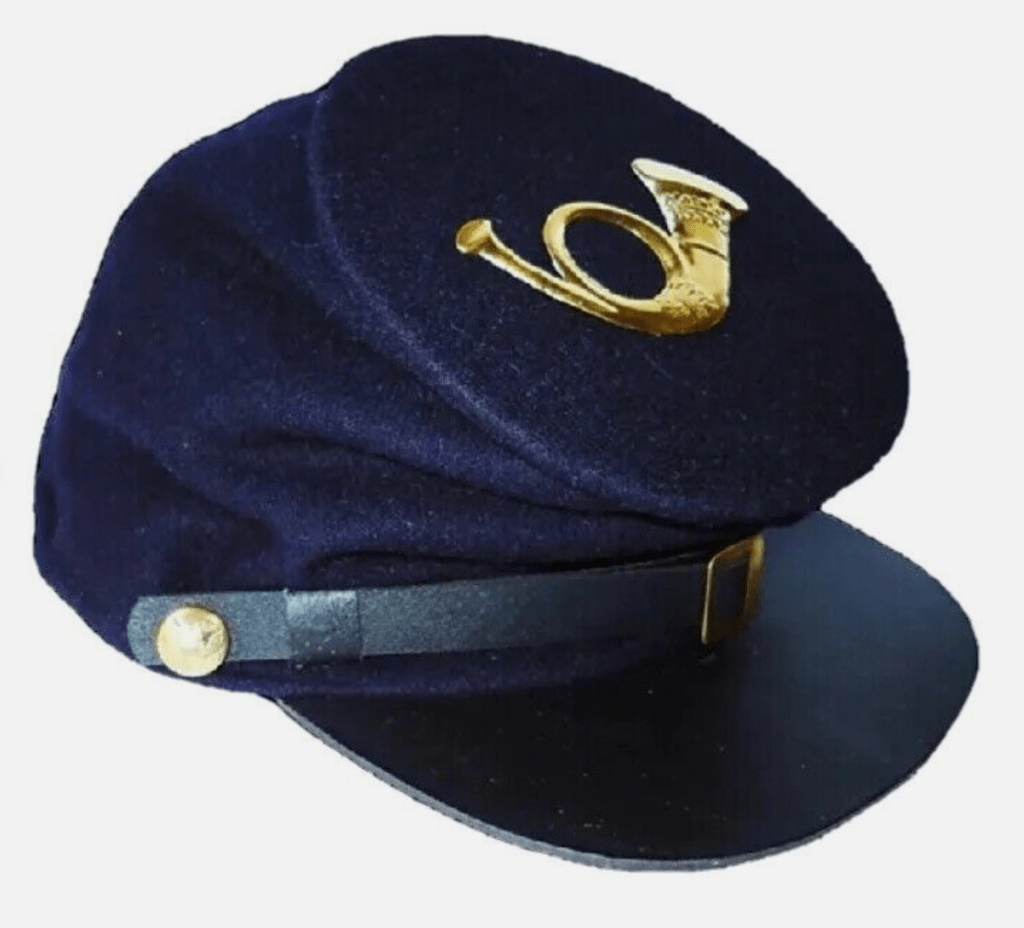
His grip was sweaty upon his piece. His mouth was dry; the sun beat down upon his wool jacket. He swore he could feel the sun build heat in the brass bugle upon his bummer cap; he was a man of the line, an infantryman.
His mission; to close with and kill the enemy on this accursed field.
“Thou shalt not kill,” the preacherman said.
But today, he would.
He’d kill Rebs just like him, children of the same God. How could he figure that right? How could he ever be clean?
ROAR. They screamed. They trilled; it was the Rebel Yell.
They meant to leave him cold and splayed-legged upon the field. With the bayonet that pierced, the bullet that killed. Grapeshot to smear him across the bright green grass or a ball that would cleave him in two.
The hell with that! His mouth was dry; his vision narrowed into a tunnel. He saw the running Rebs in their butternut and gray. Oh, Lord Jesus, he thought.
His Lieutenant screamed.
“Hold, Boys! Hold!”
The man held his sword along the line of troopers, straight across as if to hold them back.
Zip. Phweet. Snap!
“Uh,” said the man next to him. Ephraim. He fell as if his strings were cut.
Jim pissed himself. He would hold. On the grave of his father, on the spirits of his ancestors, he would hold.
WHUMP.
The Rebs had artillery, too. A gap formed in the line of blue.
“Close ranks! Close ranks!”
Jim moved. It was automatic, a mindless drill. The Rebs closed upon their line. They were close. Close!
“Present, Arms!”
Jim brought his rifle to his shoulder.
“Full cock and aim low!”
Jim ran his hammer back and sighted on a shouting man with a dirty blonde beard.
“First rank, fire!”
Jim smashed his trigger. The yelling, bearded man disappeared behind a dirty puff of smoke. Had he just killed a man? He was too busy to care.
Jim automatically kneeled; he pulled a cartridge out, bit off the end, and dumped it in his barrel. He smashed the ball into his barrel with the ramrod, ran the hammer to half-cock, and placed a cap upon the nipple. He was ready.
By his ear, the second rank fired with a deafening, ragged blast.
The Reb’s advance faltered. So many of them fell.
The third rank fired.
The Rebs screamed, their charge decimated.
“First Rank!”
Jim stood.
“Full cock!”
Jim’s heart pounded. The rebels fell. His heart hammered away; he screamed. Something squeezed his chest as if a great weight pressed upon him. He fought to breathe. He couldn’t. For the love of God, he couldn’t.
Jim fired. The Rebel’s line fell apart. He sagged to his knees. They got me, he thought.
On the 21st of August, 1931, James Buckmaster fell at last. His daughter found him.
They listed “heart failure” on his death certificate.





 The Interstellar Valley