2025 AWD Hybrid XL Ford Maverick review; breaking my strange hiatus.

Hey, all. I know it’s been a long time; my longest break from this page since 2017, when I started it. I have good reason for this. I’ve told the people behind my paywall site some of my reasoning, but certainly not all. While you guys are my crew, I remember this is a free-access, public-facing page, so I must restrict information here. I’m sure you understand.

I will put out that I’ve been heavily involved with my relatives in Minnesota, and I’ve experienced life-changing events over the past few months. In addition, I’ve been busy with a medium-scale construction project which has been creatively and physically demanding.

The good news is that I managed to mostly conclude the project without exacerbating my old wounds and injuries, and I’ve gotten to know my relatives out west far better than I thought I ever would. If you dig back through the archives, I’ve spoken a little about this process. It’s a hidden history rediscovered by this guy over the past five years; and it turns out that I had an entire family waiting in Minnesota.

They didn’t go anywhere. Once contacted, they instantly rekindled old ties, asking no questions beyond verification of specific facts.

Trust me, it’s been a lot. Some aspects have been so stunning that they stilled my tongue and my pen.

But here we are, and today I’d like to talk about my formerly new, AWD hybrid 2025 Ford Maverick in the basic XL trim.

Ho-ly crap, what a truck!!!

As I’ve stated in earlier posts, I’ve owned many American-style pickup trucks in my life. Some of my earliest memories are of those trucks. My dad had a ’59 Chevy stepside that I suspect was converted to 4WD at some point in its life. We had it until the late eighties. It was an ugly mottled reddish, and it would not die. I think Dad sold it for 800 bucks when we moved off the farm. There were many others, but that truck stands out.

I like full-size trucks. But, as I’ve passed over the fifty mark, I realized that I don’t need one for daily driving. I needed something smaller, and definitely better on gas.

Enter the Ford Maverick. I bought my first one in 2022. Due to weird circumstances, I am on my third one. This review is about the 2025 model.

All three of my Mavericks have been the XL model because I demand “steely” wheels in a work truck. Each was used and worked hard. Each had a different drivetrain. The first was gas-only, the second was hybrid, FWD, and this third truck was what I wanted back in ’22, an AWD hybrid with the 4K tow package.

Guys, all of my Mavericks have been…stunning. I’ll give the real-world gas mileage for each; I’ve never used anything but 87 gas.

The ’22 Ecoboost got an impressive 32.5 mpg average at 52,000 miles on trade-in. It was AWD with the 4K tow package. The ’23 FWD hybrid had an incredible, gas-sipping average of 42.5 (!) mpg when I sold it to a friend at 18K miles.

It was a serious question what this ’25’s mileage would be; there were many unknowns. Like the ’23, it was a hybrid. But, like the ’22, it was AWD with the tow package. I suspected the mpg average would fall between the two vehicles, and I was proven right, with one exception, which I’ll cover later.

Right now, at about 23K miles (so much for taking it easy on this truck, but I’ll explain later), it gets 38.3 mpg, honest mileage. YES, I am pleased!

I won’t talk about the cool base stuff this Maverick has, because I’ve covered that in my other reviews. I’ll talk about stuff specific to this truck.

First, allow me to say I wasn’t happy that Ford made me shell out for CoPilot 360. It cost about 800 bucks and was mandatory with the 4K tow package. However…allow me to eat some crow here. I discovered much later that the CoPilot is AWESOME when you are trailering. I’ll talk about this later.

Next, this was the first model year with an AWD hybrid ‘Mav. When I saw the EPA sticker mileage, I was displeased at the advertised 28 mpg overall rating. I shouldn’t have worried. After break-in, my truck is way better than advertised on gas. It does indeed fall in between the real-world mileage of my two earlier Mavs, and I am well-pleased.

Finally, I shelled out for the tri-fold, hard tonneau. Guys, I will never again go without this feature. No way, no how. It secures your load, keeps things dry, and is just plain handy as heck.

So…let me tell you how I have worked this truck. Mine is an extreme case, but I always tried to stay within its operating margins. 4K towing, and 1500 pounds haul.

Well, I tried, but I failed. Don’t rat me out to Ford, please.

I knew I had a tough nut to crack on the construction project over a thousand miles from my residence. This was the first step into the basement of madness. On a late April day, when the truck was about two months old, I loaded it with supplies, including a bulky roll of woven-wire ag fencing, two kayaks, and tools. I left, my truck loaded with about its rated capacity. I got slightly worse than average mileage on the trip out, and the Mav did just fine in terms of handling and power, which was in line with my expectations.

The worksite was where the AWD feature came in handy, as I had anticipated. The Maverick did just fine in rough-field conditions and excelled on unpaved roads, which I’d experienced with my ’22. By the way, the FWD versions aren’t terrible either. But I was very glad to have AWD again, and I loved the mileage. After doing some clearing work on a forested patch, I returned to my distant residence.

My next mission was a few weeks later, when I returned to the work site with my victims—uh, helpers, I mean. These were my old friend and his teenage son, whom he wanted to expose to manual labor. Laughs! Oh boy, did I!

Heavily loaded again, we took off, my friend in the shotgun seat, and his son in the back. I must point out here that the Maverick, all models, is a very comfortable truck. His son did fine on the backseat of the crew cab, and my bud and I rode in style in the front.

What followed in the next three weeks was a slaughter where the Maverick performed daily as a true worksite beast under very trying conditions in the Northern Boreal Forest. Ho-ly-shit was it a nightmare! We went from a lumpy, weedy semi-cleared patch to…a partially finished cabin in a fenced-in, mostly cleared, kind-of-yard amidst the towering pines, birches, and tamaracks.

We took a few breaks and did a little sightseeing, too. The ’25 Maverick handled all this with aplomb, and on the stock not-so-great tires. Exhausted, we returned to our departure point. As a minor miracle, we were all still friends, and no one died. This could only be interpreted as a plus.

But, what for some would be a very full summer, the games weren’t over. No, no, they weren’t. Yet again, I returned to Minnesota to work on the cabin some more and attend an event in the southern part of the state. This was probably the easiest phase of the total operation, and the Mav handled it with flying colors, of course.

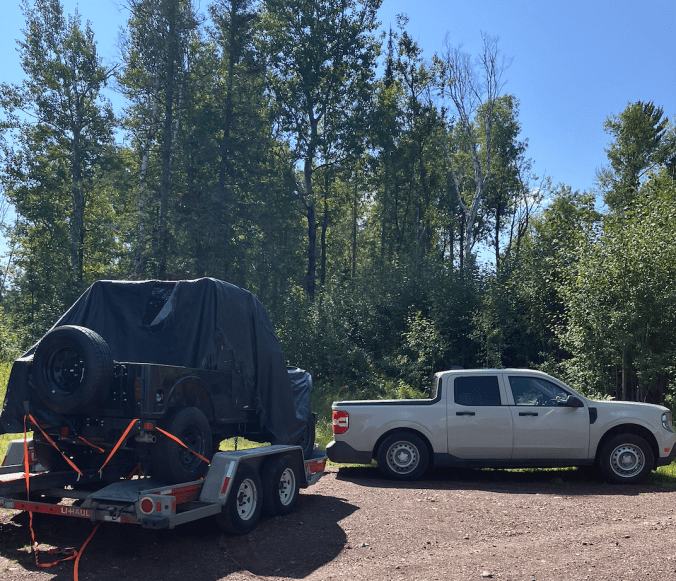
Then, deciding that my Mahinda Roxor really belonged up there, I hatched a plan to transport it to the work site by that distant lake. I had a 4K tow package, right? I’d purchased the package with exactly this in mind, actually, and it SHOULD fall within my Mav’s design specs. However, I didn’t want to buy a car hauler trailer, as I would use it very infrequently, and once the Roxor was ensconced up there, I’d probably never use one again.

Therefore, a U-Haul trailer was the only feasible option. After jumping through some hoops, I planned my final Minnesota trip for the year and rented the trailer. As the mission start date approached, I went to pick up the trailer, which hooked up without any problems.

No problems there, at least, with the mechanical bits. No. The problem was the trailer GVW, which exceeded my expectations by about 1200 lbs (!). I will say this—U-haul trailers are no joke, and they tow very well. That was the good news. The bad news was that my loaded trailer GVW was now about 5200 lbs, and I didn’t like that, but I had little choice. True, the U-haul trailer had surge brakes, so I didn’t question the safety aspect. My concern was could the little truck tow the vehicle all the hell way to Minnesota at highway speeds?

I loaded up, and found out.

Here is where I must describe how awesome Ford’s CoPilot 360 is and how I’ve grown to demand it in future vehicles. When I hooked up the trailer, a first for this vehicle, a widget automatically popped up on the info screen and asked me some questions. It asked the trailer’s dimensions, and it asked me to name the trailer, which I thought was odd. However, I learned later that that is handy, and well designed.

The CoPilot automatically recalibrated the handy blind spot monitoring lights on the mirrors (a blinking yellow car icon that is VERY easy to see) to account for my trailer! How awesome is that? I can attest that this comes in very handy in rush-hour traffic in places like Indianapolis, for example.

Don’t do what I did. I miscalculated my overall GVW and was forced, at the last minute, to proceed with strong misgivings. But…observe.

The Little Truck That Could, did.

After 23 hours of sheer hell, I made it to the camp, brushed my teeth, and passed the hell out in the driver’s seat.

Once again, don’t try this at home. It was poorly thought out and asked too much of the vehicle. It was a white-knuckle trip the whole way, and if I’d had to go through big hills or mountains, I don’t think it would have been feasible. As it was, I mostly dealt with the plains and some rolling hills. The only true challenge was climbing out of the Ohio River Valley; as I pulled away from the river, I had to drop it down to 50 mph as I didn’t like how hard the engine was laboring. For the rest of the trip, I was pegged at 56 MPH, as the very large sticker on the driver’s fender of the U-haul trailer reminded me. 55 MPH MAXIMUM. There were no issues with power or handling.

This, along with other factors, made a 16-hour trip into a mind-bending 23-hour hell. I will always loathe the late-night fog I experienced in Wisconsin, which prolonged the agony.

In addition, the ‘Mav, which has great mileage, delivered full-size truck mileage on this trip, with a sedan-sized gas tank. More delays, but one can hardly blame the truck, of which too much was asked. I had it in tow mode the whole way, and my mileage was about 20 Mpg.

But—it got the job done, and I was never so glad as to drop off that stinking trailer that afternoon, as I was passed out behind the wheel until then. I did a few days’ worth of work on the cabin, and then I headed south to the Twin Cities area for a community event, a family reunion of sorts. The truck, predictably, breezed down the highway, mileage much improved (I reset my average after that exceptional hell trip).

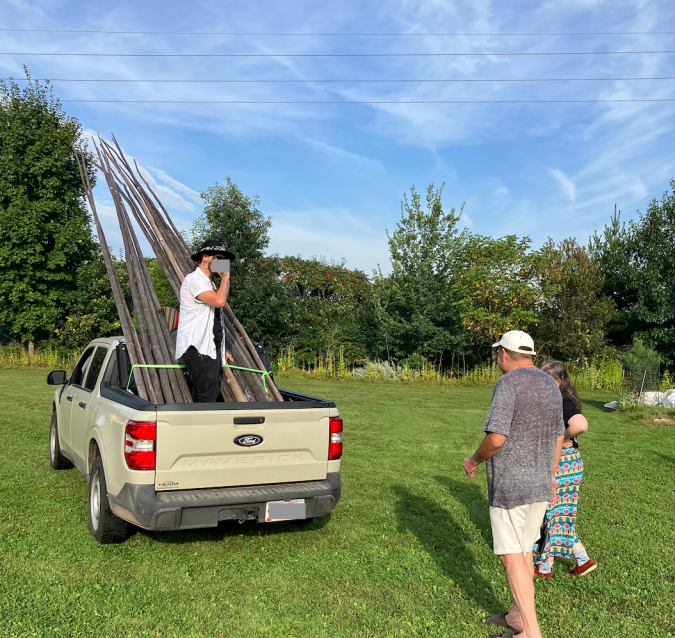
Laughs. I should have known! Once on the event grounds, people noticed I had a truck. “Hey, could you haul some thìpi poles?” “I dunno. How long are they?” “Twenty feet.” “WTF?”

It was yet another stunning moment for the Ford Maverick. Assured that we didn’t have to go far or fast, I left with a small party and collected the very long poles. Ho-ly-shit, the little Mav did it again! We placed them carefully in the Mav-that-could, strapped them down, and then, slowly and carefully, we transported them to the grounds.

Another success. I did my thing at the event, and made yet another trip home.

But…the fun wasn’t over for the Mav. Reader, you may ask yourself what in Pete’s name else I could pack into this crazy summer, but I managed. Once home, some life circumstances changed, and I had to move some stuff around. The Maverick was a key part of this effort. I’m not sure how much cargo I moved over the next two weeks, but it was a lot. In addition, I made a few long-distance trailer runs with the magnificent Harbor Freight unit I have. I squirted the axles full of good bearing grease, checked the lights, and took off on a few runs.

The Maverick laughed at loads of garden equipment and other odds and ends. Hell, listening to the engine I didn’t even bother to switch it to tow mode; in my opinion, it didn’t need it, and my mileage barely suffered at about 62 mph on the interstate (I didn’t want to do 70+ with a little trailer).

At last, the summer of torment for the Maverick was done.

It passed with flying colors in every regard, and to say I am pleased would be a drastic understatement. I asked full-sized truck work out of a compact, supposedly light-duty truck, and it KICKED MAJOR ASS.

By all means, consider buying a Ford Maverick. I’ll bet I have more experience with these trucks than almost anyone in the US, across a range of models, and I can say beyond a shadow of a doubt that this is a well-designed, sturdy, efficient, and comfortable ride across vast distances and under varying and trying conditions.

SIX FULL STARS, no exceptions.

My Strange Passion, Cheap Amazon Violins.

Long-time readers will know that I have an odd hobby: I work on violins. I’ve done almost everything to them, except a sound post crack repair, which is very difficult. I’ve had old violins in many pieces on my bench; to date, I haven’t destroyed one. There is a dark art to repairing them, which I enjoy. I’d like to think that I’m improving with time. Perhaps.

An outgrowth of these repairs is a minor passion for selecting cheap instruments on Amazon and seeing what I can do to improve them. One model that I’m very familiar with is the Cecilio MV300; it’s cheap, and the fundamentals are solid. I’ve also tried others. Some were good, some were worthy only of donations to local schools. You can make many improvements to help an inexpensive violin, but some things are a no-go.

I’m referring to paint, as opposed to varnish. I’m also talking about plywood plates: those are terrible. In addition, false beautifications such as painted purfling (the wood inlay around the edge), false character added to the wood (think airbrushed tiger striping on the belly and ribs), and anything that detracts from the natural beauty of the honest wood.

I’d rather plain-Jane but honest spruce and maple. You must have a spruce top plate and a maple body. It’s not just aesthetic; it’s about the violin’s performance. There are good reasons why violin makers have used those woods since the late Middle Ages! I say this to establish that ALL cheap violins I buy on Amazon have these basic materials and construction. They also must have full-length bass bars with an OK profile. You can see them through the left F-hole. It’s a performance thing. You can’t compromise here.

I’m astonished that you can find violins for less than 100 USD with everything I require. In addition, these violins come with a case, a bow, usually a polishing cloth with rosin, and they throw in a cheap tuner, too.

But here’s a cautionary note: these violins are seldom ready to play.

What do I mean? They come with everything you need, right? They do. However, the fitting and strings are terrible in most cases; I’ve seen exceptions, but as a rule, this is a fact.

If you don’t want to mess around with the fitting, spend some money and get this model or this one. These violins are ready to play out of the box. These are made by the same company as the violin I’m reviewing today, but they’re MUCH HIGHER GRADE. I know- I own one of each, and they are easily equal in quality to 1800 dollar violins that I’ve purchased from a well-known US-based violin specialty store. These are Cadillac, traditionally manufactured instruments! The catch is that they come all the way from China, and you may wait a while to receive one. However, it’s worth it, I assure you. While you must be judicious, Yinfente is a legit manufacturer, and their products, while not well known, can be great if you shop carefully.

But I’m not talking about those violins today. I’m talking about the “Yinfente 4/4 Acoustic Violin Kit,” which, after checking the well-known online violin retailer, I suspect is the exact same model as one of their low-end fiddles. Of course, the well-known retailer’s offering has a nicer case and is probably warmed over by their in-house luthier. Still, upon close examination, I believe it is the same base instrument for three hundred dollars more.

But I digress.

I had experience with Yinfente and came away impressed, so I decided to try their lowest grade offering for 100 USD. As is frequently the case with cheap Amazon fiddles, you get it all. A bow, a tuner, a case, rosin, etc. How can you go wrong? Well, you can if you order from the wrong company or the wrong model—many terrible instruments are available at this price point. Caveat Emptor, and all of that. But the models I’ve linked to above are OK with varying degrees of elbow grease. The Cecilio lots, the high-end Yinfentes almost none. How would this low-end Yinfente be, I wondered? I ordered it, and it came in faster than I expected—one must have been hanging around in a Stateside warehouse. This is not always the case; I’ve waited up to five weeks.

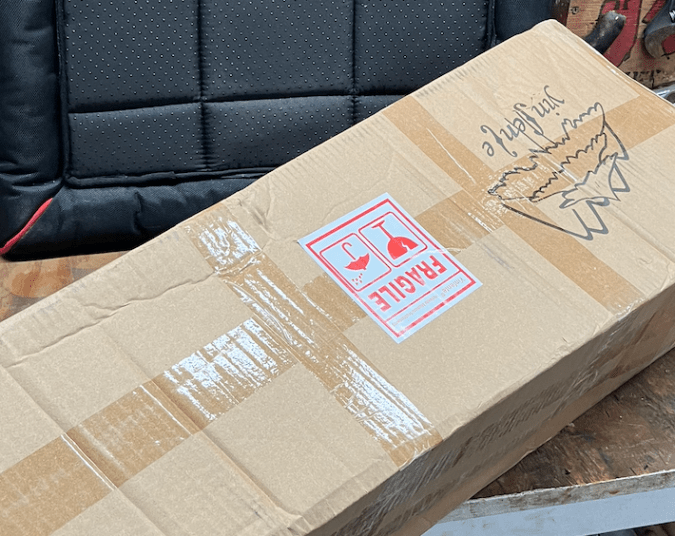
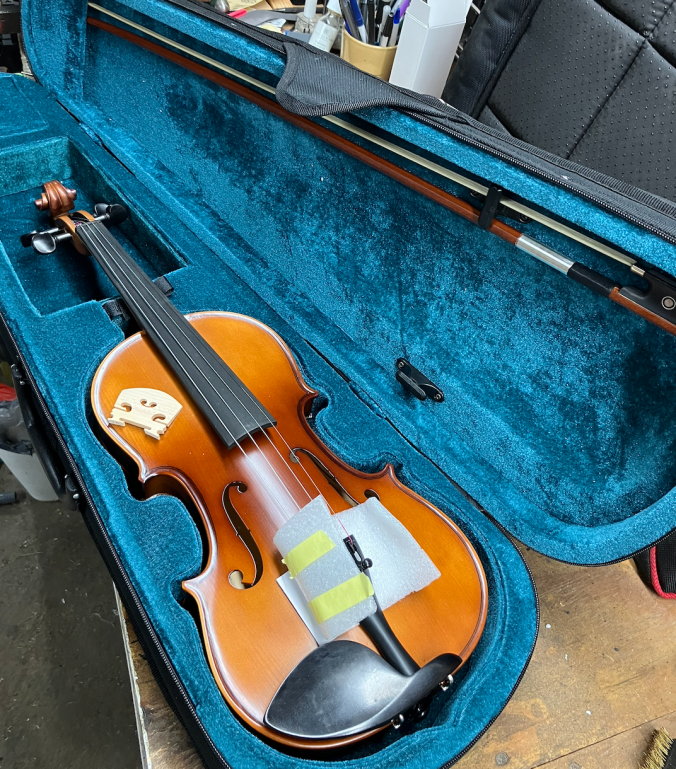
The big box arrived. This is always a moment with a tingle of excitement for me. What will I get? I busted open the box and opened the case. Here’s what I saw.

At first glance, it was a pedestrian instrument. I noted its genuine ebony furniture; violins at this price point usually have painted wood. The top was spruce. Before I flipped it over to check the belly, I looked at the bow, which was surprisingly nice. Actually, I shouldn’t have been surprised; just about all of the bows I’ve received from this manufacturer have been good. At this price point, you usually receive what I lovingly call AK-47 bows; they can charitably be called serviceable. Yes, the fiddle came with rosin, a tuner, extra strings, etc. They said it was a complete setup, it was. I didn’t like the bridge however, and I noticed the grooves on the nut would have to be deepened. However, the pattern was good, so that was a plus. It was time to flip it over and look at the belly.

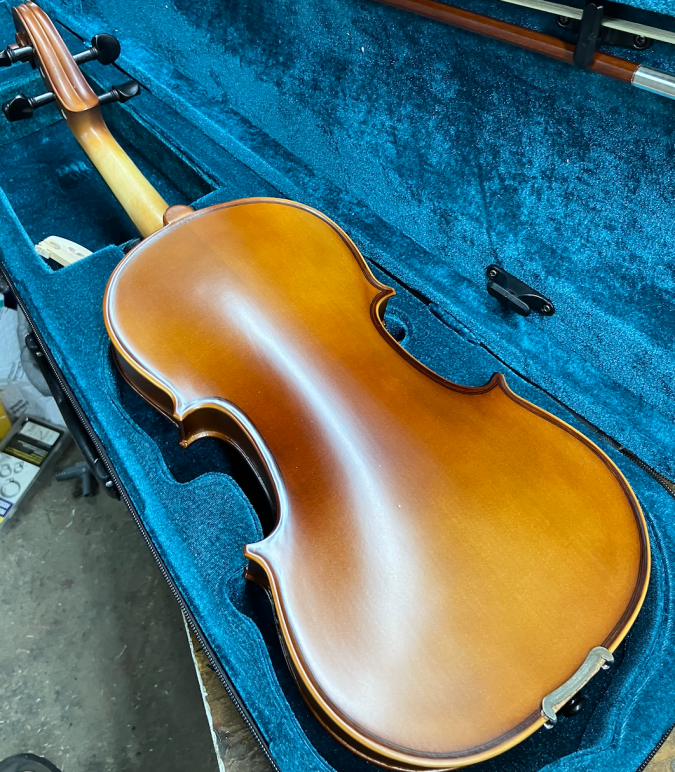
I have to say I was disappointed; I’d hoped for at least a little figure or flaming. Sometimes even the cheap Cecilios have that; this one just looked ugly and brown. However, it was maple, and that is what matters. While I was at it, I checked the position of the sound post and was annoyed again. The stupid thing was in the arch; it was badly misplaced. This, of course, meant more work for me. A sound post must be placed just aft of the treble side of the bridge foot, preferably a bit toward the F-hole. This one was waaaaaay off! I shook my head, put away the case, and started the process. I knew what I needed to do.

And by the way, the strings were the standard Chinese factory junk. Chinese strings can be good—higher grades exist. These were not. I’ve learned the hard way to dump them in the trash immediately. I’m not sure why they even bother- it’s like playing on a cattle fence, and I’m hardly an elitist.

It was time to get out The Clamp- the indispensable tool for violin maintenance. Observe.

I stripped the fiddle down; you must remove the chinrest to put it into the clamp. Also, if you’re doing a bridge, you must remove the strings and tailpiece. Note, I removed the end pin as well; you have to if you reposition the sound post (GRRRR). You need to look through the end pin hole to see if you’ve set it straight, which is easier said than done. What should have been an easy job was complicated by carelessness; the sound post dude must have been in a rush to go on tea break or something. The piece of tape on the top plate is a visual aid I use; it indicates where the sound post SHOULD go, which was not how it arrived. Obviously.

I did the part I hate worst first, the sound post. See below.

These are the required tools. The weird cloverleaf thing moves the post around once it’s jammed in. It’s a friction fit. The clamp thing is the sound post retriever. You need it when you remove the post by knocking it over, and you need it some more when you inevitably mess up. The machinist’s scribe jams into the post; you need to stick it into the post when you install it. And all of this needs to be done through the treble side F hole. Does it sound like a pain? It is. And then, when you think it’s great, you look through the end pin hole and see…that it’s crooked AF and you need to adjust it, again.

Sometimes, it’s easy. Sometimes, it’s not. But I got it done.

It was time to move to the bridge. I selected a bridge from my handy stack of bridges, which I scored for fifty cents a piece. I fished through and found one with good wood grain (the long grains must go toward the player), then I gave it the bounce test to see how it sounded. This sounds stupid, but it’s not. You want dense wood in a bridge. Dense wood has a different sound from lighter, looser grain.

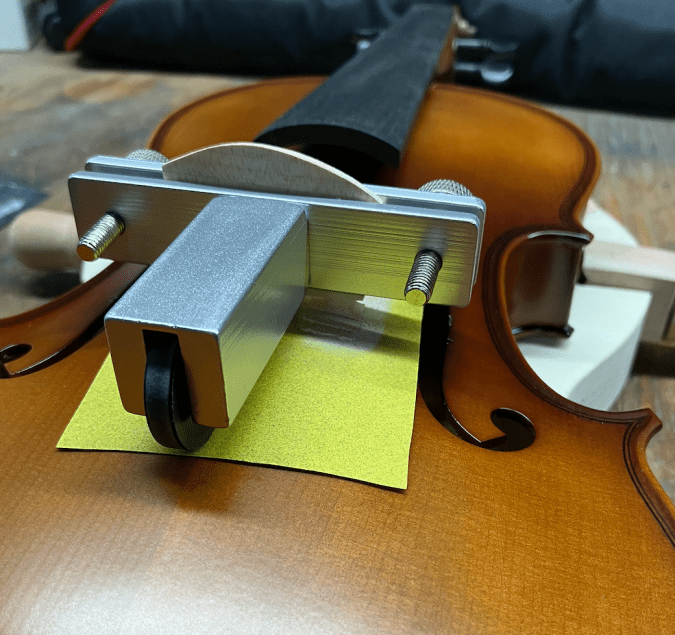
Bridges are an art form; I’m still unsatisfied with my bridges, but I’m improving. First, you must fit the bridge to the top plate. I use yet another special tool for this, which requires practice.

Ideally, the feet of the bridge should be about one millimeter thick and perfectly formed to the lid. You do that by clamping the bridge in this tool and then you move it back and forth upon a piece of 220 sandpaper until it’s close. Then, you switch to 600, and finish it off with 1000. Note: when done, the bridge must be at a ninety degree angle to the top plate, or you’re going to have trouble when you tune. In this case, all was well, and I moved on to carving and profiling.

Carving can be intricate; the point is both beauty and mass. The less mass, the better the resonance. I could go into detail, but I won’t. Suffice it to say that you have to work on the “ankles” of the bridge, and enlarge both the “hearts” and the “kidneys” of the bridge, and then make a few cuts with a razor knife. And of course, you must not weaken the bridge. Practice makes perfect, I guess.

I could point out a few less-than-perfect spots on this bridge, but I won’t bother. This is after I strung the instrument; it’s good enough, I suppose. Next time, it will be better, but it has improved much over what I received.

I did a bunch of other stuff, too. I wasn’t a fan of the rough texture of the fingerboard, so I sanded it lightly with 600 grit. Lightly! Fingerboards have a “hollow” of .7mm, you do not want to screw that up. A flat fingerboard isn’t good, it’s a resonance issue. After smoothing out the tooling marks, I added a very light coat of olive oil to the fingerboard only—so light, that it is dry to the touch. Then, I carefully deepened the string grooves for playablity, and penciled the grooves for lubrication.

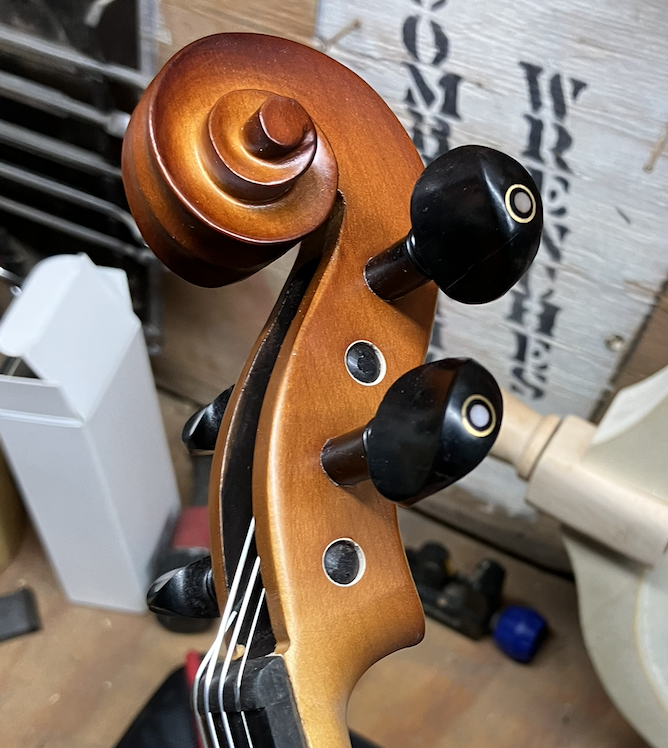
The tailpiece was fine. It was a plastic student piece. If it were one of the cast aluminum ones, you’d be better off throwing it away; they are junk and will break every time. The saddle and endpin were good, too. I was impressed by the work on the peg box—the good-quality pegs were well-fitted, which is rarely the case at this price point. All I did was to add some peg soap and they were ready to string. Observe.

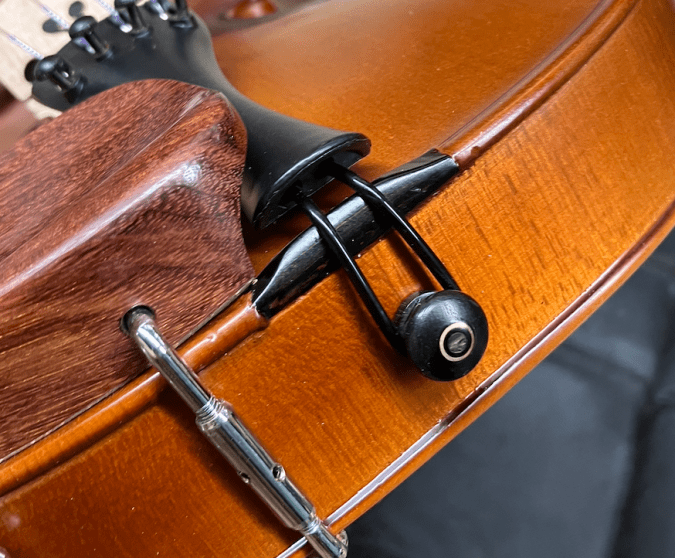
This is pretty nice for a hundred-dollar fiddle box! I also liked the end pin. I made an aesthetic choice to replace the perfectly good ebony chinrest with a rosewood unit. I think this adds a splash of color, and you may agree. See below.

I chose Fiddlerman strings because they’re what I have at the moment. These are good strings. While I wouldn’t go with expensive strings on this instrument (like Dominants), you can’t go wrong with a string upgrade here. Don’t spend more than about thirty bucks, however. Pirastros or Ascentes would be great too.

After prepping the tailpiece screws with a very light coat of bearing grease, I strung the instrument, taking care not to pop the new bridge (as you tighten the strings, the bridge will begin to lean forward). As usual, I took it easy and let the strings stretch as I went. After a few hours, it held tune and was ready for pics and a little play.

Of course, when the instrument was naked, I polished it with Supertonic, my personal fav.

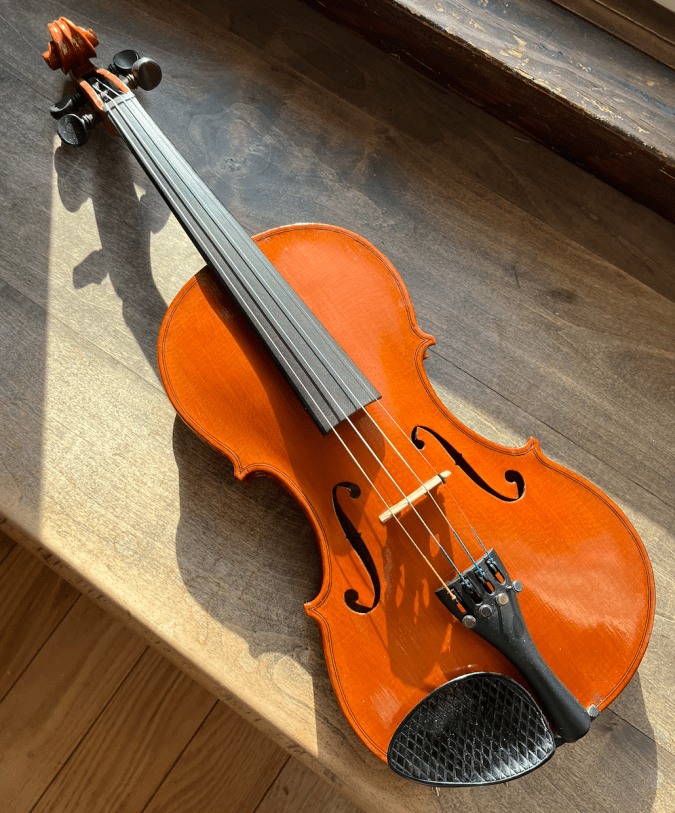
This fiddle surprised me a bit; I think it dressed up fairly well. See the belly in sunlight, polished.

Huh. There is some faint figure to the wood. Amazing what different lighting and polish will do!

But the looks aren’t what makes a fiddle; it’s how it plays.

This fiddle plays pretty well; I took it for a stroll this morning. In addition, because of my few mods, it handles and feels good, too. Playability is important! A fiddle that doesn’t feel right doesn’t play well, either. A bunch of little stuff adds up, trust me.

Here is the final product, a decent little hundred-dollar fiddle.

Not bad, I say. And it was fun!

Peace.

It’s a Hard Thing

It’s a hard thing, it turns out, to get started again on a project you abandoned for good reason. Both ISOLATED and MAGIC are kicking my butt, but in different ways. A technique I’ve honed, for lack of a better word, over the years is to think about what I’m trying to do and then walk away and do something else.

This is why I keep a player sitting on my dining room table.

This month, it’s Joe, the violin you see above. Joe is a unique violin, one of a few crafted by an old pipefitter who made violins in his workshop for fun. He was a friend of a violinmaker I know over in PA. Mr. Joe Knight of Clarion, Pennsylvania, has since passed on.

I never met Mr. Knight, but I would have liked to have. I imagine his scarred old hands, battered by years in the mill, very carefully building the fiddle above, number 37 of a lifetime total of about fifty. BTW, it’s a great player. It easily matches my mediocre ability; I feel privileged to have had a chance to buy this wonderful instrument. It is made of local choice hardwoods, selected by Joe the Pipefitter.

It is a testament to a life after your chosen trade.

In his case, wrestling with monster machines deep in the guts of a steel mill. In my case, soldiering.

He built violins. I write. I do wonder if he had days when he threw up his hands and said, “This sucks.” I’d imagine so. Then, like me and others who feel as if they’re shouting into a hole dug in the forest, he returned the next day, picked up his tools, and began anew.

This is kind of where I’m at: Never quit, never surrender. This extends to all myriad hobbies and interests; keep chipping away because one day, you’ll succeed. The rock is there. It isn’t going away.

It might not be immediately obvious. Actually, it probably won’t be. Few things in life worth having fall into the category of “immediate gratification.” Whether that be my eternal struggle with those darn violins, building stuff for projects, or my prose.

Never quit, never surrender.

It’s a useful mantra for difficult things and situations—which, readers, I am in the midst of. As I sit here typing and enjoying my morning brew, I have a thousand things to do. All of them are somewhat important; each one screams for my attention. It’s a question of triage: which comes first? Some will be hard due to physical limitations, and others will be tough due to mental hangups.

But that’s OK. Nothing in life worth having is easy.

But you can’t always grind. Hence, Joe the Fiddle on my dining room table. I write or think, then pick him up and play for a minute or two. Sometimes it sounds good; other times, it sucks. Everything eventually frustrates: I take things in small doses. Then, I walk away and do something else.

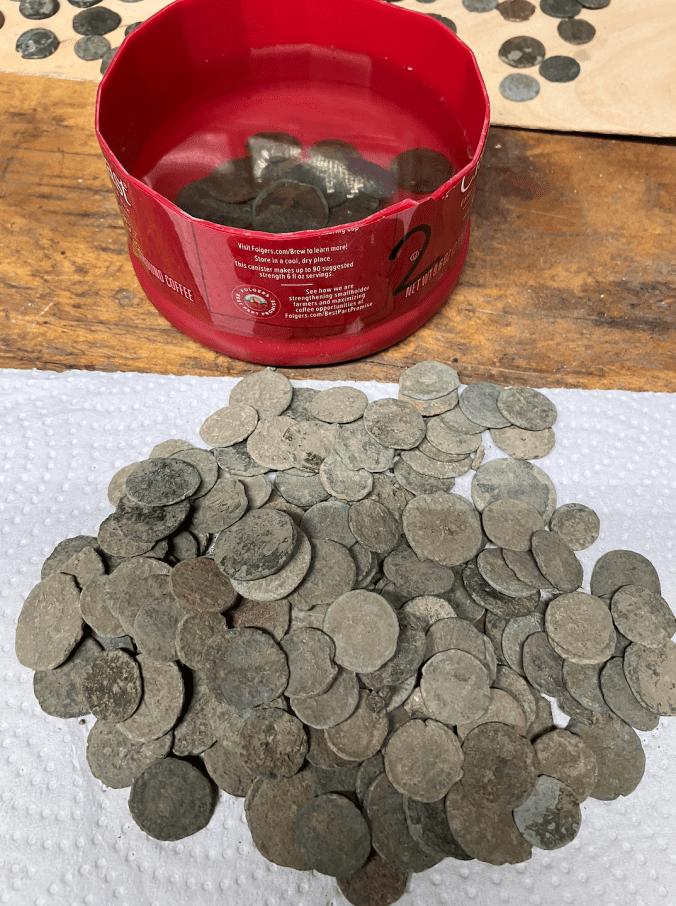
Lately, my reward after a somewhat successful day has been to clean and decipher Roman coins, which I have purchased cut rate. I would also like to thank Doc Wetsman again for this most interesting diversion.

Observe.

Admittedly, they look like hell, but under the crust are some real gems. It’s a revelation for me to see the face of a long-dead Emporer emerge from the sludge; it’s addictive and mesmerizing. Of course, I can only mess with them for a bit; like so many things, I start to stiffen up after a few minutes, and then I need to do something else.

This is the price of a little combat years and years ago.

Amazing how a few moments of your life can color the rest of your days, for better or ill. Shrugs. It is, what it is.

The rock and the hill are there; they are not going away. You will get new content as soon as I get my stuff together and produce. The next chapter of whichever project represents a boulder. Sisyphus’s real problem wasn’t getting the rock over the crest. No. It was that as soon as one boulder tipped over the hill, a new one would appear. That’s my version.

But it’s OK. Oddly enough, collecting boulders is kind of fun. Is the glass half empty, or full?

It’s your call.

—J

Trouble

My grandmother used to say “if you don’t have anything good to say, don’t say it at all.” She was a smart lady, and she lived to be very old. Now, she’s gone, along with 99% of her generation. I knew when those wise old folks, who watched a world burn, were gone, that we would have trouble. I think I’m right. Which is why I took the longest hiatus from this website since I started it seven years ago. I didn’t have anything good to say in December, and I still don’t.

But I do have things to say. It’s up to you to judge if they are good or not.

First, I have experienced a great deal of personal turmoil lately. That’s no one’s problem but mine. The turmoil is a direct result of recent developments in the news; my more alert readers can make of that what they will. Bad news is not hard to find. This has put me off my game.

Second, I’ve always looked for solutions to difficult problems. Right now, I have a problem, and I’ve found a partial solution. I’m not going to say anything more about that. It’s my cross to bear, and if it works out, it should be a lot of fun. Broadening my scope, I’m not sure how we dig ourselves out of our current mess. Leadership matters, and we suffer from the lack thereof.

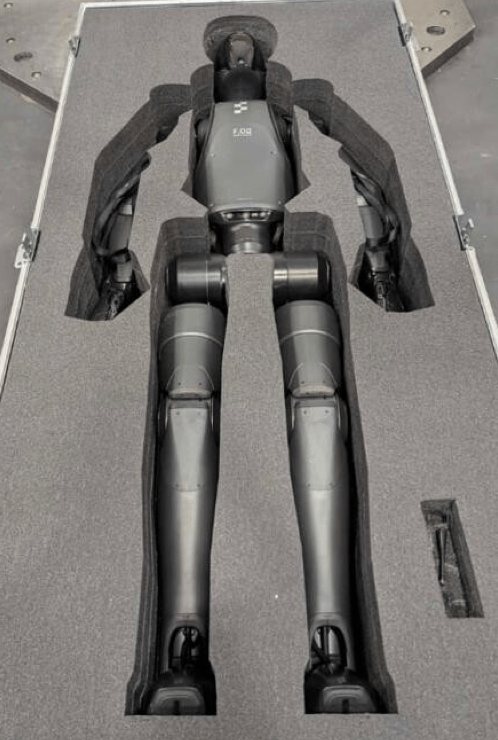
Third, as I alluded to, we are led by people who do not have anyone’s best interests in mind. I’d thought to write an article called “Hyper Intelligent Idiots,” but I decided against it. No one cares, anyway. Three hundred and sixty million people are asleep at the switch, all of us are to blame. This includes me; I am part of the problem. I will show you an image, however. Observe.

This robot, called Figure 02, is made by Figure AI. Alas, I’ve been talking about this since I started writing, and I’ve addressed this specifically in my sci-fi. “This” is the replacement of humans on a mass scale. It won’t happen tomorrow, but it will happen. There is too much money involved, invested by too many intelligent idiots.

What do I mean by an “intelligent idiot?”

A friend remarked that boardrooms are full of them. They are people who are good at exactly one thing, and they pursue that thing regardless of cost. They have zero common sense, and frequently no empathy, either.

These people, whose number includes the wealthiest among us, will bring a Terminator to the store near you. Far fetched? It isn’t. Just two weeks ago, the first robotic combined arms assault in history was launched on the Eastern Front; the Ukraine War has supercharged these bloody-minded developments. By the way, the attack was a success. I’m pretty sure from the beginnings of this website, and certainly in my first book, I’ve spoken of this.

It was a matter of time. Now, it is upon us.

So, fourth, I’ve concluded that our fates are in the hands of insanely wealthy, and possibly unstable, people who think we are all collateral damage waiting to happen; billions of loose ends that need to be tied off. What tool is better for this than the rapidly evolving progeny of Figure 02, who would be just as good on the battlefield as in an assembly plant?

An assembly plant? But what about the workers?

Laughs bitterly. Exactly. You’ve been had. There’s a reason the ultra rich have been buying islands with bigass bunkers or are looking at off world options. Think about it. There’s no reason for me to lay out every last detail of how we have succumbed to the greatest con in history, a trap laid by people who don’t even bother to lie anymore about their motivations.

In conclusion, I’ll talk about a subject endlessly tossed around in the gun mags of my youth. It was the constant rehashing of the folly of Army Ordnance in the 1950s, when they developed the M-14, and the Soviets fielded the Kalashnikov series. In short, when the rifleman’s rifle, the M-14, met the AK series in battle, the AK came out on top. Why, and what does this have to do with this piece?

The AK-47 was the direct result of Soviet battle experience in World War Two, where they discovered that the vast majority of firefights happened within a couple of hundred meters. They also found that a rifle had to work all of the time, including the worst times, and that it had to spit out a lot of lead, quickly. Accuracy and ergonomics were tertiary concerns, at best.

Strangely enough, US Army Ordnance, drawing from experience in the same war, decided that the prewar cult of the rifleman and superb accuracy and ergonomics trumped other considerations. The Army went forward with the M-14, and forced NATO to adopt the new round as standard, the 7.62 NATO, or .308 Winchester. At the time, the US Army could still dictate what NATO did, so several promising allied projects were scrapped, and the European armies adopted, grudgingly, the 7.62 as standard.

We are in the midst of another such folly. Instead of seeing the plain evidence before our eyes of failure on multiple levels, we press ahead with technologies and social patterns that assure disaster.

Some people think it’s a great thing to burn it all down. Of course, they think they personally will not be licked by the flame. I care to differ. Many think it’s a great idea to hand every last little thing over to the jet set. What? The people who run Homeowner’s Associations, and run the country club? Expect little mercy on that front. Others have the idea that having any government in our lives is poisonous. If you know your history, look up what a lack of government has been like, historically. The 17th century Scottish lowlands were a great example. That was a place where life was very, very cheap. Houses looked like forts because they had to be. Terror is a tyranny of a particularly cruel sort. It is frequently disguised as freedom. Finally, people just want to hand everything over to a strong ruler, to give up on thinking for themselves. To accept authority, legitimate or not.

This is the path to perdition, readers. I’ve been talking about this stuff for years, and now it is upon us. I won’t belabor the point.

I’ve got better things to do.

The Best Turkey I Ever Had

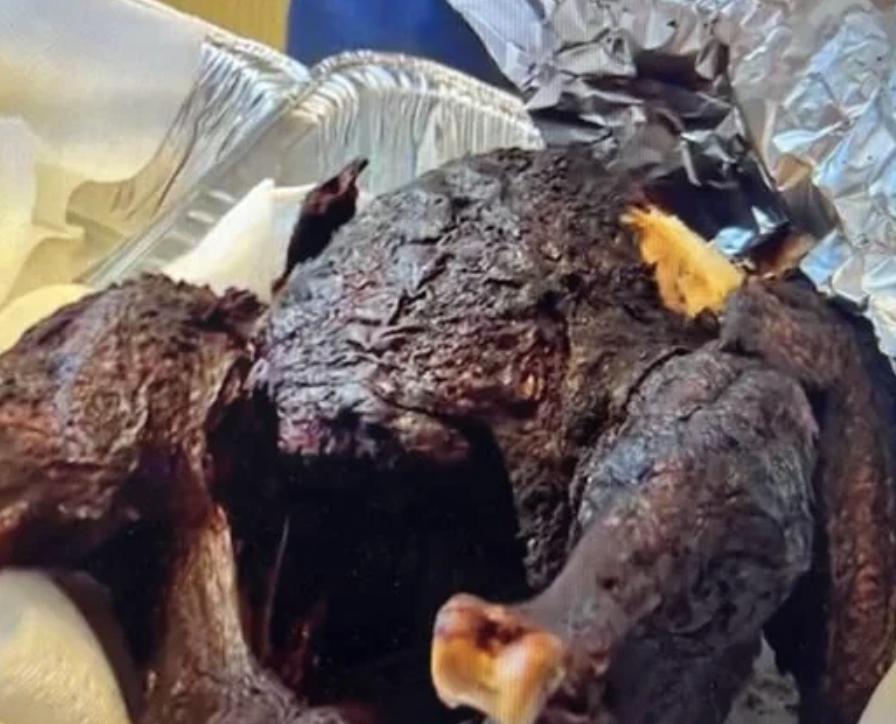
No, this isn’t the same turkey. But it strongly resembles it.

You know how to spot a bullshit story, right? It starts like this—”Well, there I was…”

This Thanksgiving Day tale begins like that. Except that it really happened, Thanksgiving Day, 2011, Camp Kilaguy, Baghlan Province, Afghanistan.

Some background. I think I’d just been promoted, and I was hurting. Most of the team was. Hacking, smoking too much, deadened. It’d been busy for a while, and we just came off a major, stupid thing out in some dive. Duststorms, cold weather, gray skies. A bright spot was that the new victims showed up, replacements from the States. We began the “right-seat ride” process, or orienting the FNGs to the area of operations.

I didn’t expect much, that Thanksgiving. But a crusty-ass NCO rode to the rescue. Sort of.

This guy, I’ll call him Toad, was a leather-faced thief and the author of a thousand tall tales. He was a veteran of the First Gulf, Iraq, and Afghanistan. Maybe other shit, I don’t know. But he had been around. Typical Air-borne 82nd dude, he was fond of mocking guys with a standard airborne badge, “Five-jump chump motherfucker. Cherry,” as he flicked his cigarette.

Toad was a gifted scrounger, which is the polite Army way of saying “thief.” On one occasion, I witnessed a spectacular act. Me and the Colonel were out on a thing, not sure how long. When we returned, we noticed a group of Joes or whoever cavorting in a hidden corner of the motor pool. What the hell was this, we wondered. The Colonel and me, still dusty and gross from the road and the field, wandered over.

There was a fucking swimming pool in the motor pool.

Army motor pools are not intended for literal pools, and to this day I have no idea where the pool came from. The Colonel said nothing, but I watched as his lips formed that dangerous grim line. We walked away, no comment made, and I went to clean my weapons like usual. The Colonel sought our Team Sergeant, the redoubtable Mike.

The pool disappeared like magic. No trace remained. I guess it was fun while it lasted, though.

That Thanksgiving, I didn’t care about anything other than going home, preferably not in a box. But Toad, the crafty, long-service NCO, had a plan to improve our day.

You see, Toad, while at times the epitome of a “leadership challenge,” could back up his bullshit, mostly. No one was better at taking care of soldiers, and he always took the mission seriously, even if nothing else—especially not petty things like Army regulations or the origin of stuff we needed, or just wanted.

Toad knew what we needed that day, and he delivered.

He appeared with a turkey, origin unknown. He had a plan to cook it using scarce, dubious and unsafe resources. You see, in Afghanistan, wood is precious. This is why for day-to-day cooking, people generally used dried sheep shit patties; this was why roadside kebab always had a tang. His plan was to use trash and ammo dunnage for cooking—the stuff that keeps munitions from rubbing together or being exposed to hard shocks; not exactly Kingsford charcoal, but it’s what Toad could get.

Toad executed. I’m not sure what I did that day, but I wasn’t involved with the dubious turkey prep. When not in the field, I had administrative duties or leadership BS. It was nonstop. A good guess would be briefings, training, or written order generation. Maybe weapons or vehicle maintenance, I don’t know anymore. However, at sunset, all of us came together in the supply shack (probably being used these days by the Taliban as a goat shed or something) to eat Toad’s spread; a well-done turkey with a chemical trash-fire tang, and T rat or purloined fixin’s, prepared as well as possible.

It was crowded, I remember. All twelve of us, maybe some replacements, I dunno, and definitely our adopted Air Force guys, the JTACs, or forward air controllers. Those guys! Nicknamed Fucks and Butter, they had gone full Colonel Kurtz and had bushy beards. However, they were real pros in the field, and had delivered for us. They belonged, and we awarded them the Army Combat Action Badge.

Even though one time I pee’d on Butter’s head. But that’s another story.

It was the best Thanksgiving turkey ever. Even though it tasted of burned toys, it was great.

A couple of weeks later, I boarded my freedom bird, never to see the Box again.

Happy Thanksgiving, readers. For all of this, I am grateful.

-Jason

The Short Black

Hello, all.

I’m writing from an undisclosed location, somewhere south of the equator, from which I will be be based for x amount of days.

In this Eden I’ve been surprised by the high quality of local food and drink, which the locals do not fully appreciate.

I do.

A simple trip to a very local supermarket reveals a staggering quality and quantity of food; the breads, cheeses, and meats are first rate and surprisingly affordable. While at Wally World in the States you can hardly escape with a few pathetic bags and your wallet lighter by a hundred-and-a-half, here, you can get the same amount of really first rate stuff, for less than half that amount.

Among the items of truly quality foods and drinks is the Short Black, a bracing, rich, black-as-midnight cup of Joe. This is not a cup of coffee in the US sense. This is an adrenaline producing, full-throttle, vicious jolt of pure, visceral essence of the esteemed coffee bean, while died well on the bottom of my tastefully appointed cup.

I have been instructed that one should never drink more than four of these guys in a day. I fear I have been remiss- and at some point I shall pay for my many sins.

The Short Black calls, and I should firmly resist.

But damn, are they fine. The perfect compliment to the sunrise; a trusted companion to the rising sun in the north-east.

This has been a surprising revelation, the Short Black. I was unaware that the denizens of this fair land are harsh critics of substandard coffee.

After this, coffee in Midwest diners will be an abomination, I’m afraid.

I’m ruined.