2025 AWD Hybrid XL Ford Maverick review; breaking my strange hiatus.

Hey, all. I know it’s been a long time; my longest break from this page since 2017, when I started it. I have good reason for this. I’ve told the people behind my paywall site some of my reasoning, but certainly not all. While you guys are my crew, I remember this is a free-access, public-facing page, so I must restrict information here. I’m sure you understand.

I will put out that I’ve been heavily involved with my relatives in Minnesota, and I’ve experienced life-changing events over the past few months. In addition, I’ve been busy with a medium-scale construction project which has been creatively and physically demanding.

The good news is that I managed to mostly conclude the project without exacerbating my old wounds and injuries, and I’ve gotten to know my relatives out west far better than I thought I ever would. If you dig back through the archives, I’ve spoken a little about this process. It’s a hidden history rediscovered by this guy over the past five years; and it turns out that I had an entire family waiting in Minnesota.

They didn’t go anywhere. Once contacted, they instantly rekindled old ties, asking no questions beyond verification of specific facts.

Trust me, it’s been a lot. Some aspects have been so stunning that they stilled my tongue and my pen.

But here we are, and today I’d like to talk about my formerly new, AWD hybrid 2025 Ford Maverick in the basic XL trim.

Ho-ly crap, what a truck!!!

As I’ve stated in earlier posts, I’ve owned many American-style pickup trucks in my life. Some of my earliest memories are of those trucks. My dad had a ’59 Chevy stepside that I suspect was converted to 4WD at some point in its life. We had it until the late eighties. It was an ugly mottled reddish, and it would not die. I think Dad sold it for 800 bucks when we moved off the farm. There were many others, but that truck stands out.

I like full-size trucks. But, as I’ve passed over the fifty mark, I realized that I don’t need one for daily driving. I needed something smaller, and definitely better on gas.

Enter the Ford Maverick. I bought my first one in 2022. Due to weird circumstances, I am on my third one. This review is about the 2025 model.

All three of my Mavericks have been the XL model because I demand “steely” wheels in a work truck. Each was used and worked hard. Each had a different drivetrain. The first was gas-only, the second was hybrid, FWD, and this third truck was what I wanted back in ’22, an AWD hybrid with the 4K tow package.

Guys, all of my Mavericks have been…stunning. I’ll give the real-world gas mileage for each; I’ve never used anything but 87 gas.

The ’22 Ecoboost got an impressive 32.5 mpg average at 52,000 miles on trade-in. It was AWD with the 4K tow package. The ’23 FWD hybrid had an incredible, gas-sipping average of 42.5 (!) mpg when I sold it to a friend at 18K miles.

It was a serious question what this ’25’s mileage would be; there were many unknowns. Like the ’23, it was a hybrid. But, like the ’22, it was AWD with the tow package. I suspected the mpg average would fall between the two vehicles, and I was proven right, with one exception, which I’ll cover later.

Right now, at about 23K miles (so much for taking it easy on this truck, but I’ll explain later), it gets 38.3 mpg, honest mileage. YES, I am pleased!

I won’t talk about the cool base stuff this Maverick has, because I’ve covered that in my other reviews. I’ll talk about stuff specific to this truck.

First, allow me to say I wasn’t happy that Ford made me shell out for CoPilot 360. It cost about 800 bucks and was mandatory with the 4K tow package. However…allow me to eat some crow here. I discovered much later that the CoPilot is AWESOME when you are trailering. I’ll talk about this later.

Next, this was the first model year with an AWD hybrid ‘Mav. When I saw the EPA sticker mileage, I was displeased at the advertised 28 mpg overall rating. I shouldn’t have worried. After break-in, my truck is way better than advertised on gas. It does indeed fall in between the real-world mileage of my two earlier Mavs, and I am well-pleased.

Finally, I shelled out for the tri-fold, hard tonneau. Guys, I will never again go without this feature. No way, no how. It secures your load, keeps things dry, and is just plain handy as heck.

So…let me tell you how I have worked this truck. Mine is an extreme case, but I always tried to stay within its operating margins. 4K towing, and 1500 pounds haul.

Well, I tried, but I failed. Don’t rat me out to Ford, please.

I knew I had a tough nut to crack on the construction project over a thousand miles from my residence. This was the first step into the basement of madness. On a late April day, when the truck was about two months old, I loaded it with supplies, including a bulky roll of woven-wire ag fencing, two kayaks, and tools. I left, my truck loaded with about its rated capacity. I got slightly worse than average mileage on the trip out, and the Mav did just fine in terms of handling and power, which was in line with my expectations.

The worksite was where the AWD feature came in handy, as I had anticipated. The Maverick did just fine in rough-field conditions and excelled on unpaved roads, which I’d experienced with my ’22. By the way, the FWD versions aren’t terrible either. But I was very glad to have AWD again, and I loved the mileage. After doing some clearing work on a forested patch, I returned to my distant residence.

My next mission was a few weeks later, when I returned to the work site with my victims—uh, helpers, I mean. These were my old friend and his teenage son, whom he wanted to expose to manual labor. Laughs! Oh boy, did I!

Heavily loaded again, we took off, my friend in the shotgun seat, and his son in the back. I must point out here that the Maverick, all models, is a very comfortable truck. His son did fine on the backseat of the crew cab, and my bud and I rode in style in the front.

What followed in the next three weeks was a slaughter where the Maverick performed daily as a true worksite beast under very trying conditions in the Northern Boreal Forest. Ho-ly-shit was it a nightmare! We went from a lumpy, weedy semi-cleared patch to…a partially finished cabin in a fenced-in, mostly cleared, kind-of-yard amidst the towering pines, birches, and tamaracks.

We took a few breaks and did a little sightseeing, too. The ’25 Maverick handled all this with aplomb, and on the stock not-so-great tires. Exhausted, we returned to our departure point. As a minor miracle, we were all still friends, and no one died. This could only be interpreted as a plus.

But, what for some would be a very full summer, the games weren’t over. No, no, they weren’t. Yet again, I returned to Minnesota to work on the cabin some more and attend an event in the southern part of the state. This was probably the easiest phase of the total operation, and the Mav handled it with flying colors, of course.

Then, deciding that my Mahinda Roxor really belonged up there, I hatched a plan to transport it to the work site by that distant lake. I had a 4K tow package, right? I’d purchased the package with exactly this in mind, actually, and it SHOULD fall within my Mav’s design specs. However, I didn’t want to buy a car hauler trailer, as I would use it very infrequently, and once the Roxor was ensconced up there, I’d probably never use one again.

Therefore, a U-Haul trailer was the only feasible option. After jumping through some hoops, I planned my final Minnesota trip for the year and rented the trailer. As the mission start date approached, I went to pick up the trailer, which hooked up without any problems.

No problems there, at least, with the mechanical bits. No. The problem was the trailer GVW, which exceeded my expectations by about 1200 lbs (!). I will say this—U-haul trailers are no joke, and they tow very well. That was the good news. The bad news was that my loaded trailer GVW was now about 5200 lbs, and I didn’t like that, but I had little choice. True, the U-haul trailer had surge brakes, so I didn’t question the safety aspect. My concern was could the little truck tow the vehicle all the hell way to Minnesota at highway speeds?

I loaded up, and found out.

Here is where I must describe how awesome Ford’s CoPilot 360 is and how I’ve grown to demand it in future vehicles. When I hooked up the trailer, a first for this vehicle, a widget automatically popped up on the info screen and asked me some questions. It asked the trailer’s dimensions, and it asked me to name the trailer, which I thought was odd. However, I learned later that that is handy, and well designed.

The CoPilot automatically recalibrated the handy blind spot monitoring lights on the mirrors (a blinking yellow car icon that is VERY easy to see) to account for my trailer! How awesome is that? I can attest that this comes in very handy in rush-hour traffic in places like Indianapolis, for example.

Don’t do what I did. I miscalculated my overall GVW and was forced, at the last minute, to proceed with strong misgivings. But…observe.
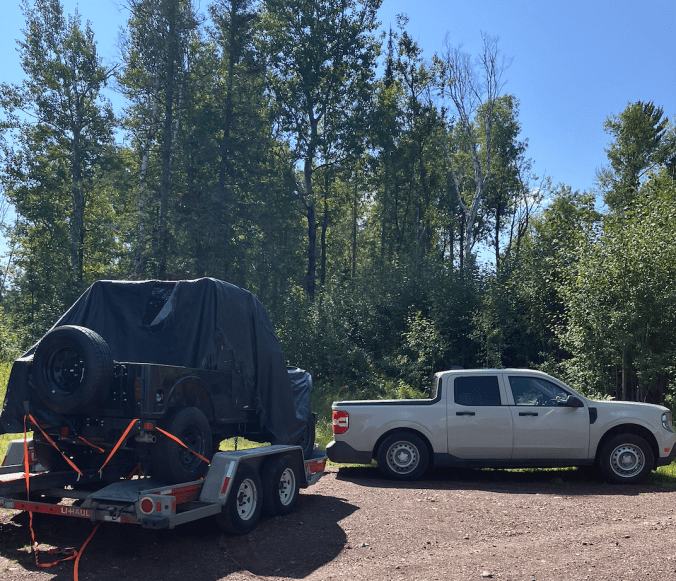
The Little Truck That Could, did.

After 23 hours of sheer hell, I made it to the camp, brushed my teeth, and passed the hell out in the driver’s seat.

Once again, don’t try this at home. It was poorly thought out and asked too much of the vehicle. It was a white-knuckle trip the whole way, and if I’d had to go through big hills or mountains, I don’t think it would have been feasible. As it was, I mostly dealt with the plains and some rolling hills. The only true challenge was climbing out of the Ohio River Valley; as I pulled away from the river, I had to drop it down to 50 mph as I didn’t like how hard the engine was laboring. For the rest of the trip, I was pegged at 56 MPH, as the very large sticker on the driver’s fender of the U-haul trailer reminded me. 55 MPH MAXIMUM. There were no issues with power or handling.

This, along with other factors, made a 16-hour trip into a mind-bending 23-hour hell. I will always loathe the late-night fog I experienced in Wisconsin, which prolonged the agony.

In addition, the ‘Mav, which has great mileage, delivered full-size truck mileage on this trip, with a sedan-sized gas tank. More delays, but one can hardly blame the truck, of which too much was asked. I had it in tow mode the whole way, and my mileage was about 20 Mpg.

But—it got the job done, and I was never so glad as to drop off that stinking trailer that afternoon, as I was passed out behind the wheel until then. I did a few days’ worth of work on the cabin, and then I headed south to the Twin Cities area for a community event, a family reunion of sorts. The truck, predictably, breezed down the highway, mileage much improved (I reset my average after that exceptional hell trip).

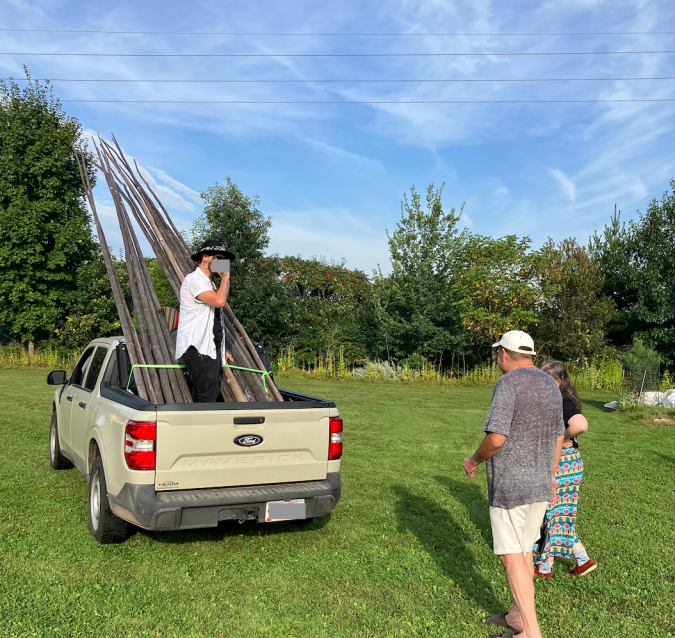
Laughs. I should have known! Once on the event grounds, people noticed I had a truck. “Hey, could you haul some thìpi poles?” “I dunno. How long are they?” “Twenty feet.” “WTF?”

It was yet another stunning moment for the Ford Maverick. Assured that we didn’t have to go far or fast, I left with a small party and collected the very long poles. Ho-ly-shit, the little Mav did it again! We placed them carefully in the Mav-that-could, strapped them down, and then, slowly and carefully, we transported them to the grounds.

Another success. I did my thing at the event, and made yet another trip home.

But…the fun wasn’t over for the Mav. Reader, you may ask yourself what in Pete’s name else I could pack into this crazy summer, but I managed. Once home, some life circumstances changed, and I had to move some stuff around. The Maverick was a key part of this effort. I’m not sure how much cargo I moved over the next two weeks, but it was a lot. In addition, I made a few long-distance trailer runs with the magnificent Harbor Freight unit I have. I squirted the axles full of good bearing grease, checked the lights, and took off on a few runs.

The Maverick laughed at loads of garden equipment and other odds and ends. Hell, listening to the engine I didn’t even bother to switch it to tow mode; in my opinion, it didn’t need it, and my mileage barely suffered at about 62 mph on the interstate (I didn’t want to do 70+ with a little trailer).

At last, the summer of torment for the Maverick was done.

It passed with flying colors in every regard, and to say I am pleased would be a drastic understatement. I asked full-sized truck work out of a compact, supposedly light-duty truck, and it KICKED MAJOR ASS.

By all means, consider buying a Ford Maverick. I’ll bet I have more experience with these trucks than almost anyone in the US, across a range of models, and I can say beyond a shadow of a doubt that this is a well-designed, sturdy, efficient, and comfortable ride across vast distances and under varying and trying conditions.

SIX FULL STARS, no exceptions.

To Turn The Tide by S.M. Stirling, a review.

BLUF: FIVE STARS.

Hey, all. Yeah, it’s been a little sleepy around here lately. For a host of reasons, and I have them, it’s been a thing. However, it is time to wake things up with a return to first principles; a review of classic science fiction by one of my favorite authors, S.M. Stirling.

He’s written a lot of cool stuff, including many personal favorites. In fact, I’ve encountered little of his that I began and was like, “Nah, I’ll pass.” Many of his books I’ve read and re-read; I discovered his writing over twenty years ago during the dawn of the Iraq campaign. “Dies the Fire” was incredible, and that was the book I found in a GI library in a hot and dusty place.

I’ve been hooked ever since.

The other night, during a strategy session with my friend, during a discussion about a future project, he mentioned Stirling’s latest, “To Turn The Tide.” He gave me the premise and I was intrigued. As soon as we hung up, I found and ordered it.

Guys, it’s been nonstop ever since. On both of the first two nights, I was up crazy later than normal, and today, I finished it in the morning, which is highly unusual for me. Usually, I do my reading in the evening after all my other tasks for the day have been completed. Nope. Not today.

I’ve had a lot of trouble reading for a while. I’m unsure why. During my career, reading was a failsafe in bad situations. I always had a book out after taking care of the essential. But my lifelong habit has failed me of late, and I am unsure of why. But, it’s been a thing. This has left me unmoored; reading has always been a constant, since about five or six years of age.

Therefore, when I heard Stirling had a book whose premise I REALLY dug, I ordered it immediately after hanging up with my Australian friend.

I don’t do spoilers and won’t break my record now. You can read the premise on the Amazon homepage. It’s pointless for me to regurgitate it here.

I’ll give you my impressions of the read. You need to know that this is a time-travel book in Stirling’s style: action, believable characters, and bad baddies. If you’ve never read his stuff, please browse his catalog. If you have read his stuff, then you know his style.

This book is Stirling in spades. That’s a good thing.

You know this will be awesome from the first chapter, which punches you right in the nose. Nothing grabs one’s attention like apocalypse, that’s all I’ll say. It segues into the time-travel sequence directly with no letup. From there, we see the requisite world-building and more violence. Glorious violence, done in Stirling’s fashion.

While the action sequences were great and are possibly the biggest draw for readers, I preferred the world-building sequences. They were amazing and almost made me wish for a time-travel machine, myself. Except for zero antibiotics, stinky people with edged weapons attacking in the dark, and garum, which, while beloved by the Romans, is probably pretty gross.

What is it with Stirling and his descriptions of food? It’s almost pornographic how he makes you taste delicious breads! The guy really has a talent for this, and I’ve seen it in every single one of his books.

I knew three chapters into this book that it would rank among my favorites. By the end of this morning, I was dead certain. In fact, after eating, I plan to re-read this book, effective immediately. I missed things during the first read that I’ll pick up in the second iteration. That’s just how I read when it’s badass stuff—I burn through it without proper consideration.

However, my initial impression was more than enough to write this review.

Believable characters. Great history. A touch of romance. A desperate mission in a lost world. If you can’t love that, then I don’t know how to help you.

Get. This. Book!

My MRE Misadventure

Morning, everyone. First, I’d like to apologize for my hiatus here. It’s been far too long since I posted; actually, my longest break on this site since ’17, when I started this thing. My reason(s)? Some life events, current events, and a creeping sense of disaster. It has messed with me, to be sure.

There are a number of things I could write about, among which is my long-delayed violin series, which just needs to be posted. Also, I could write about my books, or a lack of effort on that front (Did I mention the whole creeping paralysis thing? I think I did). I could discuss interesting electrical experiments (a side-growth on a really cool solar generator I’ve been messing with), or continuing work on the Roxor. There’s a lot to choose from, and all of them are fun and in-line with what I do here.

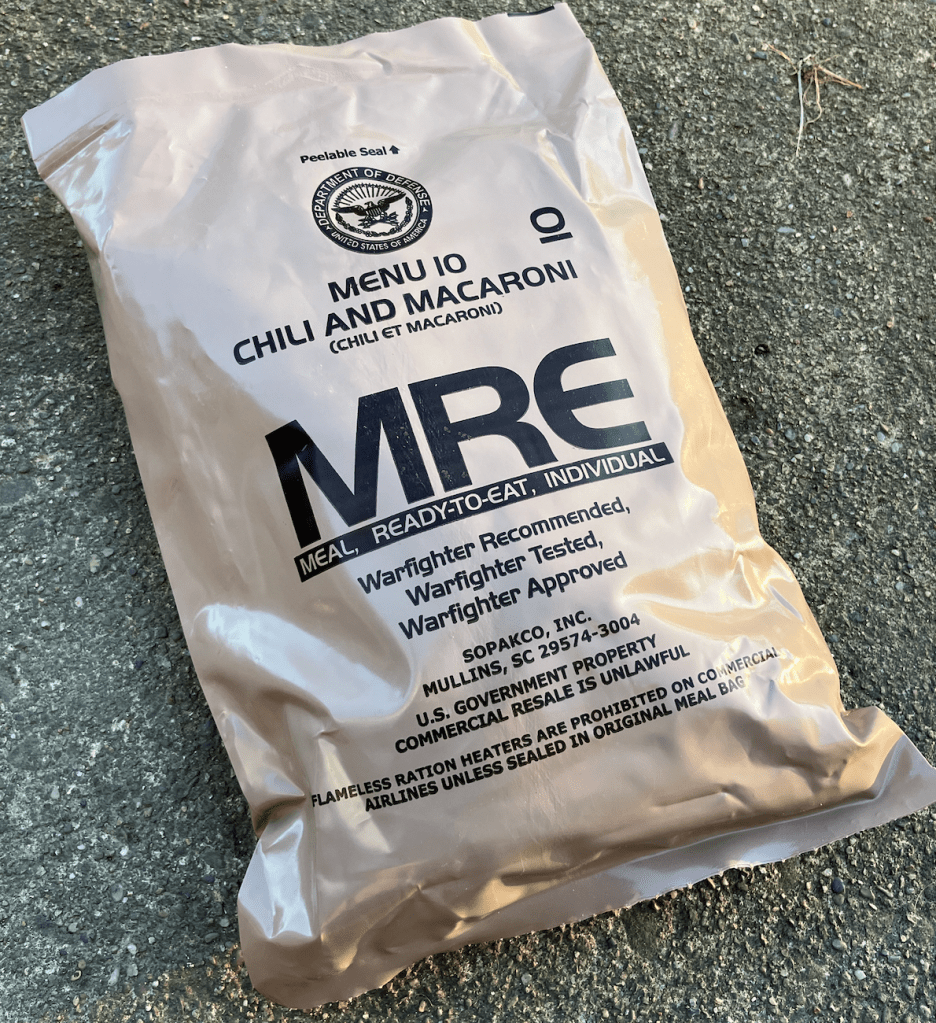
However, I’d like to talk about MREs, or, “Meals, Ready-to-Eat.” Why? Because I found a few old ones laying around in my basement, and I was curious if they were still edible. Note: Don’t try this at home. Always follow FDA guidelines in regard to stored food and its shelf-life. Don’t listen or take as advice the ravings of a retired and half-crazed ex-GI. This information is for entertainment only. Discard any food you regard as suspect and that has exceeded its sell-by date.

OK, that had to be said. Live it. The following words are written just so you can laugh at me and wonder why I did something so dumb. Once again, don’t try this at home. Or, worse yet, build old MREs into your disaster planning.

Here goes.

I’ve always heard anecdotal information about how long GI rations will last. As a kid, I heard from a number of RVN veterans how they were fed rations from WW2, complete with stale Chesterfield cigarettes. I know an elderly Dutch fellow who had a can of GI fruitcake dropped in his yard at the close of WW2, and he opened it and ate it on the 70th anniversary of Liberation Day in the Netherlands. He said it looked fine, and tasted as well as one could expect from vintage GI fruitcake.

Overseas I can’t say that our rations were old, but they were definitely improperly stored, and I doubt that they were properly rotated for age. I recall a stifling conex box heaped with MREs and T-rations, scorpions skittering about, covered in dust. I had no idea when those rations were thrown in there, but I can say for certain that the inside of that metal shipping container reached temperatures above 120F/49C. I’m also pretty certain that some boxes had been there for multiple years. This was far from ideal storage. I ate that crap anyway, and I didn’t get sick. I got sick from kebab roasted over sheep-shit fires, but not from that.

I have eaten so many MREs over the years, it’s not funny. Over the course of my career, I watched as the ration generations changed, as well as the appearance and menus. Modern, 2024 MREs are a far cry from the old dark-brown bag garbage of my youth. Later generations were the early OIF versions, to late war, to present. In the early nineties we had the dreaded dehydrated beef patty. Then, we “improved” to Omelet, Ham and Cheese. We received the frankly delightful hamburger with BBQ sauce, jalapeño cheese packets, and beef jerky. These days? All kinds of goodies. A fav is the GI milkshake, but I digress.

Suffice to say that I know what an MRE should look and taste like. I’ve had thousands. I do know a fellow who got sick from one; botulism. It happened because he ate a spoiled packet at a patrol base in the pitch black. He was in a hurry, was laying prone, and it was raining. Not ideal circumstances to inspect food packets, btw. I guess he slit the thing open and squeezed the rancid contents in his mouth; he spat it out immediately, but the damage was done. He had to be medevac’d out of there and was very ill for quite a while.

So, I’m pretty careful about this stuff. If a packet leaks, is damaged, or is puffy like a pillow, you don’t want it anywhere around your mouth.

Lately, I’ve been making an attempt to clean up my basement. The storage space is home to layers of old Army junk, and I’m trying to organize it. I’ve been doing this in lieu of way more important stuff like writing my new book because right now, frankly, I can’t handle it. This stupid election and negative life events have really put the zap on my concentration; I can’t imagine I’ll write until this dumb thing is over. Or, at least until the possible choas is charted out. There are way too many assholes in this world, and right now they all seem to have megaphones, so I’ve temporarily checked out. Thus, I clean and organize my basement. In the process, I came across some vintage MREs, and I have several cases of new Humanitarian Daily Rations, one of which I wanted to try in comparison to USGI swill. It’s been a very long while since I ate one, and I wanted to see how they stack up and write-up a comparison.

After I reveal the edibility/grossness of the vintage GI MREs, I’ll talk a little about the new HDRs.

Let’s get into it. I selected some very old USGI MREs, probably 2007/2008 vintage. Once again, I’ve eaten mountains of these, and I can spot bad stuff. When I slit these two packs open, I carefully inspected the contents. Everything seemed to be as good as the day they left the factory; there were no puffy or leaking packets. Everything that I opened, I smelled and looked at the contents carefully. If it smells or looks gross, don’t taste it, period. Not even a little bit.

This is what I found with two sixteen or seventeen year old MREs.

The first one I opened was just for reference; I didn’t eat it. However, several times I unthinkingly licked my fingers when food got onto my hands; don’t repeat my mistake! If our old friend botulinum was hanging out in one of those packets, this would have been enough to put me in the hospital. Let’s start with the throw-away/inspection example first.

This is what 17 year old GI peanut butter looks like. I made sure I kneaded the package; it looked and smelled fine. I didn’t knead the strawberry jelly packet, which was a mistake. The solids had separated over the years and it looked like hell, frankly. The sticky stuff got on my fingers. This was where I licked. It tasted like…strawberry jelly.

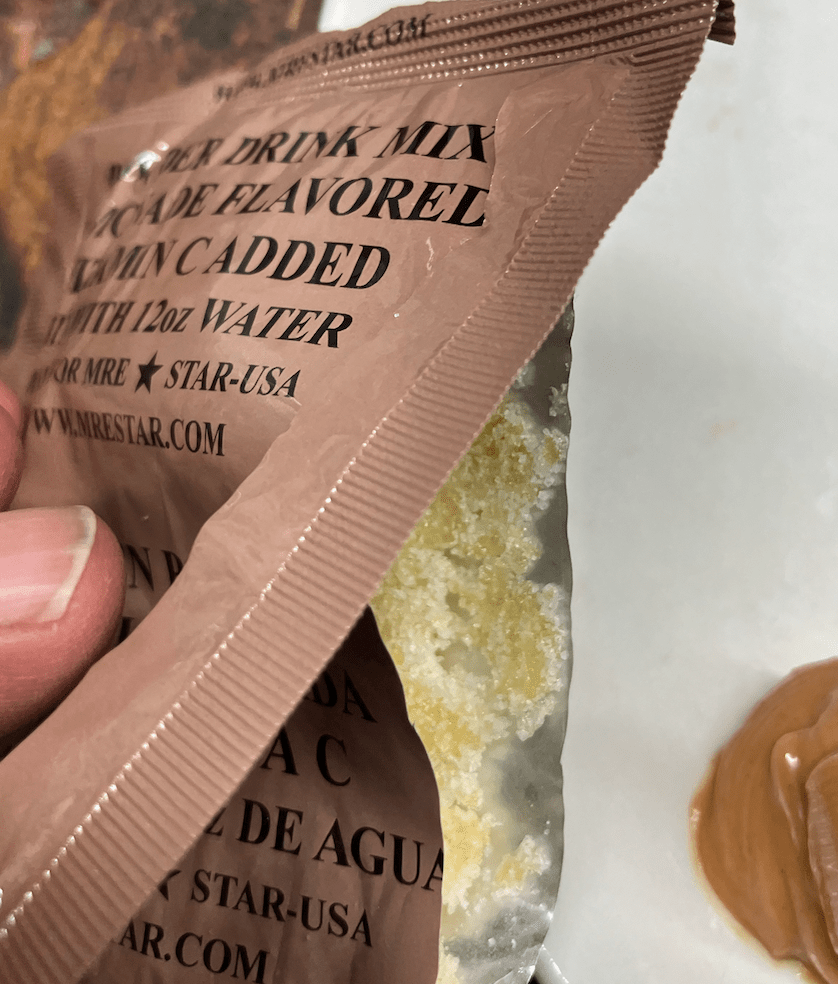
The next thing I cracked open was the beverage powder. Lemon-lime, like usual. The raspberry is much better, but infrequently encountered. I wonder if this MRE was heated up at some point in the past, note the clumping of the powder. However, this dissolved just fine in water, so it’s a matter of appearance. Note: they put drink powders in MREs for a reason. Number one is to mask the taste of crappy water. Number two is to give the soldier vitamin C. Always use the drink powder! But don’t pour it into a canteen. Use a cup. Canteens are for water only. This is a field hygiene basic tenet.

The next item I opened was GI bread. It looked, smelled, and felt as if it had been baked yesterday. Really remarkable, and I wonder what sick, dark magic goes into the manufacture of this stuff. Even though I didn’t intend to eat this MRE, I wouldn’t hesitate to eat this.

Then, I looked at the pound cake. It was as I remembered them, and it looked kind of delicious. No defects noted. Finally, it was time to have a look at the entrees, whose packets were nice and flat, undamaged. How would seventeen year old Mexican Rice and Vegetable Lasagna look and smell? I found out.

Turns out, they were both fine. This is where I caught myself licking my fingers again, a serious mistake. If this stuff had the crud, I was toast. However, I’m not dead/hospitalized, so it was fine. The Mexican Rice was clumpy, stinky, and unattractive, but so is a packet made yesterday. This is NOT one of my favorite entrees; spoiler, both MREs I tested had lousy entrees. But I digress. I’m speaking to this being edible, and it was. The Vegetable Lasagna was also fine, if gross as-new.

BTW, MRE entrees have a peculiar smell; it gets better when you heat them. This is normal but off-putting to someone unfamiliar with all things MRE. I attempted to use the MRE heater, but in both MREs they were as dead as stone. I added water as you should and nothing happened. I waited a while, too.

Weird how the purely chemical, dry heaters last for much less time than the food. Seriously, Uncle Sam, WTF?

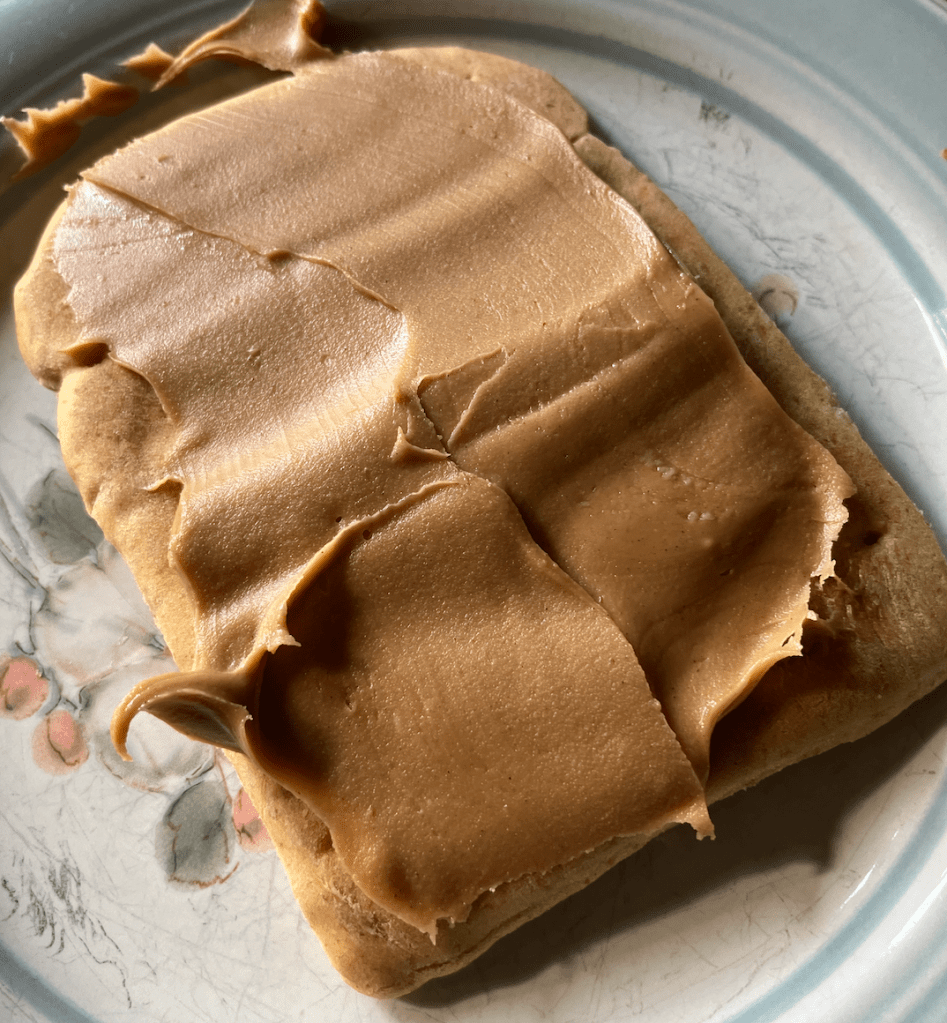
Convinced that these ancient mariners were marginally edible, I decided to eat the other one the next day for lunch. I guess it’s a spoiler that I’m typing this, so you know in advance it must have been OK. Kind of tough to post from an ICU. Well, I lived and experienced no signs of gastrointestinal distress. The first thing I ate was the peanut butter and jelly combo on the bread, and this time I made darn sure to knead the packets. Here’s what the peanut butter alone, spread over the Immortal Bread, looked like.

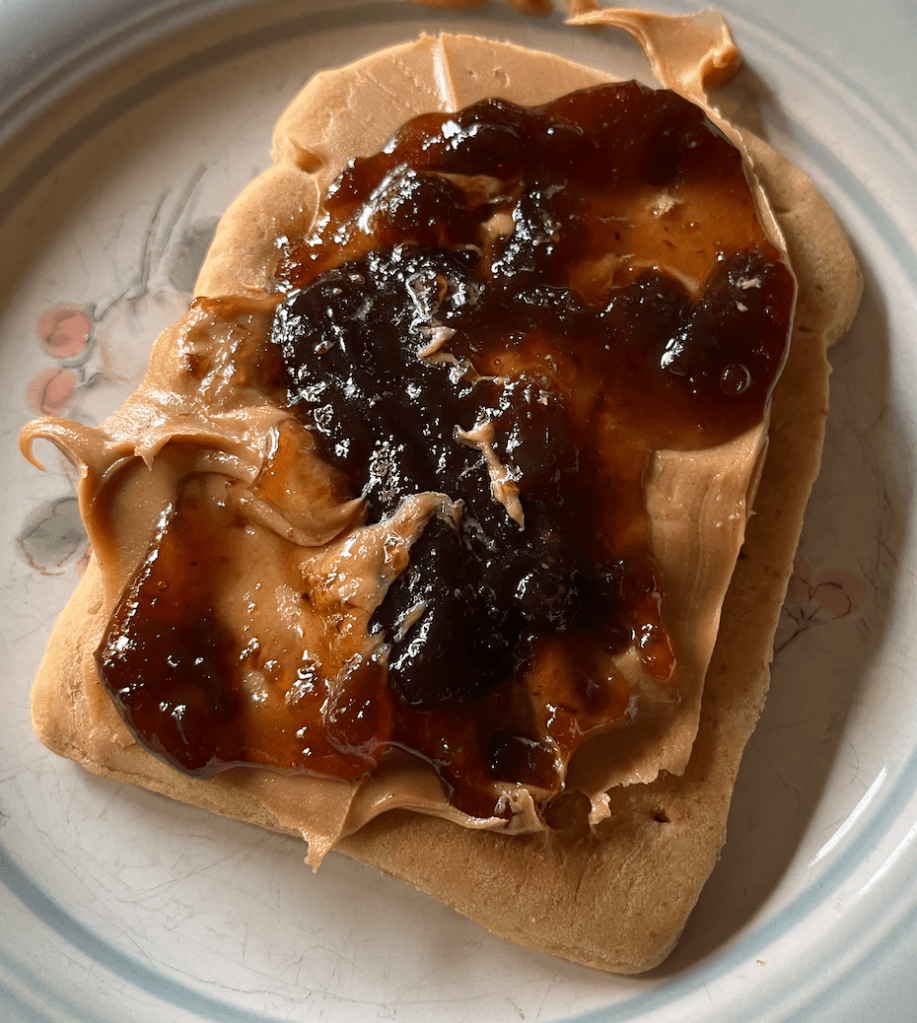
As you can see, there is nothing freaky here. The peanut butter looks like I just grabbed a jar of Skippy from the pantry, and spread it on the GI near-bread. I assure you this is 17 years old. Then, I made a PB&J.

It really helps if you knead the jelly packet. While this will never make the cover of a foodie mag, it worked. I ate it, and it tasted like every darn GI PB&J I’ve ever had, albeit a lot older (Probably. You never know in the Army). BTW, I drank the raspberry drink packet later, it was fine. Also ancient.

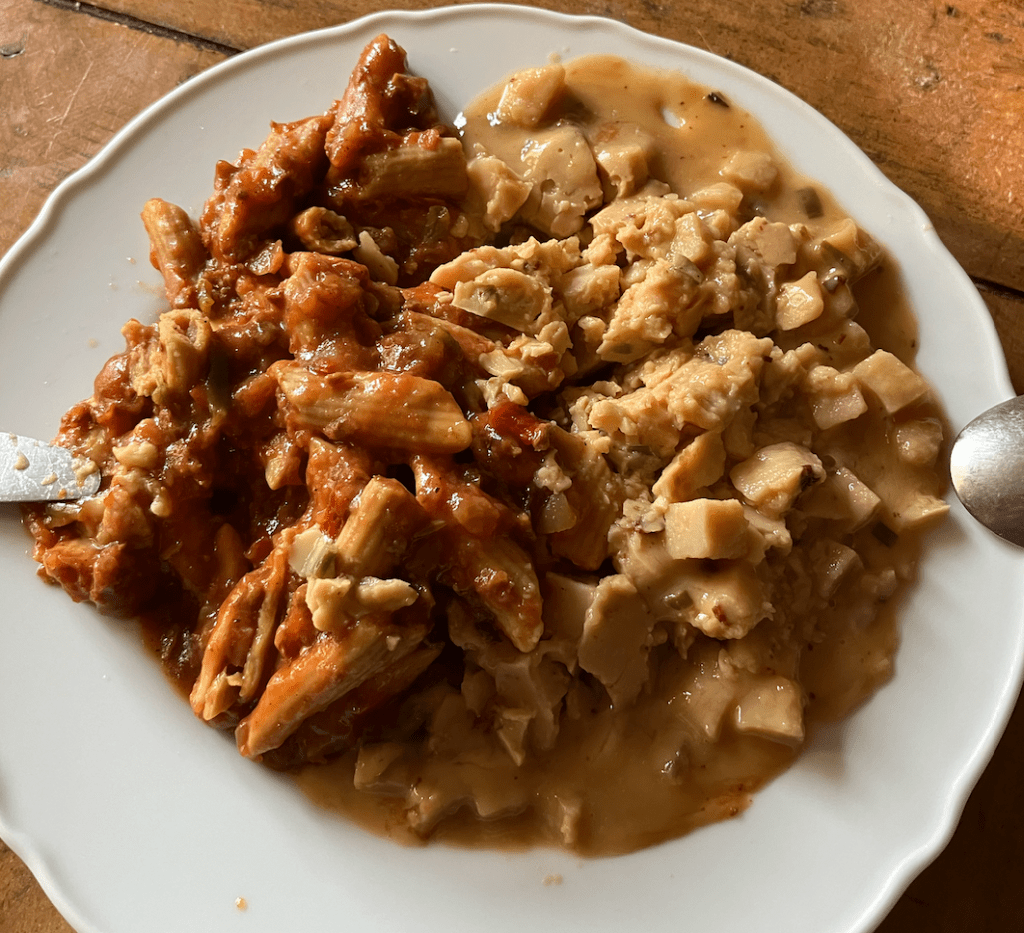
It was time for the entrees, Penne Pasta in Tomato Sauce and the dreaded Potato Soup, Bacon Flavored. I scooped it from the undamaged packets, looked at it, smelled it, and chucked it in the microwave for a minute.

Yes, this looks like hell. It tasted like crap, too. However, regretfully, this is the norm for the terrible potato soup. The pasta was marginally OK, so I ate all of it. Like usual, I only managed to choke down half the potato soup. Lemme tell you, when they pass out the MREs, and you’re the loser of the MRE lottery, no one will trade you for the potato soup; or, if your luck is particularly bad, for the Ham Omelet.

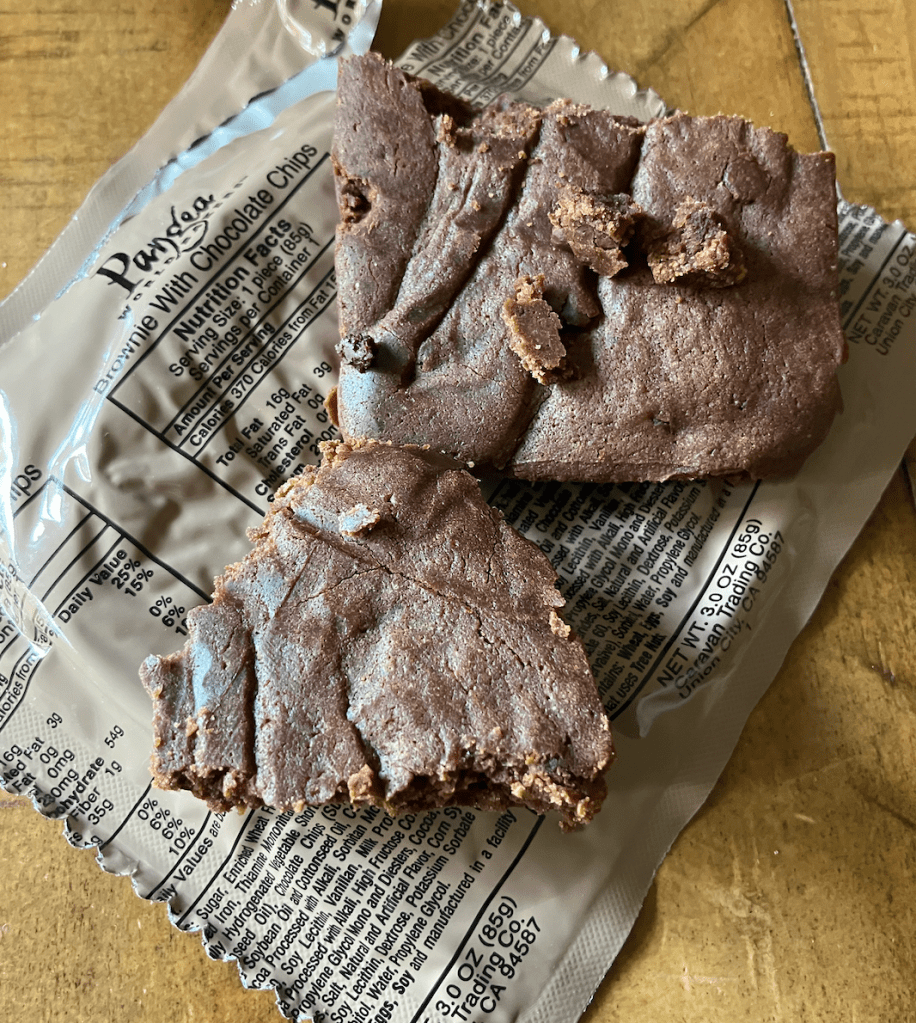
This is the definition of starvation rations. You’ll eat all of it if you’re ravenously hungry. I wasn’t, so I ate just enough to see if I’d die. I didn’t. After the Potato Soup ordeal, I saved a snack, the Brownie with Chocolate Chips.

This looks terrible, but it’s not. Something I’ve noticed in MREs over the years is that they compensate you if the entrees are gross. In this case, this MRE came with a delicious brownie. Yes, it was awesome. Even after seventeen years.

In conclusion to the old MRE writeup, I guess just the fact that I’m sitting here typing tells you what you need to know. While it’s not preferrable to eat MREs that are older than kids who can vote, I guess it can be done, judiciously. But only me. You shouldn’t do it, nor do I advise you to.

After that hell, I moved on the the meals that Uncle Sam provides to refugees. How did they stack up to USGI? What were the differences? How do they taste?

Let’s start. First, I’ll state the obvious. The HDR I tested was from 2022, so I had no fear factor eating it. Second, HDRs are (much) less expensive than USGI MREs. Third, there is more stuff in an HDR than an MRE! The MRE is designed to be issued three times a day (although in practice that’s waaaaaay too much, but those were the planning factors we had to use for heavy labor). The HDR is not. The HDR, the Humanitarian Daily Ration, is just that. It’s a once-a-day minimum for some poor bastard who can’t get any other food. This person is dead lucky to get one of these, and it can be stretched over multiple days at need. Finally, the HDR on the civvie market is 35/case of ten, 3.50 each, USD. The USGI MRE is 135/case of twelve, 11.25 each, USD.

I was shocked when I looked up the cost this morning. I know that HDRs have gone up since Hurricane Helene, and for good reason. Basic supply and demand. However, they are only up about 5$/case, which isn’t insane. USGI MREs? While they’ve always been more expensive than HDRs, now they are really expensive! For less food, you pay more than three times more for USGI. For someone doing disaster prep, unless you are very well-heeled, this doesn’t make sense to me.

I can tell you the difference, in layman’s terms. The USGI has a slightly better grade book of matches. The MRE has a self heater (see above for why this isn’t worth it). The USGI comes with name-brand junk food. The MRE has entrees with meat; they are culturally incompatible with a few major world religions. The USGI has milkshakes (a major advantage, I admit).

Is the above worth paying 11.25 a meal? I say no. So, let’s talk about my taste test with the new-ish HDR.

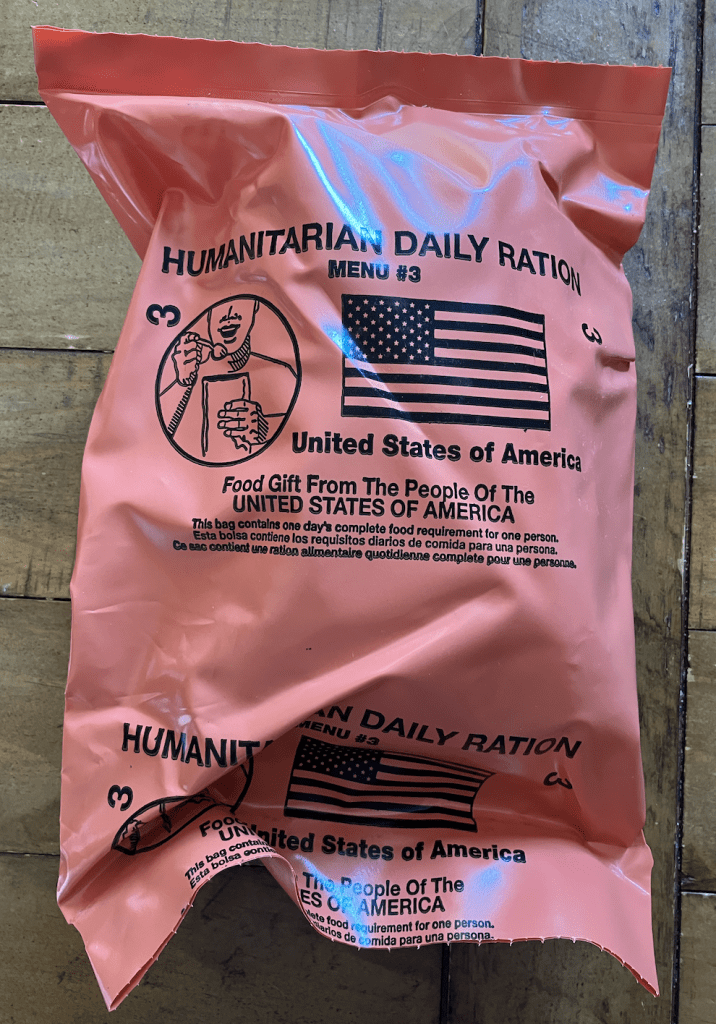
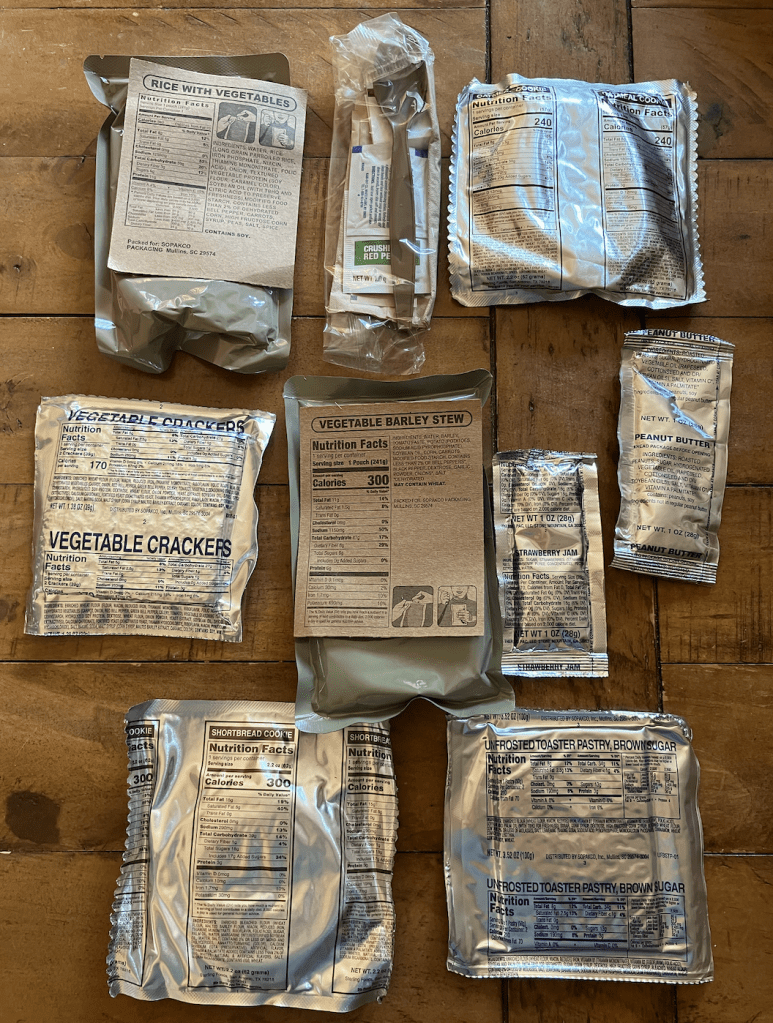
This is the HDR. Like the MRE, it comes in a tough, waterproof thick plastic outer shell.

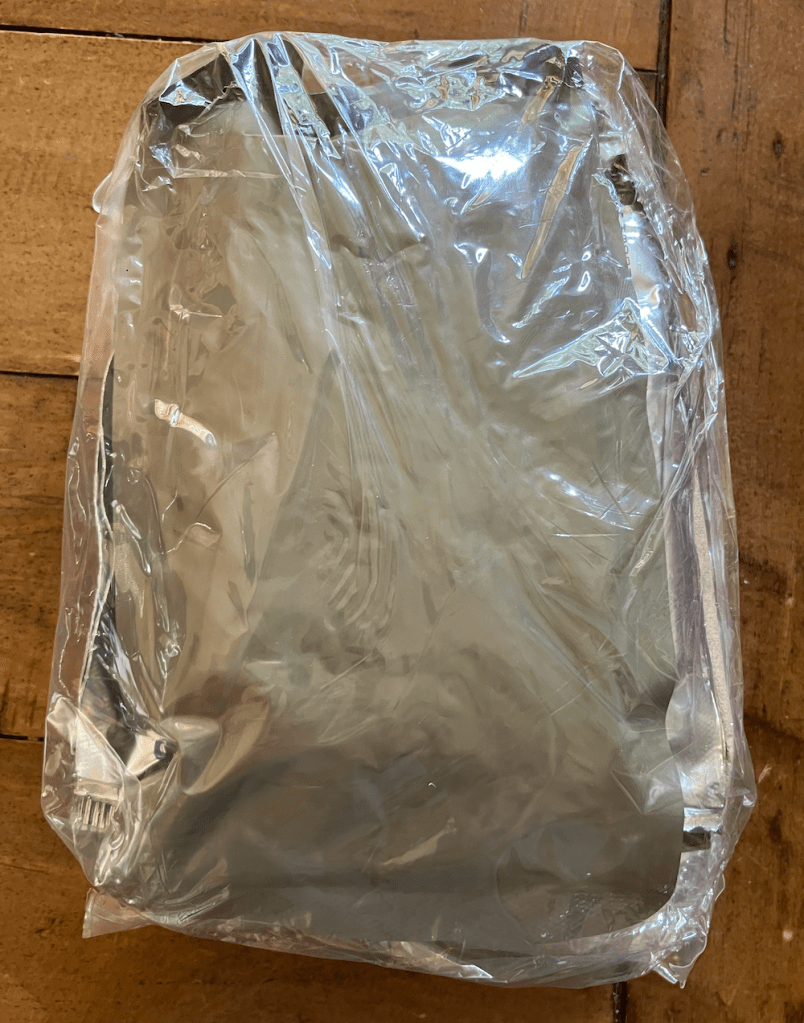
The contents are double-sealed in this compact plastic wrap. BTW, if you want to use these immediately and desire a more compact package, like in a ruck, strip the outer shell and carry them like this. What, pray tell, is inside this packet? It’s been so many years since I had one, I was curious. I have a lot more experience with MREs than HDRs. See below.

As you can see, this can be split into breakfast, hot lunch, hot dinner. The packets, if you want to heat them up, can be chucked into hot water to heat. Or, you can do like me and scoop out the contents and microwave. I’d imagine you could heat on a skillet, too. The toiletries packet isn’t as awesome as USGI, but it’s pretty good. There’s salt and black pepper, red pepper flakes, napkins and a moist towelette. Pro tip: save the napkins and moist towelette for your nether regions in the field. There is also a book of matches. The HDR is a comprehensive package.

For your benefit, I’ll give you a notional day with just this packet alone, Menu Number Three. There are four menus randomly mixed per case.

Breakfast: Crackers, with peanut butter and strawberry jelly. If not enough, get a boost with the toaster pastry (a pop-tart), which can be heated in a pan. I am well familiar with MRE crackers, these are identical. So is the PB&J, and the pop-tart. Note that the packets aren’t USGI brown. So what? But hey, if you want to spend three times as much for brown packets and less food…go ahead.

Lunch: Rice with Vegetables, throw in some pepper if you want some spice, and have a sweet treat with the Oatmeal Cookie.

Dinner: Vegetable Barley Stew, served warm. Add the Shortbread Cookie for dessert.

You’re not going to get fat, but you won’t die, either. If you really must have tabasco sauce or M&Ms, spend three times as much. I won’t stop you.

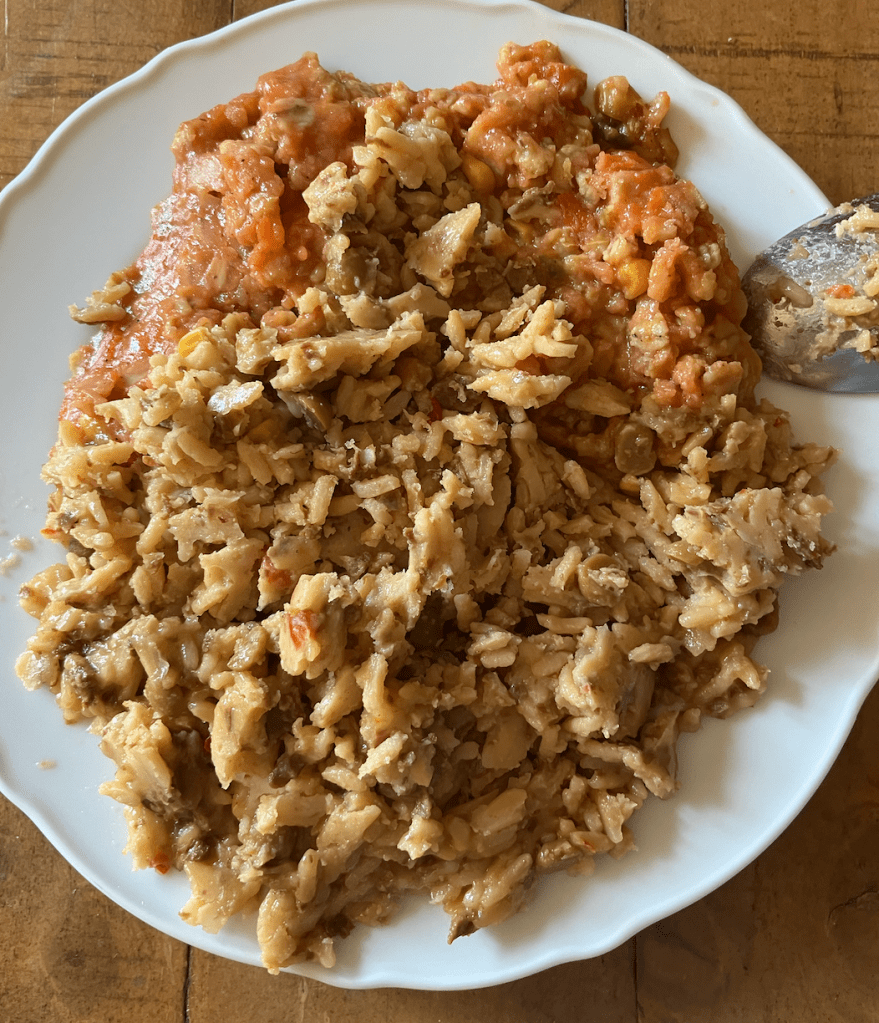
I ate this stuff without qualm. How was it? A first impression upon opening the entree bags was that for whatever reason the entrees didn’t have that USGI reek. Could this be because of Halal prep methods? Different, meat-free ingredients? I don’t know, and I don’t care, I guess. Just an impression. I scooped the rice and barley stew onto a plate and zapped it for a minute in the trusty microwave. How did it look? How did it taste?

Observe.

One hell of a lot better than USGI, frankly. Don’t say “But you ate antique MREs.” I did. However, they were NO different in taste and texture from brand-new USGI! This HDR food was superior. Yes, there was no meat. However, you don’t really need meat for nutrition, your protein requirements will be met with the total HDR. If you must have meat, I guess spend the big bucks. Your call.

The HDR entrees actually smelled good cold, and they tasted good, too. The rice and veggie combo was WAY better than “Mexican Rice.” It didn’t need the provided salt, and I thought it had just the right hint of spice. The barely stew was good, too. It was filling and kind of delicious. I should have tossed on some of the provided red pepper to try it out, but I’m sure it’s fine if you want some nip. And the oatmeal cookie? It was great, and added to the substance of the meal. There was no way I could eat the entire HDR in one sitting!

Long story short, I rate the HDR as superior to USGI. This considers overall palatability, cost, and calorie count. One thing I didn’t see in the HDR, which might have been just this one, was the lack of drink mix. However, this isn’t a big deal, and you definitely aren’t missing anything with the lack of a heater. Both ration types seem to age well if properly stored, but the HDR wins the contest hands-down.

Food for thought.

Karrikin restaurant, a review.

BLUF: One of the unique eating experiences of my life; unique in the most positive possible fashion.

Right off the bat let me say that I am hardly a connoisseur, or a competent reviewer of food. I am the product of decades of institutional food and hastily bolted meals; you must take what I say with a grain of salt. However, I think I can say that I recognize special and novel. The other night, I experienced both.

If you ever find yourself in Yamba, New South Wales, Australia, I can heartily recommend Karrikin, a gem of Aussie dining on the exquisite Pacific coast.

OK. So, since my arrival to this fair land I’ve been bombarded with interesting food experiences. This morning I ate a vegemite concoction known as toast soldiers; it consisted of strips of buttered toast, loaded with the local brown salty paste, dipped in a semi-hard boiled egg. Surprisingly delicious. I requested the most Australian possible dish from my host’s recommendations; I ended up with a steak meat pie in a place called Maclean on the banks of the mighty Clarence River, a flood-prone, slowly flowing body of water bordered by innumerable sugar cane fields.

Also, I have since had both a beef burger and a fish sandwich fortified with beets; a surprisingly welcome addition. In addition, the alcoholic drinks have been first rate, not a Budweiser in 9000 miles, God be praised. While I’ve been sparing with these treats, what I’ve sampled has been top notch. Also, the weather has been top-notch, very comfortable. For those from the frigid north, I highly recommend an Australian winter. Hint: it’s not winter down here, although it is claimed as such. My guess is that the summers are ghastly.

But, let’s talk about my experience at Karrikin, a departure from any past experience.

We had a four course meal at a restaurant with no fixed menu.

That’s right; no fixed menu.

Whoa. For a child of the American strip mall, this alone sets this place apart. No nationally standardized menu, where a basket of jalapeno poppers prepared in Charleston, West Virginia is exactly the same as poppers served in Spearfish, South Dakota. No ready-made meal fetched from the depths of a freezer, shipped from a corporate kitchen a thousand miles distant, to be prepared by a first-week line cook with two days training.

Nope. A light-year from that culinary hell.

Let me walk you through the experience.

First, we walked, yes, walked, to the restaurant. So far, villages in Oz are pedestrian friendly. It was about half a klik from our accommodations, and there were no near-death experiences. We entered the Aussie standard friendly, open establishment, and we were shown to our table in the back. Nothing “fancy,” but a distinct outdoor feel, informal and clean. We sat and were greeted by the waitstaff, she was first-rate. In a jiffy, we got fresh water and the courses started.

There were four courses, and they were a mystery. You could ask what was on the menu, but I’m pretty sure we opted for surprise. Yes, special dietary considerations are honored, but you must be upfront in this regard. By the way, if you need something special, the staff does an amazing job of blending in your individual requirements to the spirit of the course.

And, the courses have spirit! Each is unique, and they do a fine job with indigenous ingredients.

This is where my lack of food-critique experience becomes obvious. I cannot adequately describe the courses, I won’t try. Plus, the ingredients were entirely novel, I don’t know the names for most of it. But, here goes.

The first course was native bread drizzled with a fine olive oil. In addition, there were amazing venison shavings with a savory spread. As a rural US guy who has taken and prepared my share of deer, it was the best damn venison I’ve had in my life, and I’ve had the freshest venison, with the choicest cuts, possible. Sliced cucumber. Radishes.

And this was but the first course. See illustration above. It set the tone and the standard- and it blew my doors off! Also, each course had a recommended drink- alcoholic or not. I went with dark beer, my host did wine, and later, during the main of succulent pork cutlets, I opted for a macademia liqueur- a local specialty, I gather.

We concluded with a fine dessert of a sort of custard crumble- it was fantastic! The portion sizes were just right; in all regards this was a satisfying and novel feed.

I ate every bit- none was wasted.

This. This is as it should be.

So, if you should ever find yourself on Australia’s East Coast, and you’d like to surf and relax, drop by Yanba. Australians think it’s a tad too developed- I disagree. See Atlantic City or Miami. While in Yanba, do yourself a favor and spend an evening in Karrikin. Take your time, eat your fill, and do as I did- allow yourself to be surprised!

It’s worth it.

You might want to reserve in advance, though. I think the word is out, and it deserves to be.

Five-frickin’-stars from a stranger in a strange land.