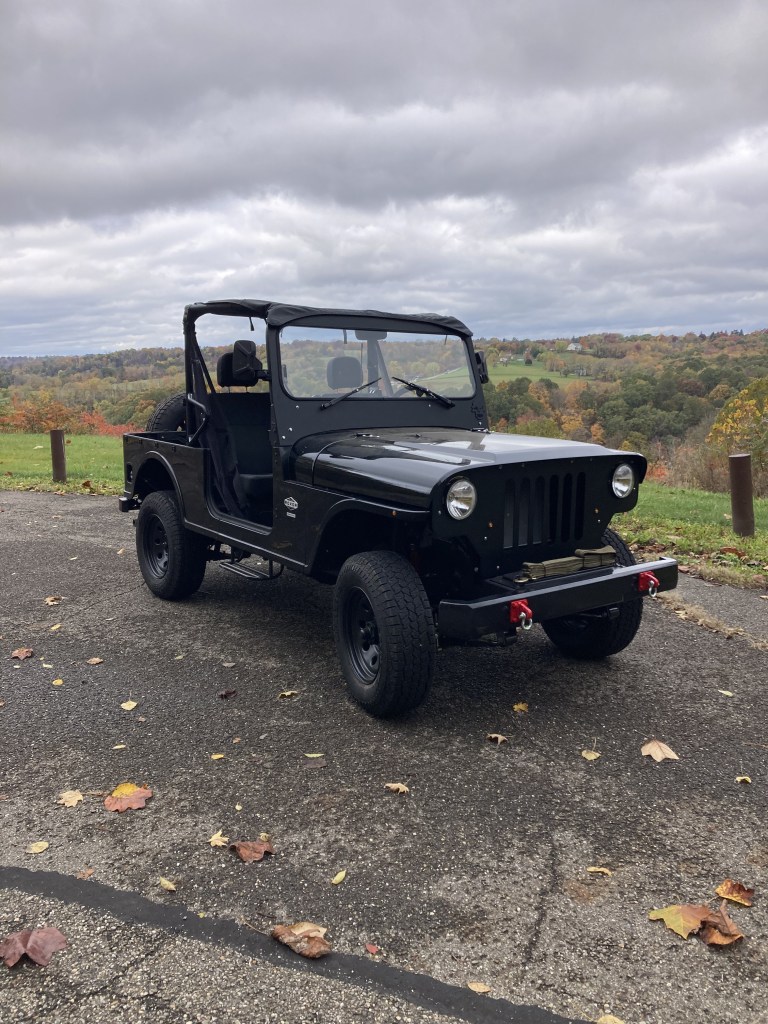
Or is it a WW2 Jeep?
Good question, actually. Think of it as the old WW2 Jeep, but with some modern must-haves, like a reliable engine and five-speed transmission. Plus a digital speedometer/tach, the roll cage is kind of nice, and seat belts are a plus. The old Willys didn’t have that stuff, and the five-gallon gas tank was under the driver’s seat. Kinda dangerous. So, there was room for improvements in the original design, and Mahindra made them.
But the good parts they left alone. Rugged design. Honest steel construction. Ridiculously steep gears- 5.38’s, with a low and hi range transfer case and Dana 44 style axles. Needless to say, this is not a highway vehicle, and neither is it intended as one. This wagon was most comfortable driving around at about 40 mph in fifth gear, 2WD. Sure, it would go faster. But why? As an “under-speed utility vehicle,” this guy can’t be operated on limited access highways, anyway, and its legal top speed is 35 mph.
Once again, not a highway vehicle, and not intended as such, either. No, this is an off-road beast, with its only paved miles being back roads to get to local trails and forests. Once you appreciate the Roxor for what it is, you can see what a freak it is- a throwback to an earlier generation’s craftsmanship and ruggedness.
Guys, I’ve gotten some work out of this wagon. Observe.

This was the Roxor’s first chore- a dead elm that had crushed my pasture fence. You can’t see it in the pic, but this is seriously steep. Without the Roxor- a really crappy job. The following pic gives you an idea of the hole we worked in.

It was a big tree, and the job took a couple of days. It didn’t help when I was climbing out of this spot, at the worst possible moment, one of my goats decided she needed to be right where I was driving. Well, I didn’t want to run her over, so I had to back up and try again. This is a lot steeper than it looks- without the Roxor’s crawling ability, it would have been a no-go.
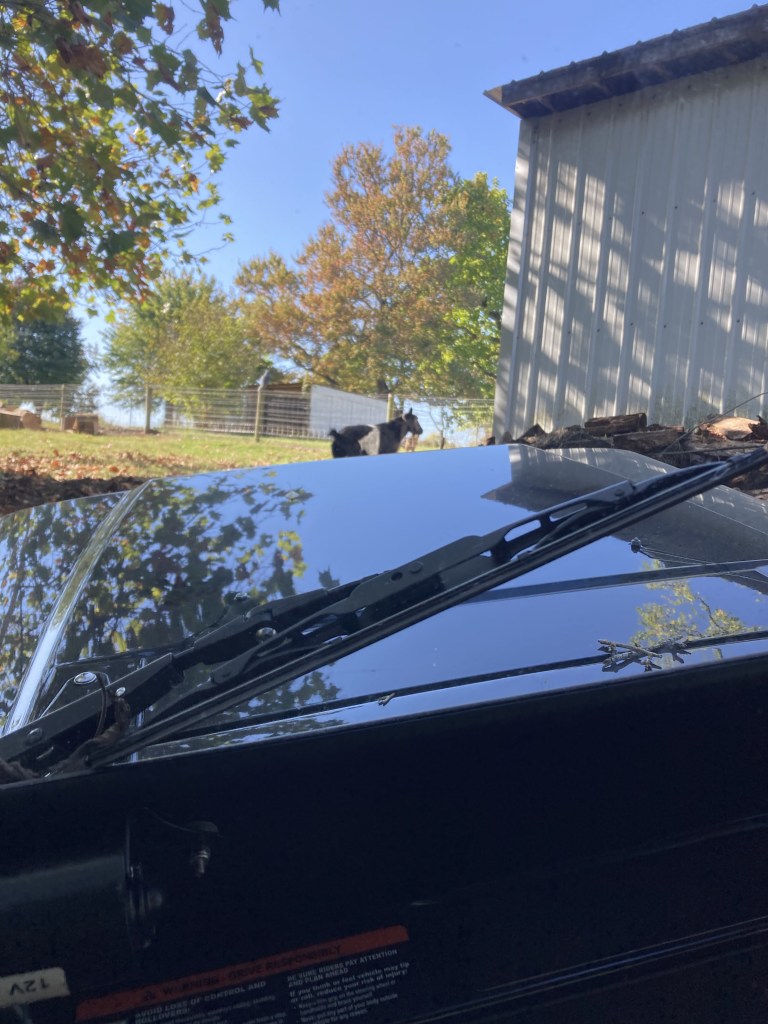
Before I did this job, though, I put a lot of thought into what it would take to make the Roxor trail worthy, and a worker, as opposed to a toy. Looking at the original design, some mods had to be made. One was a means of protecting the seats and keeping stuff (like logs) from rolling around in the crew compartment.
Luckily, I had a few pieces of steel left over from an oil tank I cut up years ago. I never throw away “scrap” pieces of steel. It’s just too useful if you can do a little fabrication. Observe.
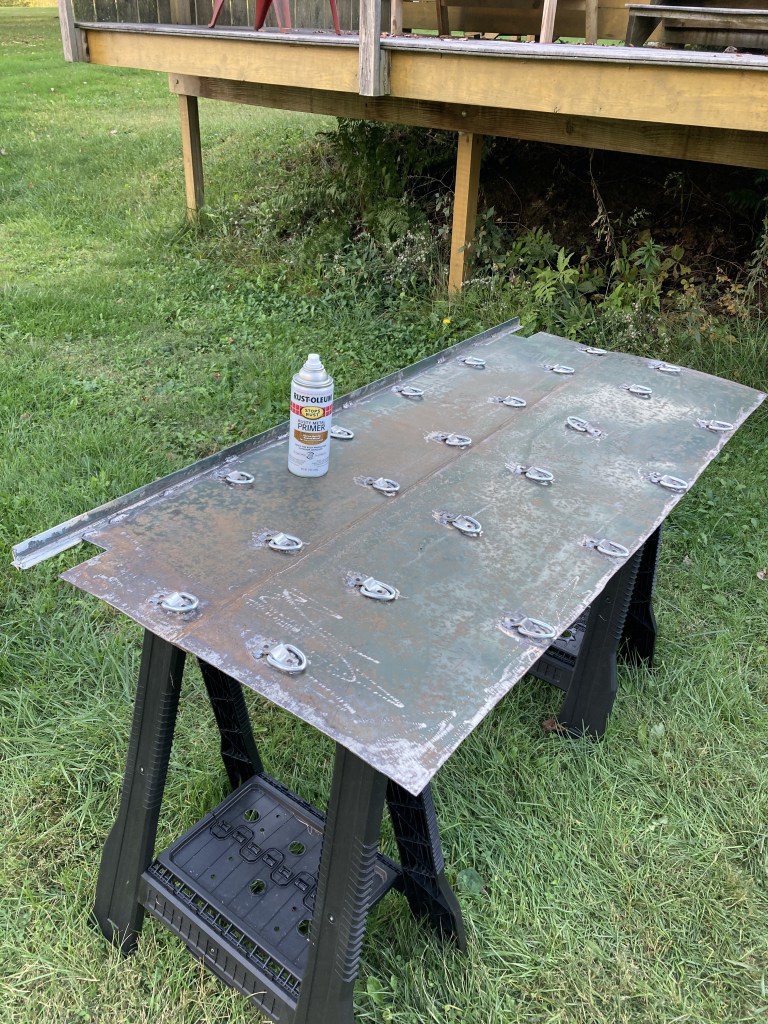
A little welding, a little grinding, and a whole lot of 2.99 tie-down two-packs from Harbor Freight, and I had what I needed. A means to divide the vehicle, and to protect my seats. From things like really big frickin’ logs.
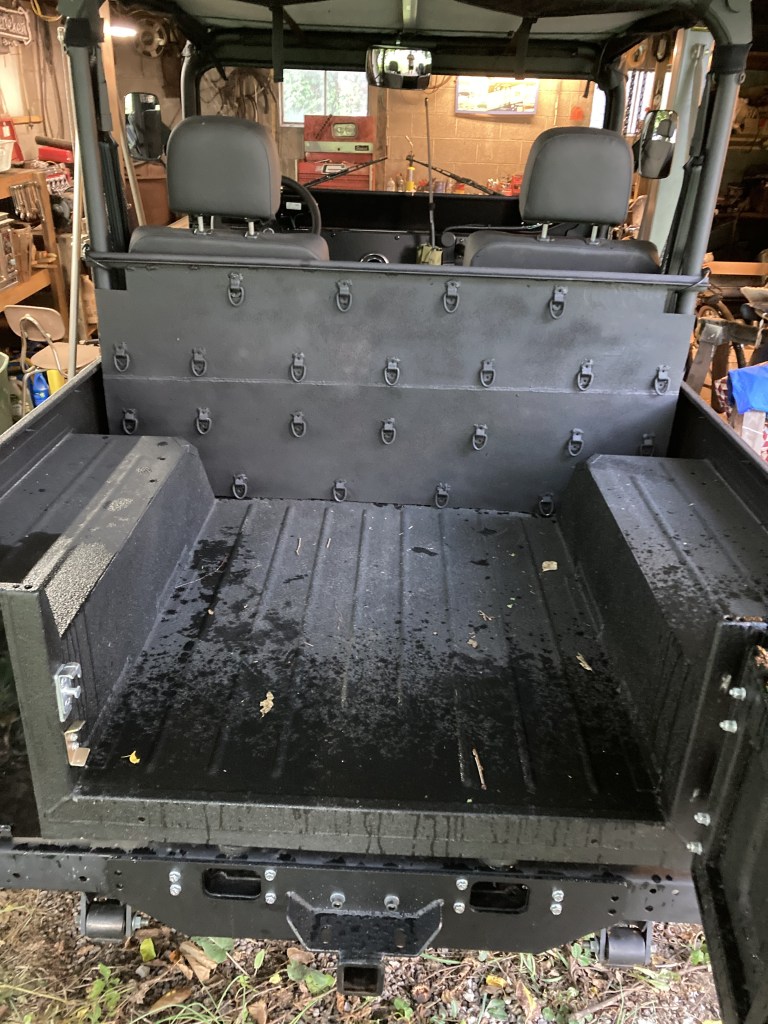
The divider was fabbed from the old oil tank, a steel cattle T-post, and a couple of U bolts to secure it in place to the roll cage. The bottom jammed into a narrow crevice by the rear fender wells, and in subsequent testing, I can confirm that it is very solid. But why did I need all of those tie-downs?
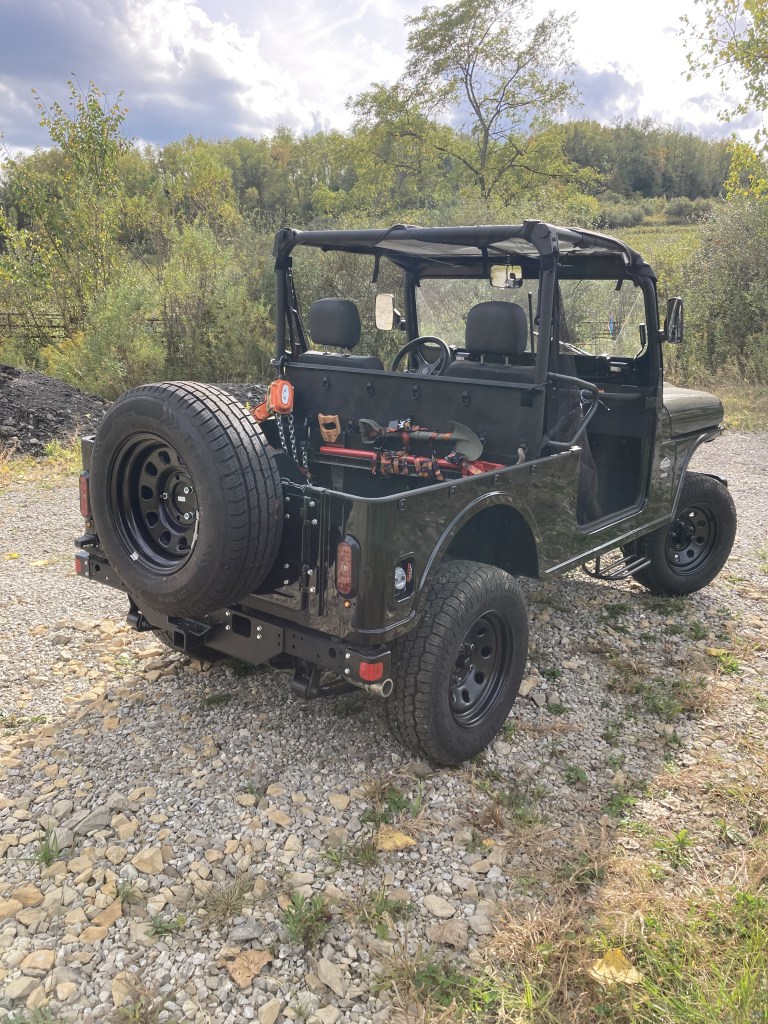
You can NEVER have too many tie-downs! I’m a big believer in keeping your tools and gear tightly secured. Not only is it neat, but it’s safer, too. If you get in some kind of misfortune, you don’t have big, heavy things flying around. The top row is reserved for a future rear window. I plan to make a cab enclosure from marine-grade vinyl. I just haven’t gotten to it yet.
So far, the Roxor has met or exceeded my expectations. The elm job, for example, would have been terrible without it. Here’s a pic of what happened to the elm after a few days work.
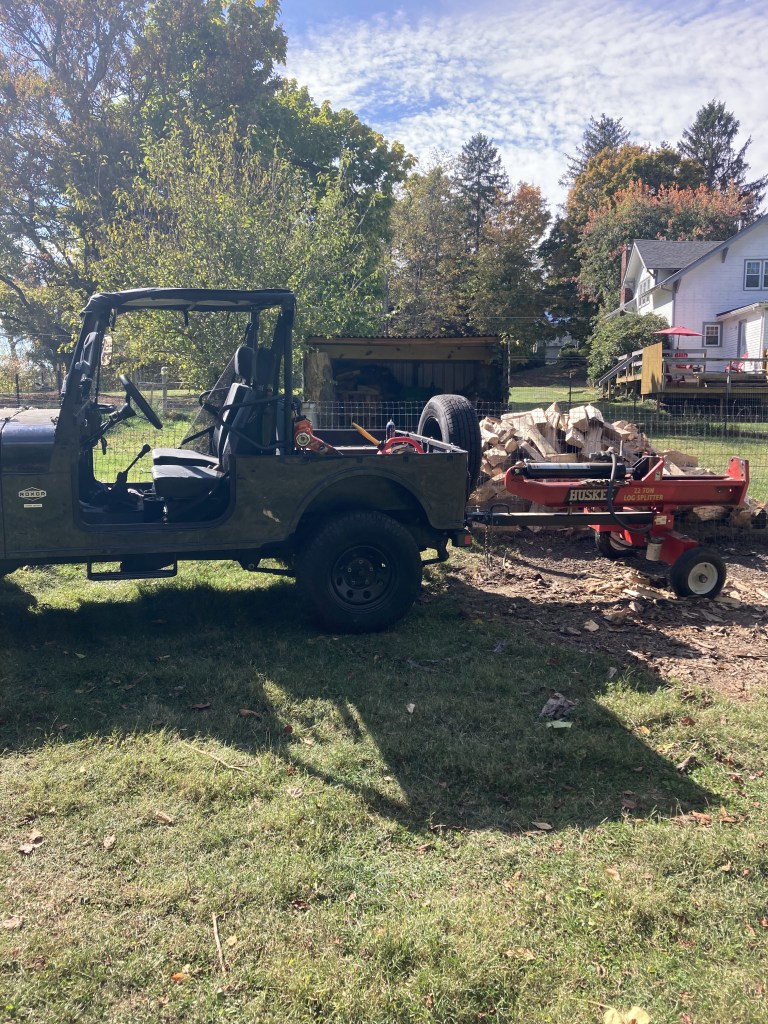
This is a versatile machine. As I’m pretty familiar with its pattern, the old GI Jeep, it hasn’t surprised me. No, it’s the same buggy without outdated crap and antique parts. This is what I wanted, and after years of chasing my tail, it’s what I got. The hell of it is that it was much less expensive than a typical plastic side-by-side, and much more practical. If you’re in the market for a vehicle like this, I can recommend the Roxor.
Of course it’s fine off-road. This is what it was built for.
This ditch, which is gnarlier than it looks, is typical of the sort of obstacles that I encounter around here. The Roxor made short work of it, as you can see.
Pretty glad I did this. It’s been a lot of work to get it close to where I want it, but now it’s there.
Catch ya.
 The Interstellar Valley
This sparks nostalgia in me, for my very gone 1944 Ford GPW….gotta love a bare bones work horse vehicle.
LikeLike
Well, I have to say the Roxor has a very clear lineage to the utility wagon of WW2- the original Willys Jeep design, the MB. I can’t stress enough that the Roxor isn’t built like anything to roll off the lines in the last fifty years. When I went to do my original inspection of the Roxor, I expected that it would hew closely to the design of the wartime Jeep. However, I was not prepared, and was delighted by, how close it was. Most impressive was the sheet metal. True 1940’s, thick-ass steel and very little plastic. The first thing I did on the dealer’s lot was the “dimple test.” I pressed on the hood with my finger, and it didn’t budge. Even my full-sized Chevy truck oil-canned when I did that, and its sheet metal started to rust through when I traded it in years ago. In contrast, this vehicle is clearly built to last. With proper feeding and care, I think it has a good shot at outlasting me.
LikeLike