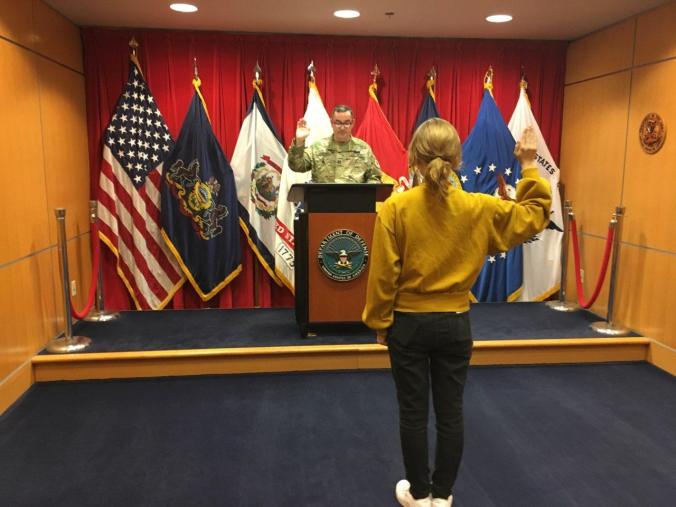
The Oath

23684

The image above is me administering the US Military Oath of Enlistment to a prospective soldier.

I want to discuss this oath, this basic step, because a lot of people misunderstand the role of the US Military in society. So here goes.

First, the oath of enlistment in its present day form.

I, _____, do solemnly swear (or affirm) that I will support and defend the Constitution of the United States against all enemies, foreign and domestic; that I will bear true faith and allegiance to the same; and that I will obey the orders of the President of the United States and the orders of the officers appointed over me, according to regulations and the Uniform Code of Military Justice. So help me God.” (Title 10, US Code; Act of 5 May 1960 replacing the wording first adopted in 1789, with amendment effective 5 October 1962).

Now I’m going to tear it apart and reveal exactly why a lot of military leaders this week have been hesitant to summon the Regular military to US cities to suppress lawful demonstrations.

First, “I will support and defend…” This refers to the obligation, freely assumed by members of the military, to defend the entire US Constitution against those who would seek to deny its specific rights to fellow citizens or attempt to conquer from without. Some examples would be lawful conflict against Nazis in World War Two, or suppression of the Klu Klux Klan during Reconstruction. The Nazis because they sought to overthrow our system of government, the KKK because they sought to deny the Constitutional rights of their fellow citizens.

“I will bear true faith…” This means that you follow the Constitution to the letter and the spirit, and that you are loyal to the Constitution before all else. It’s why this clause is written before the following clause, which authorizes lawful authority to command.

“That I will obey the orders of the President… officers…” A military member is required to follow the orders of the President and officers, commissioned and non-commissioned. The clause means what it says. However, there is an important caveat; and this is raised in the next clause.

“According to regulations and the Uniform Code of Military Justice…” This body of written regulation and law is first subject to the Constitution. A military member may not circumvent the Constitution. After the Constitution follows regulations and the UCMJ, which are partially subject to international treaties (ex: the Geneva Convention). This clause, within regulation, recognizes the difference between illegal and legal orders. This is a concept which was fleshed out by the Nuremberg Trials of 1945-47; i.e. it is why it is never a sufficient defense to say “I was just following orders” in the course of atrocities, etc.

“So help me God.” The capping clause that acknowledges the supremacy of a deity over the laws and actions of man.

There you go. A nutshell class in why every service member in the United States serves as a guarantor of the freedoms enumerated in the US Constitution, and why they must follow orders, but only legal orders given in the spirit of the US Constitution.

By the way, National Guard personnel have a slightly different oath in which they recognize the command authority of a given state’s governor. Look it up, it’s much the same; also, National Guard personnel are frequently summoned to active duty and they function under Title 10 exactly like regulars. Sometimes people get confused by this, but it’s really simple.

So there you have it, the reason why every US trooper is obligated by law to uphold the Constitution.

If a servicemember acts to deny his or her fellow citizen their Constitutional rights, then they have gone against the base principle that they committed themselves to on their first day of service.

The US oath of enlistment.

It is specifically designed to ensure and lawfully oblige each member of the armed services to protect the Constitutional rights of their fellow citizens; with their lives if necessary.

No matter who is in charge.

Space post

planet

It’s been a while since I wrote some stuff down re: space developments on these pages, so today we’ll talk over some of the latest.

First and foremost is what Space X has pulled off, again. Elon Musk and co make the miraculous seem mundane; witness how we’ve gotten used to how Space X recovers rockets. Real holy crap stuff; if you watch the Youtube videos you’d think it was fake. It’s not.

Last night Space X punched yet another Starlink mission up into low Earth orbit, the adds more mini-satellites to the proposed internet constellation. One of these days I’m going to be an internet customer of his; rural US internet is pretty bad.

And this doesn’t even touch on the Demo 2 mission less than a week ago. Once again the US is lofting astronauts heavenward; it’s about darn time. This time around its even better because a private company is doing the deed.

Why is this better? Because one of NASA’s perennial handicaps is funding shifts with political changes in focus. Space programs are by definition long-term projects. How is it possible to maintain continuity when every two or four years funding changes? Short answer? It’s not.

This is where Space X reigns supreme. One person, Mr. Musk, determines what gets funded. The goal remains the same, it’s not a moving target.

Over the past decade, Mr. Musk has demonstrated that he is serious about space exploration. Look around. If it wasn’t for his vision and drive we’d be stuck with the cash-cow military industrial complex and half-hearted efforts from other billionaires.

Let’s face it, we are not going to space with “737 MAX” Boeing.

Barring any horrible unforeseen events, we will get to space with Mr. Musk.

He is working hard on the development of his next-gen rocket,the Starship. Even though he keeps blowing the darn thing up.

In other news, scientists are refining exoplanet discoveries, including one around Proxima B, out neighboring star. I remember a time when planets around distant stars were theory, not fact. These days there seems to be a discovery per week; the darn things are everywhere. This is excellent; when the day comes that we gain interstellar capability there will be no shortage of star systems to explore.

Of course, there is a lot that needs to happen before we become a multi-planetary civilization, let alone an interstellar one.

But as I judge things from my rural retreat, I see the potential. Even though it’s tough to look past the 1968ish turmoil down here. Real tough.

We have a lot of work to do, both here in the dirt and up in the heavens.

I remain optimistic.


The Bulldozer

army bulldozer

Hey Readers. I was kicking back this morning and I wondered what to post this week. Well… I’ve gotten a fair bit of feedback about this short in the new alternate history series; so I thought to share it with you all.
To give you a taste of what is to come. Here it is, the non-spoileriffic short.
The Bulldozer.
“Fuck you, sir.”
 
Second Lieutenant Wayne Haskell of the 180th Engineer Company, 276th Engineer Battalion of the Virginia Army Guard covered his eyes for a moment. He wanted to scream. He wanted to be anywhere but here, the westbound exit off of Interstate 70 onto state route 65. It was a major logistics route into and out of the Baltimore and Washington DC area, and right now it was a nightmare of fleeing cars, many of them filled with those stricken by the Plague, the Crud, or what-the-fuck-ever.
 
His platoon, equipped with heavy bulldozers, was tasked with keeping I-70 westbound clear, no matter what. His company commander hadn’t left any room for doubt; Wayne had written orders in his pocket. 
 
Deadly force was authorized; usually one wouldn’t think of bulldozers as deadly. In this situation, they were.
 
Wayne looked at the pile-up of hopelessly entwined and burning cars before him. People were trying to help others that were trapped. Someone, or someones, were screaming. Screams such as he had never heard; high pitched keening, hoarse shouts. 
 
Someone was burning to death. 
 
The driver of the bulldozer, Sergeant Vogel, was a good man and soldier. Experienced. A veteran of Afghanistan, he had run the Ring Road looking for bombs. When he tired of the Regular Army, he had gotten out. After a while, he missed the service, and as with so many veterans, he found the Guard.
 
And now the Guard had found both soldiers, and their mission was clear. Keep Route 70 free for traffic, by any means necessary, no matter what.
 
Wayne’s mouth set in a grim line. He was a brand new officer, and here he was, in one of those fucked up situations they had warned him of in OCS. His instructors pasted a bland term on such moments. This was a “leadership challenge.” 
 
Bad enough, thought Wayne, to be a black man in a unit with a heavy Confederate lineage. But now I have to face down one of my best NCOs. A man I admire. A solid soldier, father and husband. Jesus. He shook his head.
 
Wayne spoke, he pitched his voice over the dozer’s idling engine and the screams.
 
“Sergeant, this isn’t an option. It’s a direct order. Push the wrecked vehicles off the road.”
 
The man’s face contorted into a rubber mask of anguish.
 
“Sir, there are kids in there! Babies! They are trapped. If I push these cars they fuckin’ die!”
 
Wayne rubbed his face. Vogel was right. But as an Army officer with a clear mission, Wayne was more right, if that made sense. It was time to either use reason or his M17 pistol, either or.
 
Lieutenant Haskell decided to try reason first.
 
“Vogel, look left.”
 
The Sergeant looked. There was a traffic jam as far as the eye could see. There were thousands of cars.
 
“Now look right.”
 
The westbound highway was empty.
 
“Clear the cars, Vogel, or more people die.”
 
“But…”
 
“Sergeant Vogel, this is on me. Not you. Put the dozer in gear, clear the jam.”
 
The NCO let a string of profanity loose, but he acted. With a crunch and a roar, Sergeant Vogel followed orders.
 
Both men wept as he pushed, crushed, the wrecked autos aside. The rumbling diesel and the screech of tortured metal almost blotted out the screams.
 
Almost.
 

Memorial Day 2020

memorial day 2020

There is exactly one occasion around here where we hang out Old Glory, and that’s Memorial Day weekend.

That’s not to say that people who put it up at other times are wrong; certainly not. If properly displayed the US flag can be flown year-round, at all times. Other examples of appropriate occasions to hang the flag would also be the 4th of July, Inauguration Day, Veterans/Armistice Day, Flag Day, the list goes on and you get my drift.

It’s a free country.

We choose to only fly the flag on this hallowed weekend, when we remember the dead.

This is not the weekend when you beat your chest and tell everyone what a great guy you are. This is not a weekend where it’s appropriate to use the sacrifice of 1.2 million Americans for political or commercial ends. Unfortunately, however, you see this too much; it is what it is.

That’s not to say you can’t have fun on this holiday weekend, because you can. Let me give an example.

In the now-distant past, when all of our WW2 veterans were middle aged, we held large family picnics on this weekend. Not on the day itself, but usually on the Saturday before. I remember my uncle Clyde, a tanker, the best. I also remember my Grandpa Magyar, an infantryman. We also had a cohort of Korea and Vietnam guys, they were young then, still in their twenties and thirties. These are with us today; but their ranks are thinning as well.

While it is true that us kids played, and everyone ate and enjoyed themselves, there was always a moment devoted for remembrance and a short prayer.

Does anyone still do this? I hope so.

Our fallen. We have a list, from the Civil War to present.

ferry cannon

The parade back then would be somber, a marching line of veterans, everyone headed to the cemetery for a short service by the VFW chaplain. One recollection I have of those days, the late 1970’s, was a Great War veteran. His sister wheeled him onto the porch every year in his high-collared uniform. He had no face.

Our dead. Our honored dead.

Fast forward to now. How to describe this year’s Memorial Day?

Nearly one hundred thousand dead of a terrible epidemic; well over a million struggling with the sickness.

There won’t be any large gatherings. At least, not if people use some common sense.

So I guess this Memorial Day will be spent here at home, remembering, with Old Glory hanging in the pleasant spring breeze.

I don’t think our passed-on ancestors would mind; they’d want us to stay safe and do the right thing.

“This we’ll defend.”


Mania

keyboard

Hey everybody. I’ve been laying low lately. But then again we all have. Mostly. Hopefully you all have been staying healthy and reasonably safe.

My latest writing jag has been so crazy that I have no idea when we started it. I think in March. Somewhere around the start of the Siege, but I’m not sure. Just now checked the earliest document in relation to the series, it’s dated March 11, 2020. Or at least that’s the last time it was modified.

So I’m close to right. I think.

For us, the Siege started on the 12th of March, that’s when all the schools were cancelled.

That’s when it all went to hell.

But that’s OK. It gave me an excuse to deep-dive into a fictional series; a joint effort with a friend and mentor.

I have a tentative release date, but it’s just that, tentative, so it wouldn’t do to put things out there and irritate people when the inevitable delays creep in. There’s a lot of moving pieces involved in this work, a lot of new stuff that pulled me out of my comfort zone and caused me to think about various stuff.

Like structure. World building. Show-don’t-tell. Pacing.

So here’s where I’m at; I’m closing in on the end game of my part of the rough draft. This has been a serious case of fugue-state writing; and now that I’m close to the end it’s moving very, very fast.

The writing, that is, as well as the narrative.

This is my first effort ever that spans in excess of one hundred thousand words; my novels usually wrap up somewhere north of eighty thousand, south of the mid-nineties.

It’s been a real marathon.

The hammering of the keys has dulled out some pretty dark, lousy days.

This is the longest, most ambitious project that I have taken part in to date.

Now that the end of the beginning is in sight, I already miss it.

Whew.

***

Note: The rough draft, the end of the beginning, is complete. 111,034 words. 7800 in one day, yesterday. I am burned.


Sinkhole

Multiple-flies-on-bread-image-1024x681

Hello, all. It is with great pleasure that I can post a writing sample today from me and Australian author John Birmingham‘s tentative shared universe; it’s a dreadful place where the Black Death, or a modern version thereof, stalks among us once again. This piece has no name, just a number. It is called 4 (5); “Sinkhole” works better.

Here goes! A joint effort and sample, JL/JB.

Sinkhole.

Not in all of his days had Bob Parker seen so many damn flies. Looked as if his dump truck was gonna get swallowed by a great black wave of them, a living storm, as he drove into the glen outside of Bayonet Point, Florida. Nothing for it, but. The Pasco County Health Board was desperate for places to bury the dead and someone had pointed out this clearing in Forest Acres.

This part of Florida was famous for sinkholes; the yawning chasm that Bob backed up to had opened just a few weeks earlier. Before all this other business with the virus and stuff. It’d been huge, but the damn thing was nearly full of bodies already. In a few more loads the county people would have to find somewhere else. Still, that wasn’t his problem. Some poor bastard standing with a facemask backed him up. This guy was standing right next to the lip and all he had for protection was an an old bandana wrapped around his face. Bob was glad to be sealed up inside. He didn’t even have the air on.

Bob paid extra close attention to his hand signals. Last thing he wanted was to get his truck stuck in a pit full of corpses. The stench was overpowering on this sunny spring day. He thought for a second about spinning his wheels; his mind shut down. He made a face and gagged.

The guy by the pit halted him. Gave him a thumbs up. Bob worked the dump bed controls, the massive hydraulics whined as the cylinder pushed the bed upright. The tailgate popped open, the lumpy, oozing, farting and stiffening load dumped out into the hole. Bob heard the man by the pit call out.

“Truck’s empty.”

Bob called back. “All right! Coming down.” The hydraulics whined again, after a few moments the lift bed clicked back into place. With some haste, Bob pulled out of the lime-green field and went back into town for another load.

There was a problem, of course, but neither Bob nor the civil servants working for the Health Board could be expected to know all the facts about karst topography and the formation of sinkholes. Florida was basically a limestone finger, jutting out of North America into the vastness of the Atlantic Ocean. Limestone dissolves when exposed to water. It decays into a series of interconnected caves, sinkholes and ridges known as karst topography. Lots of wells had been drilled into the limestone for drinking water and millions of folks depended upon these wells.

Wells that were directly connected to the sinkholes throughout the state.

A few days after Bob Parker made his runs, Elmer George, a retiree from New York who had sealed himself off in his house, opened his kitchen tap.

A stream of brownish water gurgled out.

“Jesus, Lord God!” He gagged. “But does that stink!”

He let the tap run in hopes that the pipes would clear out. The pipes gurgled and belched and quit running.

What the hell, he thought. He figured something must have clogged the sink faucet. He knew there was a small filter in there. He’d had to have a plumber clean it out once after doing a pretty poor job of tending to it himself. Elmer opened the window for the stench and shuffled at double time up to the hallway closet where he kept a small handyman’s toolbox. He’d be damned if he was paying some toilet engineer three hundred bucks to come out and do this again. Elmer pulled out a set of slip-joint pliers and returned to the kitchen. He unthreaded the filter from the faucet with care and set it aside.

Then he turned on the water.

A massive blob of something flew into the sink, along with a splash of the foul brown water. Elmer swore and turned off the sink with haste. He examined the gob, the blockage.

It was a wad of scalp and human hair.

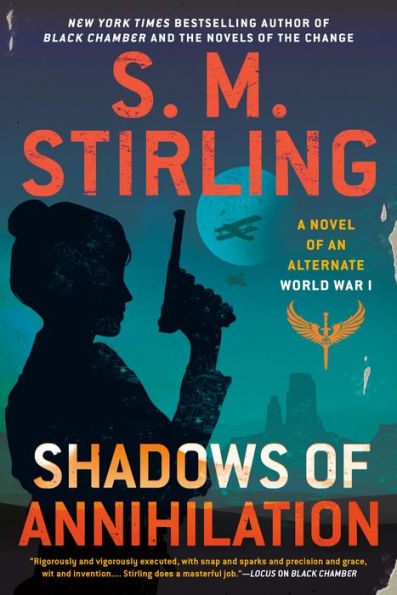
Shadows of Annihilation, a review

annihilation

BLUF: The best of the Black Chamber series.

Everyone knows that I dig S.M. Stirling’s work. I’m pretty sure I’ve read everything he has produced, and most of it is amazing.

Of course I jumped on it when I originally read the premise of his new trilogy; a Great War alternate history combined with his writing. A sure-fire recipe for success, really.

So why did it take me two whole months after release to read and review “Shadows of Annihilation?

Well, I’m not going to launch into stupid excuses or mealy-mouthed explanations. I’ll just say I’ve been subject to some heavy stressors; this does not make me unique in this year of our Lord 2020. In fact, I’d say that most of us have been mildly freaked out lately.

It’s been weird; I haven’t been able to read or watch TV.

I have been able to write or work.

So an Australian friend pointed out what should have been obvious: treat reading like work. So I did, and I am pleased to say that it’s time to do this review.

Well, what didn’t I like about this book?

Not much. It was fun.

What did I like?

A lot. I’ll touch upon a few things.

Stirling did a lot of research in this book; he beats me like a stepchild in that regard. But he doesn’t get as far into the weeds as Michener; that can get old. No, the cake is fairly well leavened. Just enough.

The pacing was excellent; I didn’t have a feeling of dead spots or places where I had to struggle through. The book did what it should. It hooked the reader at the beginning and accelerated through to the end.

Have I mentioned that Stirling books never fail to make me hungry? They always do. He describes food in loving detail; this book reminded me in places of a favorite of mine, Conquistador. There were so many delicious sounding, utterly exotic dishes named. I could only hope to try one-quarter of them.

This book didn’t have implausible scenes. I thought book two, “Theater of Spies,” had too many of those. Now, I can suspend disbelief as well as the next fellow, but I do like a spoonful of realism with my science fiction. I thought Mr. Stirling did a nice job with the concluding chapter of this series.

Finally, Stirling did a really nice job of fleshing out his characters. The antagonist Horst wasn’t just some SS recast, he was a flawed man doing his best for his people and country, just like our protagonist, Luz and her girlfriend, Ciara.

This series is worth checking out. If you haven’t read the last book, do so.

It’ll make you wish that TR, instead of the most-unimpressive Taft, had gotten another shot at the presidency. But hey, unimpressive presidents happen.

Not everyone can be a Roosevelt.

Read Stirling’s latest and shake your head at what could have been.

A good yarn

m1916

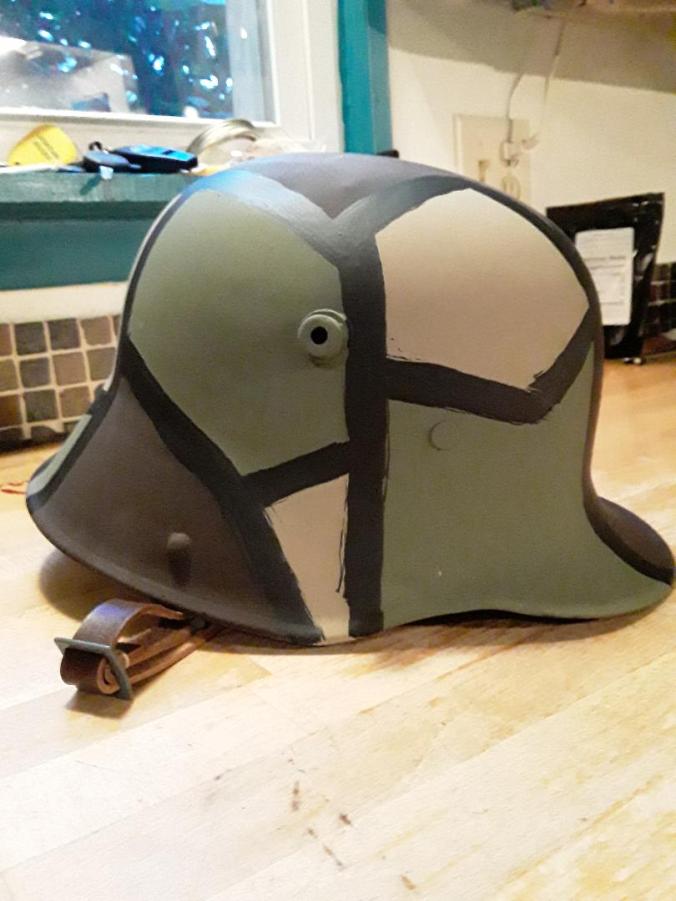
OK, what’s with the photo of the German WW1 M16 helmet?

Pretty easy, it has a lot to do with what I’d like to talk about today.

No, not random war relics.

Yeah. Today’s piece is about a very strange thing I’ve had, and how advice from a friend and mentor helped me overcome an obstacle.

The problem has been with reading. Whoa, an author who has trouble picking up a book?

Yes. You see, I’ve been meaning to review “Shadows of Annihilation,” the new book by S.M. Stirling, on this site for a couple of weeks. Actually, longer than that; his book came out about when the Siege started. One would think that the better part of two months in solitude would have made me burn through books. The opposite has been true.

I have been able to maintain my writing, I am busy with a collaboration right now. It’s going pretty good.

But what’s with the helmet?

Well, that has to do with the very strange weirdness in regard to my reading, and why I should be very interested in reading Mr. Stirling’s work. I’d like to illustrate exactly how messed up this reading block has been.

First, long time readers know that I’m a very big fan of S.M. Stirling. When he releases something new, I don’t mess around. I read it. I devour it. Almost always, I enjoy it. So it’s super freaky that I didn’t immediately take care of his latest.

Second, I take my obligations to this site and my readers seriously. I know that you all have been lurking out there, looking for new stuff. Like me, you are probably hemmed up in your home; I have a duty to entertain you. It’s important not only to read Mr. Stirling’s book, but to review it for this website as well.

Finally, a fictional series set in the Great War is rare; this is an interest of mine and even if I wasn’t a huge fan of Stirling I’d still read his “Black Chamber” series for the World War I alternate history theme. After all, I’ve written one of those myself (hopefully for expansion into a trilogy), and I hope to release it this fall.

So it is with a glad heart, readers, that I can now report to you that I started “Shadows of Annihilation,” and so far it’s pretty damn good. What got me to sit down and read, as opposed to sitting and staring (BTW, I can’t watch TV either)?

A conversation with a friend in Australia. He suggested that I need to start treating reading as an obligation of the author’s trade; this was novel to me. Reading as work. It has always been for pleasure, or as an escape. But I found that if I treated it like writing, as a job, that I was able to do so.

And you know what? After the first fifteen minutes I started to enjoy myself; the book so far is pretty good. The Great War deserves more attention than it’s gotten, it has shaped our modern world. Kudos on Mr. Stirling for writing about it.

So tonight, I broke the dam.

Soon, a review.

Lilacs

airport 04:15

The above photo was taken a few days ago when I absolutely had to venture out to recover a close relative from a small, but usually bustling, airport. It was an experience that bordered on the surreal; we had to drive four hours (one way) to recover her because no other airports closer by had any flights coming in!

It was dead, dead, dead. On the trip there we were able to drive through a fairly large city at “rush hour,” construction zones included, with no delay whatsoever. It seemed at many times that our passenger car was the only one on Route 70, one of the US’s major east-west highways. All I could do was shake my head. There were plenty of semis (lorries), but vehicles such as mine were few and far between.

I see a lot on the news (when I bother to look) about protests, etc., but the majority of the people I know and live around are taking the lockdown seriously. Also, Route 70 and the airport really told the tale. It’s hard to describe how empty it all was; we waited at the airport for a while and we had <zero> trouble getting a prime parking spot. When my relative got off the plane, we asked her how many people she had shared the flight with.

The answer was five.

Five. How in the world can the airlines stay afloat like this? The travel agencies (like the one that refuses to pay me back for my very poorly timed Australia trip)? Anyone, really, but the grocery stores?

This new and unpleasant world borders on the creepy. And I know it is potentially fatal and economically ruinous.

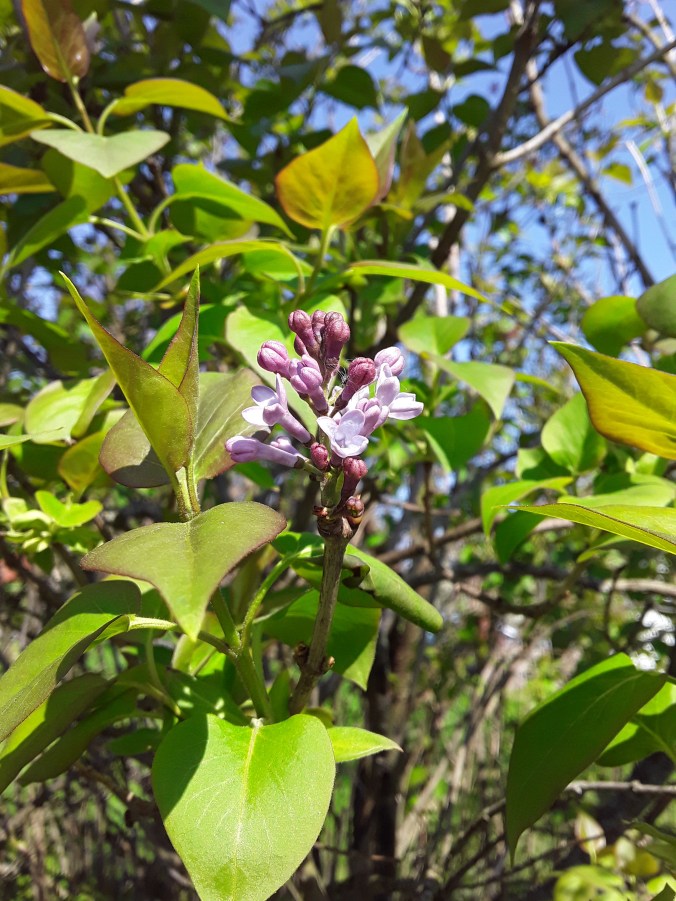
So I choose to avoid the news and do stuff that’s physically active and fun. Here’s a photo of a personal favorite of mine. Lilacs.

lilacs

This is a surprisingly good photo from my cheap Samsung, it shows the first buds on the old lilac bush in the yard.

How old is the bush? I don’t know. Let me tell you about me and lilacs.

First, the bush in our yard actually came from my Great-Grandparent’s farm, the Magyars. My mom took it when they died and planted it in our yard. The bush keeps getting bigger, it has nearly died via loose goats on several occasions.

I love my lilac bush. Every year its fragrance tells of the coming spring, of new life bursting forth from the seemingly dead late winter earth. Its smell is one of my indelible touchstones of home, the lilacs of far Ohio when I was marooned overseas. Tour after tour the lilac stood, it welcomed me when I retired, it witnessed the birth of our children.

And who knows what else. As I said, it came from the Magyar’s old place. I barely knew those people, but I remember them as kind. People of the earth.

Strangely enough, both of them, Imogene and Joszef, lived through the Spanish Flu of 1918. So if they were still around, this would be old hat.

The thought comforts me, oddly enough, and I feel connected to them through that old lilac.

The one the goats tried to kill, but they failed.

So in this year of the plague, at least I can still walk outside and smell the bloom of the lilacs.

The smell of home.

The Siege Part IV: Apocalypse Workout

thumbnail-1

The above image was from today’s morning activities, preparing my yard and gardens for the coming growing season. Yes, that is my shadow. Guess I should have paid more attention in my high school photography class.

You have to forgive the shaggy appearance of stuff, that’s what I did this morning, brought a winter’s worth of hibernation back under control.

That’s what I want to talk about today, how to keep your body moving and exercising in times of stress. This helps your mental outlook and keeps you back away from the ledge.

Lord knows we all have stressors right now. There are acute problems, dwelling on them doesn’t do any good. So I’ve chosen to get outside and do physical labor. It’s amazing how much you can work up a sweat by simply tilling up a garden; a side benefit is the vegetables you’ll eat later on.

And this year we need the vegetables in the garden.

Check out this article, front and center in Yahoo news this morning, the 4th of April, 2020.

dumbass

What drooling idiot, I wonder, leaked this information to the press? Headlines like this create a self-fulfilling prophecy; ie news of a shortage spurs people into buying all they can before it’s gone. Look, we have enough problems as-is without this kind of thing. As I stated in my earlier piece “Victory Gardens” our logistic chain is going to be severely tested by this disease.

In short, planting a garden is not only good for the system as a whole and your stomach, it is a necessary physical outlet.

Let me tell you, if you’ve never done it, breaking sod and conditioning the soil on a new garden is an excellent whole-body workout. There is a reason most of our ancestors were rail-thin and tough as roots. Subsistence agriculture, because that’s what we’re talking about, is hard. Physically demanding, even when done on a very small scale.

But that’s OK. We need both the exercise and the food. If you have any land at all, now is the time to put in a garden. Seriously, for the reasons I have listed above.

thumbnail

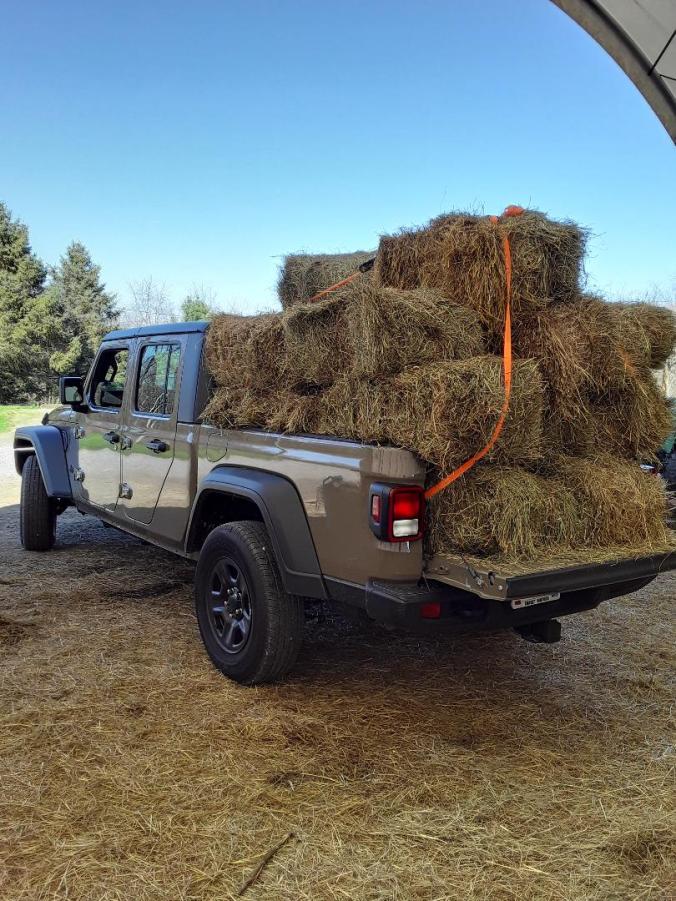
OK, why have I posted this picture of my truck loaded down with hay?

Exercise. You gotta take it where you can find it, and getting feed for livestock is currently authorized under the emergency regulations. Lemme tell you, great exercise.

Here are some of the exercises inherent in gardening or small-scale farming.

  1. Weeding. Squats, hand strengthening.
  2. Hoeing. Workout for the shoulders.
  3. Tilling. Upper body and thighs, excellent.
  4. Mowing. Walking, upper body.
  5. Haying. Each bale 40-60lbs/20-30kg. Think about it.
  6. Feeding and watering. Lifting. Back and shoulders.
  7. Raking. Shoulders and back.
  8. Sowing. Squats.

And I’m sure there’s stuff I’m forgetting.

So if you are down in the dumps like me, force yourself to get out there and work. There is also a mental aspect to it, and as we still have the internet there are loads of helpful resources with gardening.

But I live in a flat, you say. Well, do you have any house plants? You can actually grow potatoes and tomatoes in an apartment, seriously, and peppers… the list goes on. Google it, there are a million resources. There are also those who say that plants help your mood; there could be some truth to this.

Exercise and mental engagement now equals a better operating position later.

Set yourself up for success.