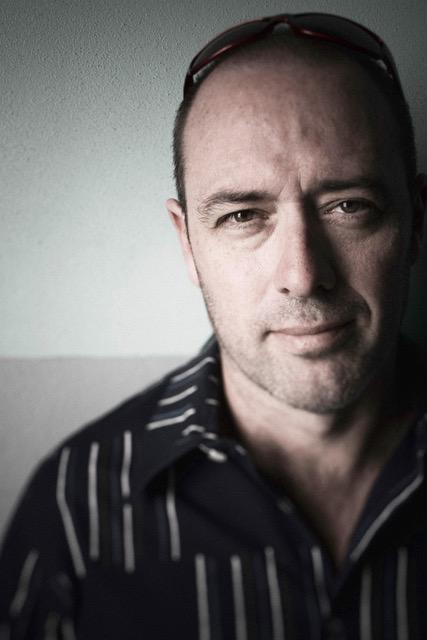
Author John Birmingham, Interview, 12AUG19.

approved JB

Readers, it is with great pleasure that I can say that best-selling Australian author John Birmingham agreed to do a mini written interview about his latest novel, The Cruel Stars. This book will be available on the 20th of August, it’s a great read and I plan to review it soon. Without further ado, I’ll turn things over to Mr. Birmingham.

  1. What gave you the inspiration to write this book? 

    I’ve always been a huge fan of space opera and classic sci-fi, but I’ve never had the guts to write my own. I’m not sure why. But if you are asking straight up what inspired me to write The Cruel Stars, it’s the novels of Peter F Hamilton, and John Scalzi and C. J. Cherryh and Isaac Asimov and Iain M Banks. I could go on. I’m deeply invested in James SA Corey in the Expanse series, and that’s before we get anywhere near other media like TV and film. It’s just a great, almost infinite field in which to tell stories. I’ve always wanted to go there.
    What specifically inspired me to write this series? To be brutally honest, failure. The last series I did, my Dave Hooper novels, failed for a whole bunch of reasons. I loved them as books. I worked hard on them. And I’m happy with them as creative works. But for a bunch of reasons I won’t go into here, they just didn’t work as well as they should have on the shelf. So I was looking for something else. Something very different.

    2. The Cruel Stars was in development for a long time. What was your greatest challenge with creating it?

    I really worried, to the point of obsession at times, about getting things right. And I shouldn’t have. It’s fiction. I remember interviewing Lee Child on stage in Melbourne once about how he put his Jack Reacher novels together. I assumed they were intricately plotted and massively researched. Well there is some research, but plotting? No. That jammy bastard just drops into it and gets going. Me, I spent about two weeks try to figure out how a spiral staircase in a micro gravity environment might work. In the end I had to remind myself this was a traditional military thriller, in a science-fiction setting. I’ve written a lot of military thrillers. I just had to relax into what I already knew. Finding a way to do that, to let go of my anxiety and relax, that was the biggest challenge.

    3. As the writing unfolded, which character became your favorite, if any?

    I had always assumed that Lucinda was the main character of this story. I like strong female leads and I was very much looking forward to learning about her as I wrote the book. But strangely enough it was the foulmouthed, irascible 700 year old Scotsman, McClennan, who was the most fun to write. His relationship with the advanced combat intellect, Hero, was like a marriage. Not so much a marriage gone bad,  as one gone deeply, deeply strange. They were both enormous fun to write and I always looked forward to getting back to their storyline. A lesser character, Jaddi Coto, was also a heap of fun to write.

    4. You use the beta reading technique to help develop the raw manuscript. How useful is this?

    I love my beta readers. It’s a process I tend to use a lot more in my independently published works rather than by trade published books, because trade publishers can be a little nervous about letting the intellectual property out into the wild with so many unvetted readers. But all of my betas are longtime readers and trustworthy with it. A lot of them have some pretty arcane specialised knowledge that they bring to the gig too. Not the sort of thing that some editor in a publishing house is going to know. It’s such a useful process that I really wish I could make more use of it for my trade work.

    5. Finally, having received the final proof, what are your thoughts regarding the completed work?

    I am very, very happy with this book. I love these characters and I can’t wait to get back into harness with them.


Thus concludes the short interview. I’d like to thank JB for his time, and I’d like to encourage my readers to check out The Cruel Stars. I’ve been waiting for this launch for a long time, I even ordered two hardcopies of this work.

When that plain brown box from Barnes and Noble shows up, don’t bother to contact me for a day or so.

Do check it out.
Preoccupied

Unknown

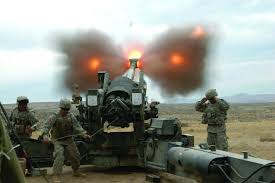
Fort Sill, the home of the US Army’s artillery, also hosts a number of other training activities. For example, I did the second phase of the Basic Officer’s Leaders Course there, the infantry phase. It’s a harsh, rugged landscape with a fairly unforgiving climate. Scorching hot in the summer, freezing cold in the winter with winds that cut through you like a knife. In other words, a great training environment.

Great training environment? Surely I must be kidding. No, I’m not. Misery focuses the mind, monotony and harsh conditions prepare the soldier for war. Napoleon said “The first quality of a soldier is constancy in enduring fatigue and hardship. Courage is only the second. Poverty, privation and want are the school of the good soldier.” He was right.

So at the moment a close relative is enjoying the hospitality of Fort Sill while she undergoes the US Army’s Basic Combat Training, an eleven-odd week gut-check.

Forgive me if I’m a bit distracted by this. I’ve managed a bit of writing for a friend, but I haven’t done much else. Right now she is in the communications restricted phase, the trainees typically don’t get phone privileges for several weeks after the start of the training process.

I have only vague, blurry memories of Basic. Hey, it was 27 years ago. Stuff like watching my supposedly perfect, inspection ready wall locker getting its painstakingly arranged contents dumped out into a heap on the ground. Running in the early morning. Stuffing food into my mouth faster than I thought possible. Long hours on the drill field. Learning the care and feeding of the M-16 rifle. And so on.

It is a moment of supreme disconnect for me to imagine this young soldier going through this hell, when I remember holding her as a baby. I know she will be beaten by pugil sticks. She will throw a live grenade. She will choke on riot gas… the list goes on.

So yeah, I’m a little preoccupied at the moment.

Hope to get to some serious writing, beta reading, whatever, soon. These dog days of summer are eating at me pretty bad.

In other news, Space X continues to do the miraculous, they caught one of their first-stage fairings with a recovery boat lately. This will save some six million dollars per flight. Also, there’s some work going on with solar sails; people are working on proof-of-concept stuff. Pretty awesome.

My thoughts keep returning to Fort Sill like one’s tongue worrying a broken tooth, though.

Good luck, soldier.

You’ll need it.

Stalingrad, a review

stalingrad

I’ve been chewing through Vasily Grossman‘s “Stalingrad”. From the first pages one can see that this book, recently published as an English translation, was a product of Stalin’s Soviet Union. When it first saw the light of day, in 1952, its name had been changed to “A Just Cause.” The new English version was given its first name back, and material was added from the original manuscript.

The heavy hand of the censor and the pervasive reach of Soviet doctrine is all-too-clear in this work. As such, this alone makes the book an interesting read; we can see into the mind of a man born into the Soviet Union, see the thought processes of the children of the Russian Revolution. Mr. Grossman speaks of “entire classes” swept from history, he paints portraits of ideal New Soviet Men. There is a “shock” coal miner, a selfless collective farm worker, scientists, industrial leaders, exemplary political officers, doctors and legions of brave Red Army soldiers. The Gulag, the secret police, the many repressive organs of the State are only obliquely referred to.

I can’t hold this against Grossman. If he was to have any chance at all of his work being published, he had to toe the party line. That there was even a passing mention of the dark underbelly of the Soviet state was almost foolishly bold in Stalin’s time. Grossman was a brave man and an excellent, analytical writer. His subsequent books were repressed for political reasons, and he died forgotten in 1964 of stomach cancer.

But what a legacy he left behind. As a reporter for the “Red Star,” he covered much of the major action on the Eastern Front in WW2. The Frontier battles and the fight for Moscow in 1941. Stalingrad. Kursk. The drive to Berlin, the liberation of death camps. Grossman was there; no wonder that his portrayal of the enemy in “Stalingrad” is damning, vitriolic, and tinged with raw hatred. After all, his own mother was killed in the war. He wanted to write his novels while the memory of the war was still fresh, and he did.

“Stalingrad” is quite a book. It starts slowly, and it takes some patience on the part of the reader to persist. There are a bewildering range of characters, I found myself getting lost in how they were all related to one another; one almost needs a flow-chart to keep them unentangled. From time to time I found myself getting thrown out of the story by statements Grossman made about the self-explanatory goodness of the Revolution and the benefits of life under the Soviet state.

Every time this happened I reminded myself of the circumstances in which he wrote this book, the frigid Cold War with a living Josef Stalin in the Kremlin. Grossman was literally one phone call away from a stretch in the camps or a bullet in the neck. He speaks repeatedly of “freedom loving Soviet men” in the book, all the while knowing, living, the lie behind the phrase.

But I digress. The book picks up the pace like a steam locomotive, we watch as the city of Stalingrad transforms from a place where kids play in the streets to a city under siege, to the worst sort of maelstrom; the deadliest place on Earth in 1942-43. All the threads come together into a city transformed into hell, a place where a soldier’s life expectancy was reduced to hours, minutes.

One passage toward the end of the book really stuck with me. Grossman describes a mortar and artillery attack in terms I’ve heard or read nowhere else; he was either a first-hand, very experienced connoisseur of death by explosives or a damn good reporter of those who had such knowledge. Me? I think he was both, and he must have written down exactly what it’s like to be “blown up” immediately after the fact. His description of the different sounds varying types of shrapnel make is accurate, harrowing.

And all too often the shrapnel found its intended target. No-one is spared in Grossman’s merciless work.

Unlike a lot of his readers, I didn’t read the follow-on novel “Life and Fate” first (it was translated and published into English earlier). I’m glad this wasn’t the case because now I can flow into book two without an issue.

At the beginning of “Stalingrad” I wasn’t sure I wanted to read “Life and Fate.”

Grossman, however, convinced me otherwise.

“Stalingrad” is essential reading for those who want to make some sense of the human condition’s unique madness- war.

A recommended reward for the patient reader.


After the fight

after the fight

A bit of a personal post, today. Part of my subjective writer’s journey.

Why did I post the photo above, me wearing a pakhul at some lousy firebase?

Well, it’s because that was me at the height of my competency, before everything went downhill. Before I took a hit. Before the hospitals, the boards. Long before I got the idea to write. That’s me when I led men in combat, when I could still point at something and say, “this is what I do.”

On many days it still feels as if I am stuck there, in 2011, up in the mountains. As if I can’t escape. As if everything that’s happened since isn’t real.

I thought I would die there, and then it didn’t happen.

As if by magic, I came home and wrote. In the Valley, the first book of my trilogy, was the result.

Why am I talking about this today.

Well, a few things have happened, some of which I’m not going to touch in a public forum. What I will say is that I recently attended a gathering of soldiers, I struck up a conversation with some of them. One of them asked “what are you doing these days,” a pretty innocuous question. A pretty uncomfortable question, frankly.

How do I answer that? I’m medically retired, still relatively young. Looking at me, I seem to be able bodied. I stood there tongue-tied, unsure of what to say. Did I spill my guts and tell this soldier that I spend a lot of time at the VA? Did I mention that I tried regular employment and it didn’t work out? Did I say that I’m trying to atone for all the years gone, the pain, the loss?

Nope. I blurted out “I write books.” The statement felt lame, stupid, as it crossed my lips. Even though it’s the God’s truth.

The soldier changed the subject, we stopped speaking soon after.

Looking back on the conversation, I’m a little pissed about it. First, I know I did good time for God and country. Second, there’s nothing wrong with a medical retirement. It’s not as if the Army gave me a choice. They didn’t. I’m lucky to be alive. Finally, what the hell is wrong with being an author? Not a damn thing, as far as I’m concerned.

I’ve written a decent little trilogy. I’m up to my ears in collaborations. Just finished the rough draft of my fourth novel. I run this website, and it’s rewarding and fun.

So maybe the problem isn’t with the question, “what do you do these days,” but with my own perception. I’m not a soldier anymore. I’ll probably never face the enemy again. I no longer carry the sword.

It’s over. I write books.

If people want to give me funny looks about it, that’s their problem.

This is what I do.


Not-so-peaceful palms

NG37thAmmo

Usually Americans don’t think much about the Pacific rim. In the popular imagination they are a series of idyllic atolls with white sand beaches and swaying palm trees. For an older generation, they were the scene of vicious struggles. Misery and death beneath the merciless sun, facing an enemy that didn’t know when to quit. My uncle Russell fought in those tiny islands with the 37th Infantry, it was bad news.

So my eye was caught by an article about the current effort by both Australia and China to win friends and influence people among the rash of islands between the two nations. This is a deep extension of the earlier effort to wrest control of these island nations from the Japanese once they had been lost in the dark days of 1941-42.

Since that time all powers in the Pacific have been painfully aware of the strategic importance of these tropical idylls, those green jewels almost lost in the blue vastness of the ocean. The island nations could serve as power projection nodes as they have done in the past; an open question is whether China will seek to build an overt military base in the region, using its loans as leverage.

The Chinese say they have no such plans.

Maybe not. But the islands are certainly a temptation for them, and an opportunity in case they wish to expand their military reach in the area. My layman’s take is that the Aussies and the Yanks are probably right to be concerned. And any old Pacific veteran will tell you it’s better to hold the islands than to have to re-take them at some future date.

This is a modern-day version of the Great Game, and we get to watch it in realtime. I do wonder if the Western leadership is capable of facing the Chinese. The Confederate General Forrest, for all his flaws, said it best with “get there first with the most men.”

He was right.

So who will “get there first with the most men?” And what consequences will that have?

We’ll see. It’s happening before our eyes.


Going electric

Harley-Davidson-2w

I came across an article on the internet today about an exciting new electric bike from Harley-Davidson, of all companies. This is cool, and I think it’s the wave of the future; a wave that right now is coming in dribs and drabs.

Within the following decades the gasoline engine is going to go down the same path as the horse and buggy. The combustion engine has hit a wall in terms of efficiency, there’s only so much performance that can be squeezed from its century plus old design. As we speak the transition to electric vehicles is underway.

On my last road trip I saw probably about seven Teslas pass us by in our stodgy Subaru, I smiled each time I saw one.

My turn to buy an electric will come when they are competitively priced, reliable, and the recharging infrastructure matches or is comparable to diesel fuel. What does this look like?

I need (and probably millions of consumers like me) a car that will go about four hundred miles in a charge. The car must recharge in about a half hour on the road, with the capability to trickle charge at my residence. It must cost no more than 25k in 2019 dollars. The vehicle must be reliable, with a service life of about ten years.

All the other stuff, like “seats four,” “large cargo capacity,” “attractive appearance,” etc., are all old hat for the engineering and marketing folks. The other stuff in the paragraph above is close to attainable now.

Some would say that you should be willing to spend a 10k premium on an electric car. My response is that 7/8 of consumers would strongly disagree. In order for the electric to break out into mass usage, its price and performance must be on par with gasoline products or the ordinary Joe or Jill will not lay down hard-earned cash to buy them. Period.

I bought an amazingly efficient truck in 2013, a 1500 Chevy Silverado. Great truck, does everything I ask it to do. Hauls, pulls, good off-road capability. Twenty-one miles to the gallon with a 5.7 liter engine, this is an almost miraculous level of fuel efficiency. But it’s not good enough. Ideally its fuel usage would be zero.

In this household, there is a different standard for trucks. A car must last five to seven years. A truck must last for twenty.

It’s not unreasonable that by 2033, when the grey Chevy is scheduled to be retired, that we can replace it with what will probably be my final truck- hopefully a tough, four-wheel drive electric beast.

This would be the ideal world. No more gas burners parked in my driveway by this century’s third decade.

If Harley can make a cool electric bike now, then Chevy can make a tough, economical, no-nonsense electric truck by 2033.

Tesla is leading the way.

The others are following suit.

Mr. Musk demonstrates conclusively that we don’t need a government plan to forge into the future, whether that be here on Earth or in space. What we need is true leaders with a vision; these leaders need to be backed by science, engineering, and a great marketing team. We have these people. They are making a better future happen right now.

Ignore the static. Feel the groundswell. Avoid the pitfalls.

The future rides a Harley.


Quebec

Quebec street

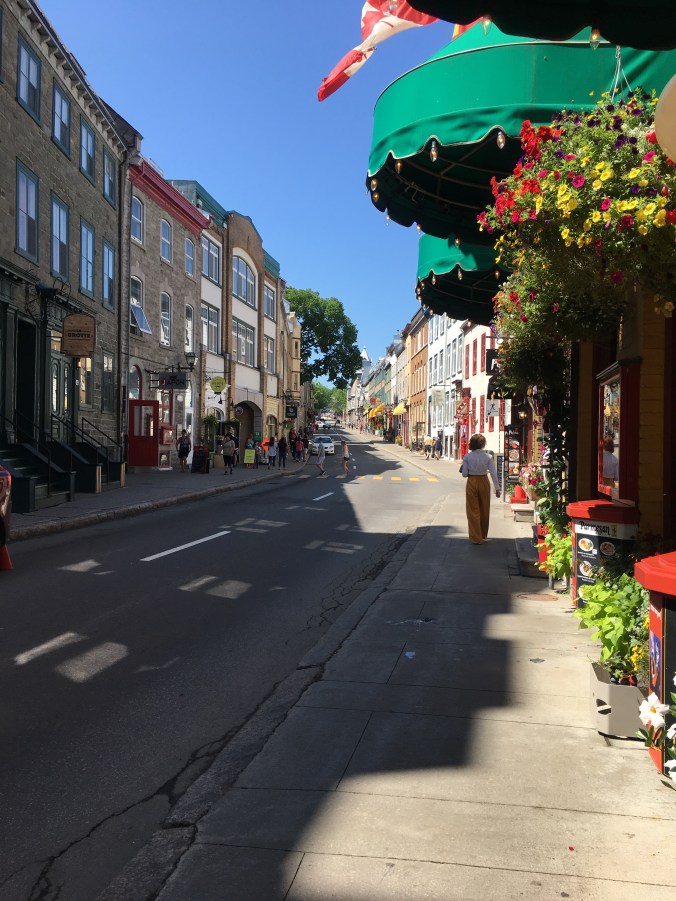
Every now and then everyone needs a break. This year the break took place in Quebec, which is a long way from where I hang my hat. It was a different world in a lot of respects. First, it was in another country. Second, the landscape was different. Finally, English was a second language up there.

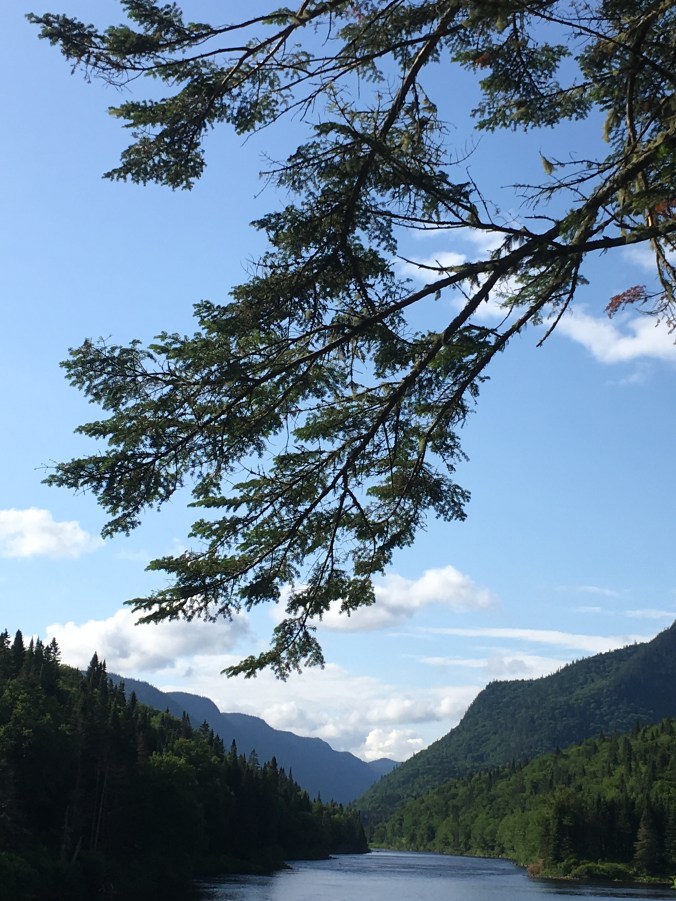
It was very nice. Canada is an excellent place for summer vacations. The boreal forest is something everyone should see at least once. The dark pine and mixed hardwood has a spicy, earthy smell. The call of the loon is mysterious, mournful. There are many freshwater lakes and streams, the forest thickens as you go northward.

In the past we’ve gone camping for real, with a tent in the middle of nowhere. This time we took the civilized approach and rented a series of cabins in some national parks, first at Mont Tremblant and then at Jacques Cartier. From these perches we ventured forth to various destinations.

The most remarkable was old Quebec.

What a neat place. For North America it’s pretty old, I believe the oldest structures dated from 1608 or so. It’s a taste of Europe in Canada, with cobblestone streets and profligate shops set in typical 18th Century (mostly) sturdy stone structures. The city was busy, there were crowds of tourists and locals. It was definitely worth seeing, probably my favorite moment was sitting in the D’Orsay restaurant.

We were seated by an open window, there was a pleasant breeze. The staff was professional and bilingual, the food was top-notch. Me? I had to sample a local specialty, Quebecois Poutine chased with a fresh-poured pint of Guinness. It was amazing.

A regret? That I speak no French. Now, it was never a serious hinder. Most people there in the province were bilingual; however, I think it’s polite to speak at least some of the local tongue. I’ve spent a lot of time overseas and I’ve always felt that way. Maybe it’s just me. If I ever return to Quebec, and I may, I’ll be sure to Rosetta Stone some French first. Seventh-grade French doesn’t cut it.

This segues into the locals. They were friendly, helpful. Yeah, OK, some of them had no English or very limited English. So what? Quebec’s first language is French- their land, their rules. A traveler has to adapt to local norms and customs, not the other way around. We were grateful that those who could speak English did so. Once again, very helpful and nice people.

And the food! I had one of the best steaks of my life in a restaurant called Baton Rouge in Terrebonne, north of Montreal. The everyday produce in the stores was of excellent quality as well. The French, whether in Canada or in France, know how to eat in style. The food was awesome, and it formed a formidable barrier to my weight loss goals.

Speaking of which. The rough forest and hills lent themselves to exercise in the great outdoors. We went on hikes, I got to do some rough compass work on some trails.

lake view quebec

Really worked up a sweat on those well-marked, rugged trails. It was awesome, very enjoyable.

Of course there were some minuses. For many, the northern insects can be a barrier. The biting flies. The mosquitoes. These are the prices that must be paid for such natural beauty. After all, there is no such thing as a free lunch. Plus, some might be off-put by the remoteness of these locations, although Park Jacques Cartier was within easy reach of Quebec City.

In short, this was an excellent trip. I can recommend Quebec to anyone.

Much thanks goes to the people of Quebec, and the helpful staff of Sepaq, the people who made our visit to the national parks so pleasant.

Quebec, highly recommend!


Reading before the fire

Woman reads book near fireplace

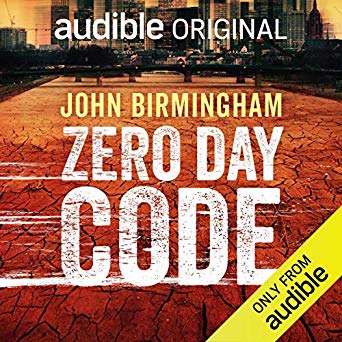
I just finished John Birmingham’s Zero Day Code on audiobook, the thing was some twelve hours long. If I had read it, it would have taken four or five hours of my time. Now that I’m done I have to say that the audio experience was pretty darn excellent, like having your favorite uncle tell you a story before the stove on a cold winter’s day.

OK, maybe this is not a revelation for a lot of you, but it was for me. I’ve always devoured the written word, books have been my friends since I was a little kid. Don’t know how many I’ve read, but it’s been one hell of a lot.

Zero Day Code left me little choice but to listen. It’s been released as an Audible exclusive, so outside of Patreon you’re out of luck if you want to read. It’s also the case that the final draft isn’t available on Patreon either, so the final polished product is only available as an audio book.

Well, I really wanted to check out Zero Day Code, so I bought the audio book. A friend has loaned me a number of audio books in the past, but those were all documentaries. Listening to a novel was a very different experience.

It was amazing, excellent. The narrator (Degas) did a fine job. He did women’s voices, different accents, everything. Birmingham’s prose came to life as never before, the effect was cinematic.

Really, I can’t heap much more praise on this effort. How can you top a five-star, which this was?

The best part of it was that me and a couple of hundred others were involved in the project from the start through Patreon, and it was super-cool to listen to the culmination.

By all means, take some time out of your busy day and relax with Mr. Degas’s voice.

It’s like sitting in front of the fire.

“Look on my Works, ye Mighty, and despair!”

6095277979_dcd35ca0c0_b

…Which of course is a line from the poem by Shelley, “Ozymandias.”

The lines that follow are haunting.

Nothing beside remains. Round the decay

Of that colossal Wreck, boundless and bare

The lone and level sands stretch far away.
This poem is a dirge for civilizations past, and it leads into today’s subject, the worldwide launch of John Birmingham’s Zero Day Code. You should buy this immediately if you’re a post-apocalyptic junkie. His novel (can you call an audio book a novel? Probably.) checks all the blocks.
Violence. Check.
Action. Check.
Chilling realism. Check.
Plausibility. Check.
Strong characters. Check.
I’m not going to bust out a full scale review, I’ll just give this book a strong “recommend.” This novel and the creative process that surrounded it has been talked about in these pages enough. Click on the link above and check it out for yourself.
It’s totally worth it.

Launch Day

61zRsumLzEL._SX342_

Readers will know that I’m a huge fan of John Birmingham’s apocalyptic serial novel on Patreon. So I’m not going to go into that subject today. Instead, I’m going to talk about the uber-geek side of me that enjoys Launch Day thoroughly. Not only do I track my own launches, but I track those of friends and authors I like. Some examples would be Jason Cox, Alicia Wanstall-Burke, and John Birmingham.

What do I mean by Launch Day? Well, it’s the day that has either been chosen by the publisher or the author to make a given work available to the public. This is a huge deal for the author, especially with a first book. The feeling is akin to dropping one’s pants in public; all of a sudden your secret scribblings are available for random people at large to examine with a critical eye.

There’s a lot of work involved in the launch. You give as many people as possible notice that your book is coming out via a news letter, social media or website, an author may make a book available for pre-order. In some cases the book is released as an advanced copy to reviewers to amp up the hype a little. LOL, of course this can backfire spectacularly, but it’s an acceptable risk.

As an author you look at the date and cross your fingers.

And then the moment arrives, and all you can do is check your figures on Amazon. What do I mean by this? I’ll give you an example of a book that’s been successful in the pre-order stage.

Screen Shot 2019-06-30 at 6.53.31 AM

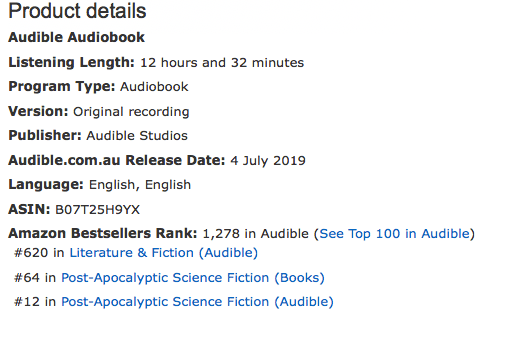
Look at the “Amazon Bestsellers Rank.” The lower the number, the better. The 1,278 number means that there are only 1,277 books that sell better on Amazon, a company that has literally millions of books in its catalog. Then look at the sub-categories. The book above is in the top 100 of two. This is excellent, as Amazon lists the top 100 books in an easy to browse format; the book gets exposure to more readers this way and sells more copies.

In the past I’ve been in the top 100 in my categories, but that only lasted for a little while shortly after launch. Some authors can sustain high sales no matter what, of course. An example would be Steven King. But let’s not do comparisons with that guy, because then I’ll get so discouraged that I’ll never write again.

OK, so the book launches and it’s a big deal. At first there is no Bestsellers Rank because the number only shows (1.) when someone has bought the book, and (2.) when the page refreshes hourly. I eagerly watch this number on books that I’m tracking because it strongly hints at sales volume. As the number scrolls downward, I cheer the book and the author on, there is a great deal of vicarious enjoyment for me in this process.

The next launch I’m tracking is Birmingham’s Zero Day Code, of course, on July the 4th. I’m going to totally geek out on this and follow it closely- this is my World Cup or Super Bowl.

Besides the Bestsellers Rank, another thing to keep track of is the reviews. These are crucial to generate “social trust” of a given work. Some people say they won’t read a book unless it has at least ten reviews; so reviews are a big deal and they’re very hard to get. Full disclosure: I’ve sold thousands of books, not sure how many. There’s fewer than 100 reviews of my trilogy worldwide. So doing some simple math that means that I’ve gotten approximately one review per fifty odd readers.

Tough to get reviews. That’s why I usually review good books both on my website and Amazon.

So the book launches and I periodically check Amazon. Why Amazon? Transparency and ease of tracking. I watch the numbers, I switch between various Amazon national sites. Now, I’m not completely anchored to the computer during this process unless it’s my own book. If that’s the case I’m glued to the screen. For other authors I check periodically during the day around stuff like mowing the grass.

This is my weakness, Launch Day. Some have billiards, some have football, some have model planes.

Me? I cheer on other’s success and the culmination of months, years, of hard work.

Launch Day is great, super-geeky fun.