Armored Assault

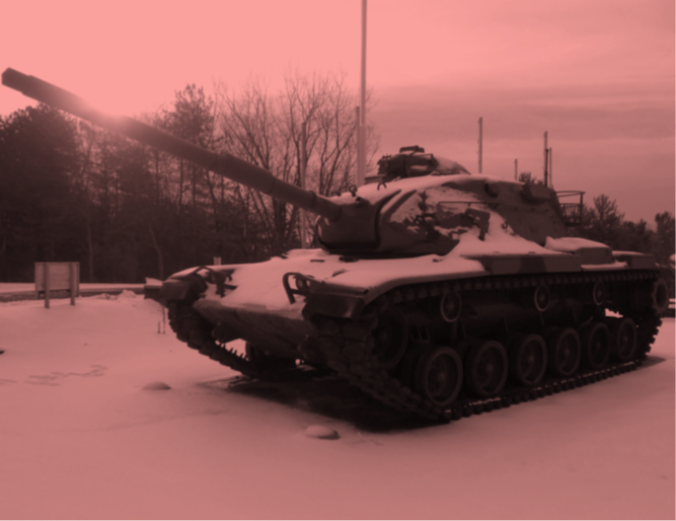
red m60

There’s a project that has been in the works for a long time. An awesome project. A world where the Third World War burst forth in 1955; where the fore-warned Soviets launched their long-awaited assault into Western Europe. Here is one partial scene from the book.

Writing Sample, German tanker.

Another 1955.

Jochen’s tanks were arrayed echelon left as they moved cross country; with each platoon in a rough wedge. His blood sang, contact could come at any moment. The moon cast his command in a ghostly light; there was a flash to his far right followed by a crashing boom. Contact. This, he thought, this is what I was born to do.

His headset crackled. “All Lehr elements, 4th Company is in contact. Move to your objectives, and toward the sound of the guns. Lehr Six out.”

Captain Boosfeld’s face was neutral, although one could detect tension by the grim set of his lips. This was his first combat in over a decade, and once again he was fighting the Reds. As his tank tore through a fence he pondered the differences, however. This time he wasn’t fighting with the Gestapo at his back. He was also being supported by airpower. As he rode, he saw flashes from heaven to his far right, the west. The lightshow synched perfectly with his thoughts.

Most importantly, he was riding in this deadly American tank. The M-60 made his trusty old Panzer IV look like a pile of junk. Was it a real killer, though, thought Jochen. He’d find out soon enough. From the right, a flash. To the southwest, a clang and a ball of flame. His headset crackled.

“Lehr Two-Six, this is Lehr Two-Three Six! Contact! Tanks to the south! Engaging now!”

Jochen answered his Third Platoon leader, his blood pulsed like fire through his body. “Roger, Lehr Two-Three Six. Call me when you get the situation under control.” He peered into the night, one hand resting on Ma Deuce, as the Amis called the M2. It wasn’t time to button up, not yet. He saw tracer fire and flashes to the southwest. His turn was coming very soon, he dropped down into his seat and closed the hatch.

He had barely buttoned up when his gunner spoke. His voice was flat, calm.

“Tanks. Left front, 1300 meters.”

Jochen peered through his thermal sight. His gunner had a good eye, the Soviets were hull down, dug in. As he watched, one fired. Must not be addressed to me, he thought. Ivan was still a lousy shot. He knew his gunner wasn’t.

“Gunner, SABOT. Tanks, pick one.”

“Left. Identified.”

Boosfeld addressed his loader. “Load.”

The young man, Tomas, slammed an armor-piercing round, a SABOT, into the breech with his closed fist and closed the breech block. He sat back down, out of the way and spoke. “Up!”

His gunner called out “Lasing!” as he “painted” the Soviet tank with an invisible beam of light. The laser designated dead men who had but a few heartbeats left.

Jochen sealed their fate. “Fire!”

“On the way!” The gun recoiled. Jochen watched his round impact with the tank on the left of the Soviet line. It brewed up spectacularly, the turret flew off and landed some distance away. Within seconds, the Soviet position was destroyed, his tanks closed with them at speed.

His net was full of terse commands, his tanks were moving and shooting. It couldn’t be this easy, he thought. There was no way. He scanned through his thermals, the enemy tanks burned. They flared out his black and white viewscreen as they drew near. Where were the infantry, he wondered. He hadn’t seen any soldiers running around.

Then it hit him. They would be dug in, invisible to thermals and night vision. His company was almost within RPG range. He placed a call.

“2nd Company, this is Lehr Two Six. Keep your eyes out for panzergrenadiere! They will be out here!” He popped his hatch and stood again. He gripped the spade handles of his machine gun and flipped off the safety. He scanned around, his tanks were easy to see with the flames and moonlight.

His Third Platoon was almost on top of the burning tanks. As if on cue, Jochen heard a boom followed by a BLAM! RPG, he thought. He was right. Choas erupted, the Red infantry had held their fire in an impressive show of discipline. Now they sprung their trap.

Panzer 91’s coaxial gun opened up, his gunner must have seen something. At the same moment, Jochen spotted a flash, it could have been firelight on a helmet. He didn’t hesitate. He swung his fifty caliber killer toward the flash and mashed the butterfly triggers down with his thumbs. He poured a long burst along where he thought the hunter-killer team was, shell casings clinked and skittered merrily across the turret roof. The weapon recoiled, red tracers plowed up the ground and bounced crazily toward the heavens.

A bullet snapped past his head, he saw a muzzle flash to his right front, about fifty meters away. He engaged the flash, his weapon recoiled, the target flew apart. Dead ahead he saw an RPG man stand up. The gunner mowed him down, the man crumpled. Jochen was certain that there were more men in the slit trench. He called Hänke.

“Driver, park over that trench and iron it down.”

“Sir?”

Jochen hadn’t taught Hänke that trick. Well, he thought, it’s never too late to learn. He spoke.

“Park over the trench, hold the brake and spin your treads. Do it now.”

The driver did as instructed, Jochen gunned down a soldier who tried to escape. He was the lucky one. The others died screaming beneath Panzer 91’s treads. After a few seconds, it was done. A quote scrolled through his thoughts as he scanned his sector behind Ma Deuce.

“There’s none die well who die in battle.”

He ordered his tanks forward.

More to follow. Lots more.

JL

Space News

long march

Hey readers. After a bit of a break, I’m back at it again, this time with a little news on the space exploration front, a fave of mine. It seems that at the end of this month, China is lofting a Long March rocket with a Mars explorer on board. This is a first for their space program, and I wish them luck.

Any human endeavors in space are a good thing, as far as I can tell, with the exception of weapons lofted above. Why we have to drag our earthly squabbles into the heavens I don’t know, but I suppose it’s inevitable.

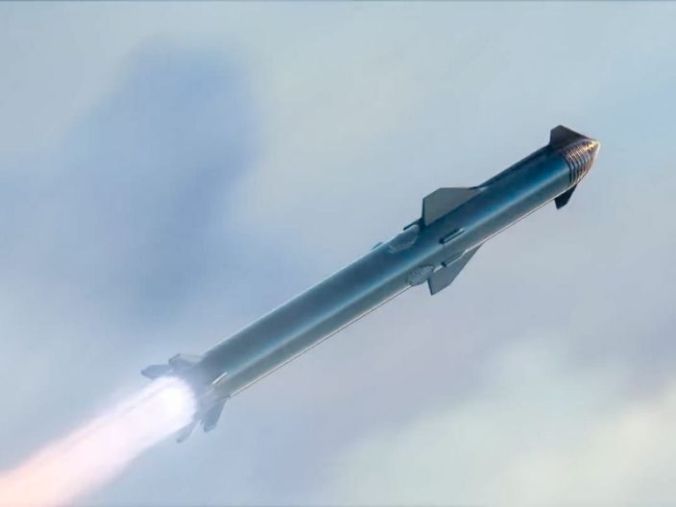
Despite the pandemic and it’s sidekick, the recession, things continue for SpaceX. They have recently asked permission from the FCC (Federal Communications Commission) to communicate with a launch vehicle at high altitude. This is an indication that Mr. Musk’s company wants to fly Starship this year.

As usual, SpaceX is going at a breakneck pace, and failures are part of the creative process for them; they are noted for spectacular explosions. But that’s OK. It really does seem that Mask’s team learns from each mini-disaster, and they are not risk-averse or punished for failure. Also, they seem to really want to get to Mars, unlike the military-industrial complex types that Musk competes against.

So yeah, there’s that. It gives you something to look forward to, and I wish SpaceX well.

In other news, engaged in the usual summer lull around here, where you try to get out and do things. We are fortunate that we can actually do that this year, that we don’t live in a city surrounded by restrictions and masses of people. 2020 has been tough. But there’s tough, and then there’s tough.

We could have been stuck in a high-rise apartment.

That would have been bad. As it is, we have a little land, a quiet road and a sleepy town.

And here pretty soon, we’ll have decent internet, too. I totally volunteered for SpaceX’s Starlink internet service. My current rural provider is a big, fat joke. Expensive, too! So when Starlink comes online it’ll be a huge upgrade.

Internet service? Totally essential this year. I don’t know what we would have done in the lockdown without it. It’s really hard to believe that the very first, dial-up modem internet service to this house was about 22 or 23 years ago.

These days? Hell, my cheap Samsung runs rings around the mainframe computers of the nineteen-eighties. And they ran communications for an entire continent. I can’t begin to imagine the capabilities of our most powerful computers now.

What drives me? The thought of what it will be like in a decade, or two, if I am fortunate enough to be around to see it.

The Chinese may be headed to Mars. OK, that’s fine.

I want to see SpaceX there, too.


Greyhound- a review

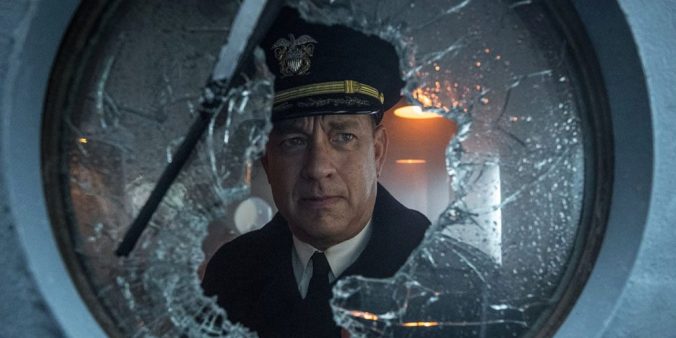
Tom-Hanks-in-war-movie-Greyhound

BLUF– Worth the Apple TV+ subscription to watch this.

Tom Hanks is one of my favorite actors; maybe because he probably is the decent guy he so often portrays on the big screen. His latest, Greyhound, is more stamped from the same mold.

In this film, released today the 10th of July, 2020, he plays a USN Captain in charge of a detachment of convoy escorts. They are making the deadly North Atlantic passage in early 1942.

Small history primer for the unfamiliar. The USN was essentially at war with Germany from the summer of 1941 when it became Navy policy to fire upon any U-boats (Unterseeboot) that were engaged in unrestricted warfare during the attempted blockade of Great Britain. After Germany’s declaration of war upon the US on the 8th of December 1941 the gloves came completely off, and for a while the German Navy was a real terror upon the high seas. They attacked from the US East Coast to the Caribbean and all points in between.

1942 was a real nadir for the Atlantic convoys, as the movie points out thousands of ships were lost and over 70,000 souls perished.

It was a bloodbath.

This movie does a real service in showing a new generation what the sea combat on such a convoy entailed.

The voices of our grandfathers and great-uncles have mostly been stilled, the first hand accounts are nearly finished.

This is one of the reasons that I think this is an important movie, as well as an entertaining one. But let’s start at the beginning; you can’t go to the theatre and see this film. Why? Because it’s stinking 2020, that’s why. This is a real shame because watching it at home on my laptop simply did not do this film justice; I’ll give a few examples from the film.

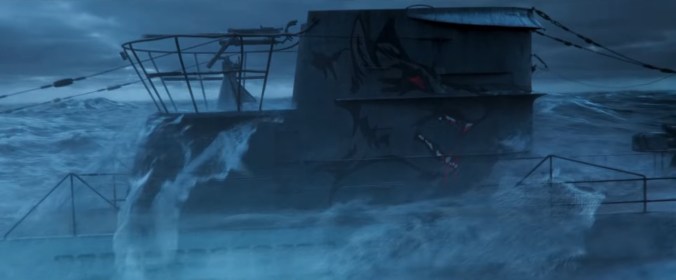
There were some AWESOME moments that the big screen would have captured far better than my humble MacBook. One example? When Hank’s little destroyer almost kisses a lumbering freighter. Another? When a “Wolf Pack” of German subs knife through the waves, closing on a kill.

greyhound-trailer-image-2

But needs must this year, so I was grateful that Apple enabled me to see this film, and that Tom Hanks and his fellow actors got paid.

The film starts showing you a bit about the good Captain’s life, a short peek into what drives him and the kind of person he is.

And then the violence starts and never lets up. The convoy reaches the part of the Atlantic where there was no air cover in 1942, and the Germans attacked, causing casualties and mayhem that was realistic and unsparing. Particularly unsettling was the footage of tracer fire at night, I shivered remembering that for every visible round there are four the viewer can’t see.

This. This blood and fire, this choking to death on blazing oil, this happened. Our ancestors faced it; many were lost before the front was even reached. The Captain’s command does not escape unscathed; casualties mount, fuel and ammo run low. The tension stays ratcheted up throughout the closing scenes of the film; it is not at all clear what the fate of the Captain’s little destroyer will be.

Does the Captain reunite with his love? Does the mission succeed? How many can he and his crew save, how many lives must he take? Does he make it to far England, across the roiling gray waves?

Good questions. Don’t expect me to answer them.

By all means, punch the buttons and get on to Apple TV+. I know I didn’t want yet another streaming subscription. I don’t think anyone does.

This, though. This is worth it. Seriously.

If nothing else, you need to watch this just to hear the Kriegsmarine commander break into the Allies’ radio freqs to howl like a wolf.

Eerie. Given his murderous intent, maddening.

Get it, watch it. Become part of this messed up experiment in keeping Hollywood afloat during these turbulent, fraught times.

But if you have a better sound system and a bigger screen than me that would be good. This film begs for the big screen; this year, not so much.

Enjoy!


Going Home

hobnails

This is a thought experiment from a while ago, a fan-fic short based in John Birmingham’s World War 2.X universe. I thought to put this out into the wild in anticipation of upcoming books in his Axis of Time series.

There is no more fraught moment for a returning soldier then the exact moment that you set foot over the door.

What awaits inside?

One such scenario follows.

Going Home

July 1944

Jurgen Langsfeld was caught in the old routine, endless marching under the merciless sky. He had been walking back through the wreckage of war for a month, trying to get to his home outside of Krefeld. He still couldn’t believe that the war was over, that the Fuhrer was dead.

But it was. If nothing else, the endless convoys of Amis and Brits headed into the wrecked home of National-Socialism were convincing evidence that the end had come. The huge, green painted snorting Studebakers and Dodges that rode past him seemed to pay him no mind, even if the soldiers in the back sometimes did.

Sometimes they would yell something at him; most commonly they would throw half-eaten ration cans at him and laugh. He and his fellow travelers would fight over what remained in the cans; there was precious little food to be had on this journey home.

When Berlin had disappeared in nuclear fire and the war ended, Jurgen had been laying in a Catholic hospital in Ghent with shrapnel in his legs. Upon word that the Germans had surrendered unconditionally, the Belgian nuns had shown him the door, fully healed up or not. He found the manner in which he had been discharged to be distinctly irregular, shabby.

What he had encountered upon staggering into the city had been even worse. He and others like him were set upon by packs of youths or those that styled themselves as resistance fighters. He snorted at the memory. He bet that most of those “resistance fighters” had only found their courage at the end, facing disorganized bands of German soldiers headed towards the Heimat, or ones such as he, wounded and apparently disarmed.

He had not been so silly as to walk through now-hostile territory without a weapon, even though the Allies made it perfectly clear that de-mobilized German soldiers caught with arms were subject to summary execution. He had taken a P-38 pistol and a box of bullets from an Ordnungspolizei sergeant who didn’t need them anymore, and he had carefully hidden the pistol in his tunic.

Jurgen looked pretty harmless in his dusty, filthy and borrowed Wehrmacht uniform. Like all the others, he was just another soldier looking to get home. From day to day, he would spy a group headed eastward and he would join them. When sunset drew near, he would hunt up a place of refuge for the evening, preferably a forested locale somewhat near a farm or other promising-looking homesteads.

When the night came, he would go scrounging, pistol in hand. A particularly fond memory was of the night that he had found potatoes and a goose. He had gotten both of the treats without so much as a shot being fired, and he had feasted on cooked potato and meat for several days thereafter. A low point had come when he came up dry on food for several days, not even the garbage heaps of the allied soldiers had turned up much. Eventually he had to waste a precious bullet on a muskrat, and because of the sound he had to move several kilometers on a dead-empty stomach before he could safely butcher the animal.

He always tried to sleep alone and hidden. Jurgen was under no illusions about the likelihood of being robbed by his fellow ex-soldiers; he really didn’t want to wake up with his shelter-half or his bread-bag gone.

No, he thought, just because a fellow was German, it certainly didn’t mean you could trust him. There were many times he thought he would rather trust one of the Belgian farm ladies he encountered than his own fellow travellers. Even though those women had a habit of staring right through him when he tried to ask them for water, or perhaps a bit of straw to cushion his accursed hob-nailed boots.

Jurgen snorted. Funny, too, how the civilians had suddenly forgotten how to speak schoolhouse German. When he had marched through here years ago, a number of people had given the “German Salute,” and more than a few were quite willing to sell or trade for goodies.

Not anymore. He shook his head as he reached his last couple of miles in Belgium. His was a broken army, moving in disorganized fits back to where they had came from, and the people he left behind were mighty happy about that.

He had a suspicion that there may be Allied checkpoints as he neared Germany, so he moved off of the main road and headed cross-country with his compass, another cherished possession. He ran up against a minefield, and he cursed his bad luck. For a long while, he followed the minefield north, and he eventually found what he was looking for.

Some Allied unit had breached the minefield in the not-too-distant past, scattered bits of their junk was everywhere, along with remnants of Germany’s defenders. Jurgen could have cared less about the corpses slowly turning into dirt. He had seen too many of them to notice, really. He spotted an aging tank track and followed it towards home. The heavy track made him pretty confident that he wouldn’t dance in the air while making his way through the mines.

On the other side of the obstacles and wire, he scored big. The Amis or Brits had camped in a pine forest there; they had thrown their trash all around. He sneered, his preconceptions about Allied habits rose to the surface. But he spotted something and he wanted to kiss the missing soldiers, they had left behind half of a crate of C-rations.

Wunderbar, he thought, as he filled his bread-bag to the top with such delicacies as “Fruit Cake” and “Ham and Lima Beans.” He walked on for a short time, and then he found himself another hidey-hole for the evening.

For a change, his belly was full and he had reached Germany.

During his trek the next day, he was disabused of his delight upon reaching his homeland. In town after town the inhabitants treated him little differently from the Belgians. They couldn’t pretend not to speak German, of course, but they bid him no more comfort than the tight-wad farmers on the other side of the border.

As he headed north, his bread-bag got lighter and the kilometers seemed to stretch on forever. When it rained, he got soaked. When the sun came out, he baked. The collar on his wool jacket chafed; his feet felt like blocks of iron clumsily sewn to his legs.

He saw strange sights. Some towns and cities were ruined, flattened. Then he would come to the next town, and everything would be unmolested. But a constant theme was the unending stream of humanity, of people going somewhere, anywhere. Jurgen met all of Europe on the roads of Western Germany, and everyone had a tale.

Sometimes, as he would stop and fill his canteen by a village well, he would stop and listen. There was a Dutchman, who had escaped Holland by a hair’s breath. Apparently he was some kind of functionary in the Dutch Nazi Party, the NSB. Jurgen thought he was an arschloch, or asshole. There was an emaciated woman who had come from a labor camp; she was headed back to France. When no-one could see, Jurgen gave her one of his precious Fruit Cakes.

And from time to time, he would see the Allies. He did his best to steer clear of them when they had a checkpoint set up, but he couldn’t avoid them while they were driving around. That was alright, though. They seemed reluctant to stop and give yet another random, seemingly harmless German ex-soldier the time of day. At times he would see an obviously German woman in one of their jeeps or trucks, sometimes those women seemed to be having the time of their lives.

Bitches, he would think. Traitors.

And finally he reached his old village outside of Krefeld. He almost wanted to cry when he saw the characteristic church steeple in the distance. As he got closer, he walked past Farmer Ulm’s place and eventually he reached Kirchenstrasse. He turned left, towards his home.

Jurgen could see no battle damage, very little seemed to have changed since he was last at home. He hadn’t heard from his mother or sister in months, but he reasoned that it was no surprise, with all the irregularities since the war ended.

He laughed a little; he was overjoyed to walk this street again, to see the sights he thought were closed to him forever. A neighbor walked by, it was the elderly Mr. Dornhauser.

“Hello, Mr. Dornhauser!”

The man looked at Jurgen as if he had seen a ghost, then he hurried on his way.

Jurgen was non-plussed. Mr. Dornhauser had always been friendly. Then he saw his house and froze. The front door had been damaged and crudely patched up. Weeds were growing in the front-garden. He was shocked. His mother would have never allowed that. Then his eye alighted on a placard on the front door.

He read.

Attention passersby. This house has been declared property of the state. A People’s Court has found the inhabitants of this dwelling guilty of defeatism and treason. Under severest penalty of the law, entrance forbidden.

 Gauleiter Krebs, Krefeld

Jurgen was shocked to his core; the notice had been placed on the door two days before the war ended. He was shocked again, whatever his mother or sister had done would have surely affected him, as well. The Nazis believed in guilt by association, as he well knew. Only the end of the war had saved him, he was certain. He had to find out what happened to his family, he banged on the neighbor’s door, the Strohmeiers.

After a bit, he detected movement in the lace curtain in the window by the door. When it was clear that Jurgen wasn’t going away, the door opened.

Jurgen was greeted at the door by Alise; she had been a good neighbor. He remembered her well throughout his childhood. Now she stood in the doorway with her arms crossed, she did not ask him in.

This was not the reception that he had envisioned.

“What do you want, SS man?”

Her formal language and the mention of the organization he had once belonged to took Jürgen aback.

“Frau Strohmeier, where is my family? What’s happened?”

Her mouth tightened. “You can read, can’t you?”

“Where are they? The Nazis are gone; the war is over.” He repeated himself.

“Where are they?”

For the first time, he saw something in her eyes other than cold hostility. He saw sadness.

“I have hard news. Your mother and sister were hung by the Rathaus.”

Jurgen felt as if someone injected ice water into his spine, at the same time he felt as if he were punched hard in the gut. And then he felt fury. Cold, raw fury. He had never known an emotion like this, not even in the blast furnace of combat, never.

He spoke mildly. “Tell me, who has done this?”

Alise must not have liked what she saw in his face. She began to back away. Jurgen reached out and grabbed her by the wrist, pulled back, and slammed her against the wall. He put his face bare centimeters from hers.

His voice was still mild. “I’ll ask again, once, nicely. Who has done this?”

She stammered. “Th, Th, The SS. Gauleiter Krebs gave the order, the local police and the judge passed the sentence. But the SS killed her.”

Jurgen released her. She ran inside and slammed the door. He knew he would have to get out of here fast; the police would be here soon.

But then he had a thought. The police had arrested his sister and mother. Maybe he didn’t want to leave so soon, after all. As far as he saw it, they were as guilty of killing his family as the other bastards. The SS.

As he walked around the corner, he pulled his trusty Walther out of his tunic. He checked the loaded chamber indicator above the hammer and worked the safety.

The police first, he thought. Then the judge. After the judge, he would seek out the Gauleiter. Then what he really wanted was the unit number and the names of the assholes who had put the ropes around his sister and mother’s necks.

Scharfuhrer Jurgen Langsfeld, late of the 2nd Waffen SS Division “Das Reich,” prepared to take on what was left of the organization he had once been proud to serve. The SS, after all, were most effective killers.

Jurgen was perfectly happy to find them and feed them their lessons.

It occurred to me, readers, that you might want to see other fan-pics I’ve written in the Axis of Time universe. So here are some links.

The End of the Circle

Writing Sample No. 3

Writing Sample No. 2

Writing Preview!


Mens sana in corpore sano

lush fields

That’s Latin for “A healthy mind in a healthy body.” It’s literally all the Latin I can remember from a semester’s worth in junior high.

I was a terrible student.

What does this have to do with the image above, a lush June hayfield with an amazing view over this area’s rolling hills?

It’s part of my view when I go for my early morning stroll along a rural road. Few vehicles that early, I have it mostly to myself. You have to get movement in; it’s the only thing that really helps in this year of disease and strife.

Healthy body, healthier mind.

Of course, physical activity doesn’t solve all problems, it just helps out. Another thing I’m doing is reading, right now I’m stuck into a two-book series, “Britain’s War” by Daniel Todman. Very good reading, and it is really fleshing out my understanding of the role England and the British Empire played in World War Two. I could review these books when I’m done, but I don’t know if I could do them justice. So far I can recommend them; other non-fiction books I was impressed by in the past were “The Pity of War” and “War of the World” by Niall Ferguson.

I think it’s important to have a grasp of the world wars in order to understand the situation we find ourselves in today. (And as an aside, it really helps when writing books.)

Ignorance, however, abounds.

This is clearly on display right now here in the US. We are going through civil strife as a direct result of the US Civil War and the Jim Crow era.

When I stand back and look at this, my jaw wants to fall open. The Civil War ended 155 years ago. Some say it was about “state’s rights.” Yes, it was. The right of states to elect to be “free” or “slave-holding.” It’s very simple, and a historical fact. Those who say the war did not have slavery at its roots are being disingenuous about the history.

A personal vignette as to what Jim Crow looked like, and you tell me if this is right or fair. If this is the way you would treat a fellow human.

After World War Two, my Grandma married my Grandpa. I guess they were in Texas for a while, sometime in the late forties. My Grandma, a freckled young redhead, went into Killeen to shop. She walked down a sidewalk, a black man walked toward her. She thought nothing of it. He passed her. No big deal.

In the Jim Crow south, it was.

A group of local toughs saw what happened. They grabbed the man and beat him to a pulp in front of my horrified Grandma.

She said “What in heaven’s name did you do that for?”

One of the toughs answered. “This (expletive) should have made way for a white woman.”

My Grandma didn’t know what to say. What did they want, to be thanked?

One of them muttered “Yankee” and they walked away. The beaten black man eventually got up. My Grandma, shaken, left.

This. This was Jim Crow. As a direct result of the Civil War and World War Two, my Grandma witnessed it.

I read about history. I listen when the old people tell me how it was when they were young, and life was still fresh. The “good old days” weren’t, and things were never black or white.

So yeah, in between bursts of writing I try to exercise the body and mind. The body with lots of walking, the mind with books.

This is how I’m trying to cope with a mind-bendingly bad 2020.

I count partial success as a victory.


A very good article

analog

So I have been busy exploring and reading the new and improved author’s webpage for John Birmingham. It’s full of cool stuff such as this article called “The Role of Military SF in Technological Innovation.”

This is really worth a read; it is something I’ve thought a lot about over the years. Especially when I wrote my original trilogy in which I imagined a future where everyone was paired up with their own wearable AI called a “halo,” and then I hear about Mr. Musk’s Neuralink project which runs in the same direction.

Now, I seriously doubt that any of his team have ever read my books, but it pleased me to see that our thoughts ran in tandem, independent development.

I do think sci-fi drives scientific developments.

This could be good, or this could be bad.

Check out Birmingham’s article and you’ll see what I mean.

Cool stuff!

The Atom Bomb Saved My Life

merle

My grandfather, seen above in 1945, was no hero. He was a thirty-five year old draftee who did his best to keep his head down while the world went positively mad around him. In the summer of 1945 he found himself on a troopship headed for the inevitable invasion of Japan. His luck, or so he thought, had run out. But then Hiroshima and Nagasaki were incinerated in turn, and the massive invasion was called off. The war was over.

He died in a car collision instead, decades later.

As coincidence would have it, this was the fate of both my grandfathers.

Operation Downfall, the aptly named invasion of Japan, would have probably killed or maimed at least one of them. Maybe both; then you wouldn’t be reading this. As it was, one ended up in Japan with the occupation forces, and the other had the surreal experience of watching his Liberty ship turn around outside of Pearl Harbor and head back to San Francisco.

Both men eventually made it home and fathered a series of children, eventually those kids had kids and I came along.

But it didn’t have to happen that way.

The Manhattan Project could have ended in failure, and Japan would have had to be taken the old hard way. One million projected Allied casualties were expected and who knows how many Japanese. People forget that hundreds of thousands of Japanese civilians died via conventional bombing; their losses would have been horrific if the invasion would have taken place.

It was very bad, a crowning horror atop a decade of genocidal killing. The atomic bomb killed in a blink, at least for the fortunate. Others died slowly of radiation poisoning, others died of infected burns or wounds that wouldn’t heal. To this day there are many who suffer; war is hell, its scars last as long as those who remember still live.

The important part was ending the Second World War quickly.

The atom bomb did that, in dramatic fashion.

I’d make the argument that nothing short of a miracle would have made the Japanese quit; the atom bomb was no miracle but it sure seemed that way at the time. It was a weapon so bad that it has never been used since, and I pray it never will again.

I have my doubts. The old ones, the ones who watched the cities burn, are dying. Few of us these days know war; it is kept carefully hidden behind the volunteers who keep our societies safe. This leads most of us into a false sense of security.

People imagine that we can’t be bestial, or that our ancestors were somehow flawed or displayed poor judgement by employing The Bomb.

Wrong on all counts.

Modern people are just as capable of being murderous, racist, or misled. People have not changed in the slightest; I fear that the simple lessons our grandparents knew are fading away.

What are these lessons.

  1. Bad things can happen to anyone. That means you.
  2. Violence does solve problems, if imperfectly.
  3. Some people just like to watch the world burn.
  4. Swords can cut their owners.
  5. Fights always end. But maybe not how you wanted it.

There are many of these.

The Atomic Bomb saved the lives of a couple of random draftees; those draftees were my grandfathers. All that has happened since August of 1945 is a direct result of the use of The Bomb, both on a micro and macro level.

The US and the Soviets never fought because of the bomb. Who knows how many lived from that alone?

Sometimes great evil is what is required to extinguish an even greater evil. Seventy-five years later, I find myself thinking this over.

We can quantify how many died because of the twin blasts. 225,000 people probably died  as a direct result of the assault. That’s a stupendous, horrifying number.

How many lived?

That cannot be quantified, only guessed at.

It’s a lot.


Beta testing

39 stories

So a friend of mine recently hooked me up with a link; it appears that Elon Musk’s Starlink is now accepting applications to beta test his satellite internet service by the end of the year. I will absolutely do this if selected; my current provider is the worst and they think they’ve got me over a barrel with their stupid monopoly.

Haha. This is why Mr. Musk is doing this. He knows there are millions upon millions of potential customers in underserved areas (like mine). In lots of out-of-the-way spots on this planet there are plenty of customers who will NEVER get fiber optic or traditional infrastructure upgrades; it simply isn’t profitable.

Yeah, I volunteered, and if you live in an internet dark spot you should, too. There’s already some 500 of the mini satellites up there, and the number will keep on growing over the next few years. There is little doubt that I will be a subscriber to his service, and when economically feasible I’ll probably drive a Tesla, too.

It does seem at times that I’m an uncritical cheerleader for Mr. Musk and his plans. I’m actually a bit wary of this; I do realize that he spouts crazy man stuff from time to time and his goals are often over-ambitious. The negatives must be put into context, however.

Space X and Elon Musk deliver. Period.

This is why this is exciting to me. Over the course of my life I have heard mealy-mouthed and empty promises about space exploration over and over again. I have watched any number of promising projects scrapped, and not once in my entire life have I seen a human step foot on another planet, even one as close as the moon. And I’m not young anymore.

It is ridiculous that we haven’t been able to duplicate what we did in the late sixties in space.

Elon Musk agrees, and he’s really trying to make the world a better place, as opposed to hookers and beer like his fellow billionaires. So say what you want about him, one day there will probably be statues of the guy on Mars. Unlike the founder of certain social media sites.

Also in space news (which is dominated by Space X. Sorry not sorry.) is an article that I lost, it was on a news website. It’s a shame because it was pretty good; namely, Space X is looking to develop super sea-borne launch pads for Starship.

This is a good idea. As many of you may have seen from previous posts here, or in the news, a lot of Space X’s prototypes of this ship have blown up. Now, imagine a full size (39 stories) and fueled prototype blowing on the launch pad, or crashing back to Earth. It would be a disaster that would significantly slow or halt the progress being made.

It is much better to do these tests and launches out at sea.

This is challenging, though. A thought that crosses my mind are the Mulberry harbors of WW2. These were partially successful, but the sea is a force to be reckoned with. A violent storm could easily wreck a launch structure, it doesn’t matter how massive or well-designed it is.

I wonder how they will pull this off.

Because if anyone can, it’s Space X. I am paying close attention, and of course if anything new pops up I will let you all know.

Amazing stuff.

Stories Vs. Porn

romance

Occasionally there is a need for sex or violence in the given narrative that you are writing. These scenes can be fraught; what is the dividing line between titillation and storytelling? Today I’m going to give my two cents on this topic.

Pornography:

printed or visual material containing the explicit description or display of sexual organs or activity, intended to stimulate erotic rather than aesthetic or emotional feelings.

I’d add that explicit violence can serve as a sort of porn as well.

Alright, when dealing with extremes in human behavior, I prefer to use a light touch. What do I mean by this. Well, sometimes the allusion is more powerful than a stark description of a given course of events; I’m a believer in allowing the reader to use their own imagination to fill in the blanks. When I get specific, there’s a reason to be graphic.

A lot of what I write is military science fiction so I tend to deal more with violence and death than romance and sex, but the latter topic does come up from time to time. In both cases I try to be careful.

In the case of violence I do my best to relate the action as realistically as possible, without embellishment or glorification. I think there’s more impact to your work this way, I think the reader tires of umpteen scenes of blood splashing all over the place. This is violence porn.

A great example of porn literature was a series that was a common sight at garage sales when I was a kid. I won’t name the series of books but I read a few of them and it was one mob hit after another, whole platoons of innocents being gunned down and then the righteous revenge of the good-guy serial killer who took revenge.

With relish, every possible way to die was explored, the relentless and mysteriously immune protagonist killed, and killed, and killed some more. And oh yeah, he always got the girl, and this was described in depth as well.

It was a classic case of crossing Mars and Eros, with every bullet tracked and every orgasm chronicled.

There IS a market for this type of thing, and whoever wrote the series probably made a boatload of money and retired early.

Well, maybe I’m a puritan, but this ain’t my cup of tea.

First, it’s probably pretty unhealthy to want to watch all this dying mixed in with sex. I wonder if they found a bunch of these at some real serial killer’s house.

Second, it’s bad storytelling. Why. Allow me to explain. Come up with a formula (each book was pretty much the same). Drape a change of scenery upon it. There are two red buttons. One says KILLING, and the other says SEX. Mash them over and over again in the story until the reader has either thrown the book away, or they are salivating for more. The author doesn’t care, because he made his buck.

Finally, this stuff is straight-up porn. The story is a veneer, the violence and the sex are not plot points, they are THE point. There’s a difference. There’s no story to be had, and there is close to zero realism. The protagonist is robot-like, his sexual conquests are cartoonish, objectified dolls, and his devilish victims are bad-guy cardboard cut-outs.

Porn, as opposed to a story.

Of course, the novels I’ve described above are themselves a cartoon and an extreme. They have been out of print for many years (I hope), but frequently during the course of writing my own material I wonder if I’ve gone too far with some scenes, or what the proper balance should be when writing a disturbing or tough passage.

Lately there was a discussion I was a part of involving the beta read of a friend’s book; some bad guys were about to be hung and there was a small debate as to whether to show the hanging or not.

I sided with the author that it wasn’t necessary; enough violence had been depicted earlier in the scene and showing the act of hanging would have been too much. Titillation versus storytelling. In the end it was enough to show the gallows to the reader and leave it at that; they could fill in the blanks.

In my own work recently there was a sex scene; there was dialogue between the two characters of a sexual nature. Specifically they discussed whether the male should use protection in the form of a condom; I included this bit of dialogue to illustrate that the man chose not to because he could have cared less about the woman for reasons that were clear in the passage.

So, specific sexual talk or acts for a reason, and violence with a purpose. In my opinion, this is what separates an adult themed story from porn.

It’s kind of like an old-fashioned farm. Everything has to have a purpose, or it gets cut. When it comes to human extremes, this holds doubly.

That’s my two cents.


The Oath

23684

The image above is me administering the US Military Oath of Enlistment to a prospective soldier.

I want to discuss this oath, this basic step, because a lot of people misunderstand the role of the US Military in society. So here goes.

First, the oath of enlistment in its present day form.

I, _____, do solemnly swear (or affirm) that I will support and defend the Constitution of the United States against all enemies, foreign and domestic; that I will bear true faith and allegiance to the same; and that I will obey the orders of the President of the United States and the orders of the officers appointed over me, according to regulations and the Uniform Code of Military Justice. So help me God.” (Title 10, US Code; Act of 5 May 1960 replacing the wording first adopted in 1789, with amendment effective 5 October 1962).

Now I’m going to tear it apart and reveal exactly why a lot of military leaders this week have been hesitant to summon the Regular military to US cities to suppress lawful demonstrations.

First, “I will support and defend…” This refers to the obligation, freely assumed by members of the military, to defend the entire US Constitution against those who would seek to deny its specific rights to fellow citizens or attempt to conquer from without. Some examples would be lawful conflict against Nazis in World War Two, or suppression of the Klu Klux Klan during Reconstruction. The Nazis because they sought to overthrow our system of government, the KKK because they sought to deny the Constitutional rights of their fellow citizens.

“I will bear true faith…” This means that you follow the Constitution to the letter and the spirit, and that you are loyal to the Constitution before all else. It’s why this clause is written before the following clause, which authorizes lawful authority to command.

“That I will obey the orders of the President… officers…” A military member is required to follow the orders of the President and officers, commissioned and non-commissioned. The clause means what it says. However, there is an important caveat; and this is raised in the next clause.

“According to regulations and the Uniform Code of Military Justice…” This body of written regulation and law is first subject to the Constitution. A military member may not circumvent the Constitution. After the Constitution follows regulations and the UCMJ, which are partially subject to international treaties (ex: the Geneva Convention). This clause, within regulation, recognizes the difference between illegal and legal orders. This is a concept which was fleshed out by the Nuremberg Trials of 1945-47; i.e. it is why it is never a sufficient defense to say “I was just following orders” in the course of atrocities, etc.

“So help me God.” The capping clause that acknowledges the supremacy of a deity over the laws and actions of man.

There you go. A nutshell class in why every service member in the United States serves as a guarantor of the freedoms enumerated in the US Constitution, and why they must follow orders, but only legal orders given in the spirit of the US Constitution.

By the way, National Guard personnel have a slightly different oath in which they recognize the command authority of a given state’s governor. Look it up, it’s much the same; also, National Guard personnel are frequently summoned to active duty and they function under Title 10 exactly like regulars. Sometimes people get confused by this, but it’s really simple.

So there you have it, the reason why every US trooper is obligated by law to uphold the Constitution.

If a servicemember acts to deny his or her fellow citizen their Constitutional rights, then they have gone against the base principle that they committed themselves to on their first day of service.

The US oath of enlistment.

It is specifically designed to ensure and lawfully oblige each member of the armed services to protect the Constitutional rights of their fellow citizens; with their lives if necessary.

No matter who is in charge.